

Every spring, for a few weeks, the land around Lisse transforms into something hard to believe until you see it with your own eyes: tightly packed rows of red, yellow, purple, and white tulips stretching to the horizon, interspersed with fragrant hyacinths and daffodils swaying in the cool Dutch wind. The Keukenhof is not just a garden — it is a seasonal phenomenon that exists only for a very short interval, generally from mid-March to mid-May, after which the gates close and the fields are plowed to prepare for the next year.
The park covers about 32 hectares in the Bollenstreek region, the historic heart of bulb cultivation in the Netherlands. It was opened to the public in 1950, with the original goal of providing Dutch growers a space to showcase their varieties to international buyers. Since that first edition, the Keukenhof has welcomed visitors from all over the world, maintaining its role as a living showcase of Dutch floriculture. Every year, over seven million bulbs are manually planted, each chosen and positioned according to carefully studied color schemes.
Themed gardens and must-see varieties
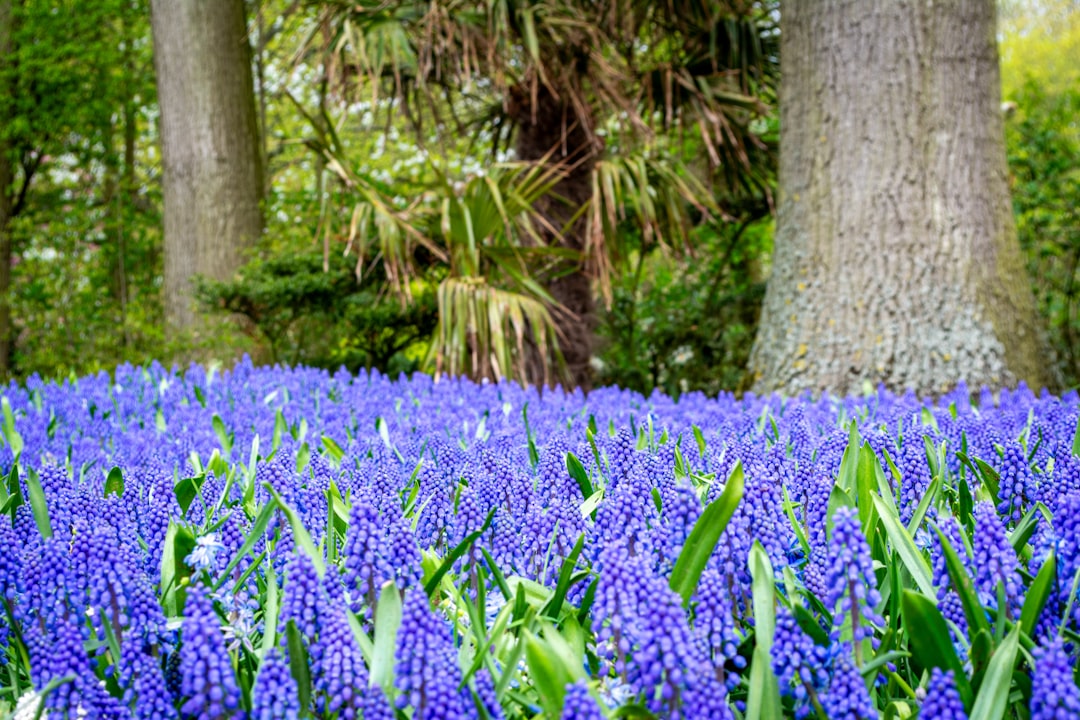
Inside the park, there are several themed gardens, each with its own identity. The historical garden reproduces formal beds in classic Dutch style, with geometric hedges and central fountains. The naturalistic garden, on the other hand, allows bulbs to grow more spontaneously among the grass and under the trees, creating color effects reminiscent of wild meadows. Along the internal canals, the banks are dotted with daffodils and blue muscari that reflect in the still water.
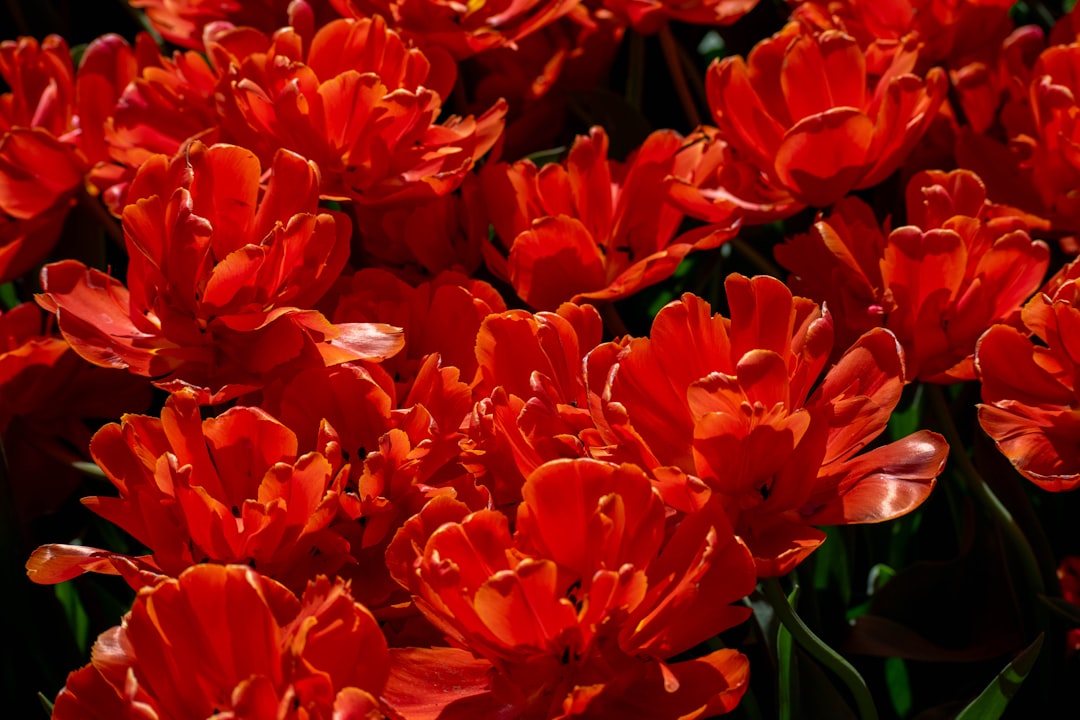
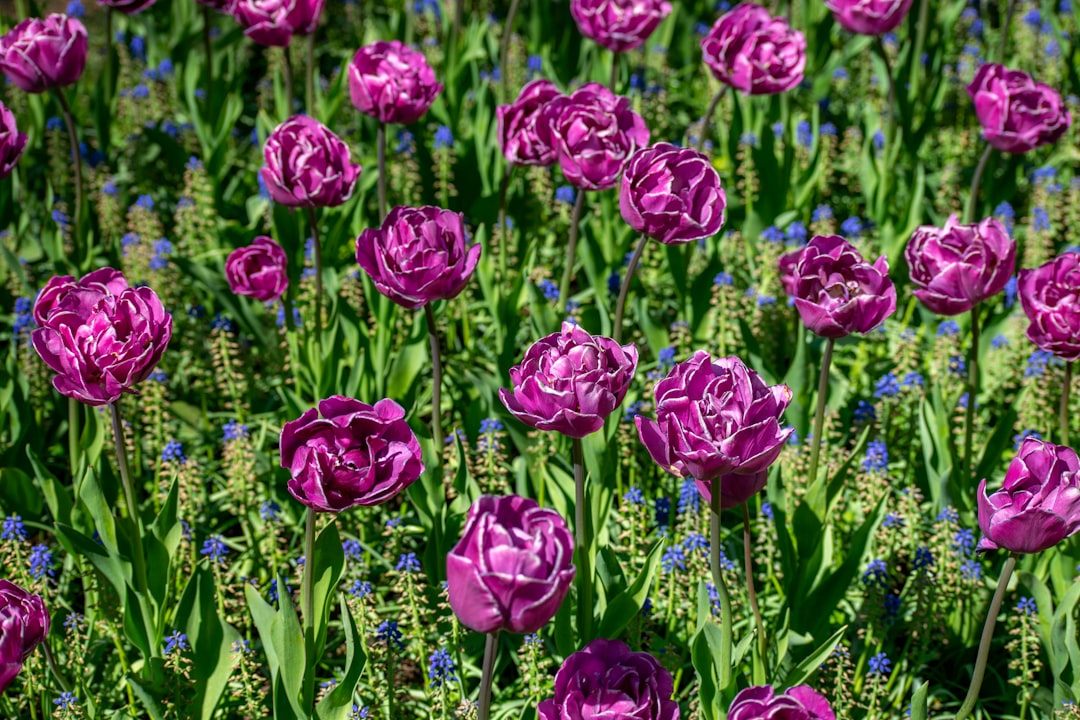
Among the most spectacular varieties to look for are the parrot tulips, with their fringed and wavy petals, and the peony tulips, double and soft like bouquet flowers. The greenhouses, on the other hand, host more delicate specimens that would not survive the external temperatures of March, including orchids and recently developed hybrid varieties presented to the public for the first time right here.
The tulip fields around the park
One of the most photographed sights is not found inside the Keukenhof but outside its gates: the agricultural fields that surround Lisse and nearby municipalities such as Hillegom and Noordwijkerhout. These plots, managed by private flower-growing companies, create horizontal stripes of pure color across the flat landscape of the Dutch countryside. The blooming of the fields follows a slightly different schedule than that of the park and depends on seasonal weather conditions.
To see them at their best, many visitors choose to rent a bicycle in the vicinity of Lisse and ride along the marked cycling paths that traverse the bulb area. It is a slow and direct way to immerse oneself in the landscape, stopping wherever one wishes without following a timetable. Some farms also offer the possibility to purchase bulbs directly, with phytosanitary certificates that allow them to be taken to many European countries.
How to organize the visit effectively
The most important practical advice concerns the time of day: arriving at opening time, around 8:00 in the morning, makes a huge difference compared to showing up in the middle of the day. During the central hours, especially on weekends in April, the park can become very crowded and the main avenues lose some of their charm. The early morning light is also the most favorable for photographing flowers, with fewer harsh shadows and more saturated colors.
To reach Keukenhof from Amsterdam, the most convenient way is to take a direct bus from Central Station or Schiphol Airport: the service is seasonal and coincides exactly with the park's opening period. The entrance ticket is preferably purchased online in advance, both to avoid queues and because it often includes combined transport. The average visit time is three to four hours, but those who want to visit the greenhouses, have lunch in the park, and stroll without hurry can easily spend an entire day.
The right time to visit
The most spectacular week is generally the central one in April, when most varieties of tulips are in full bloom simultaneously. However, those arriving at the end of March will find hyacinths and daffodils at their peak, with tulips still opening. Those visiting in the first week of May will see late tulips and double varieties, with fewer crowds compared to the mid-April peak.
It is worth checking the official Keukenhof website in the weeks leading up to the visit: it publishes regular updates on the blooming status, indicating which varieties are already open and which have yet to bloom. It is a concrete tool that allows for a more precise date selection, transforming what could be a rough trip into an experience calibrated to the exact moment when nature is at its best.


