
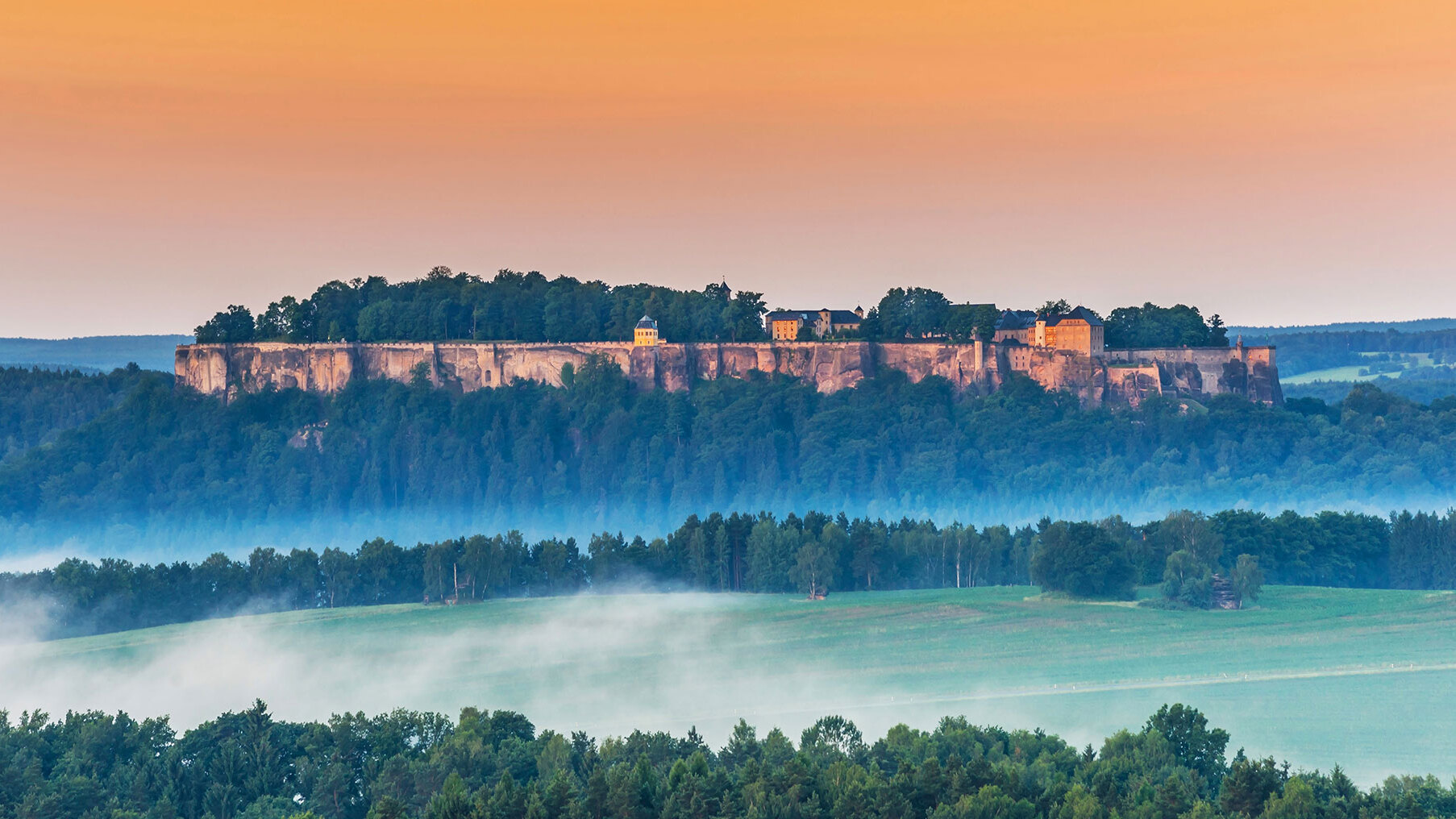

Perched atop a massive rock platform, Königstein Fortress is a striking testament to military ingenuity and a fascinating chapter in German history. This monumental structure, located in Königstein im Taunus, captivates visitors not only with its imposing presence but also with the myriad stories woven into its walls.
The origins of Königstein Fortress date back to the 13th century when it was founded by the Counts of Königstein. Its strategic location offered a commanding view of the surrounding landscape, making it an ideal stronghold against invasions. Throughout its history, the fortress has witnessed numerous key events, including the Thirty Years' War and the rise of the Electorate of Saxony. In the 17th century, it became a notorious prison for political figures, where many prominent individuals, including the alchemist Johann Friedrich Böttger, sought refuge from persecution. Böttger, famed for his role in the invention of European porcelain, initially inhabited the fortress as a free man before being confined in its dungeons.
The architectural style of Königstein Fortress is a blend of Gothic and Renaissance influences, showcasing the evolution of military architecture over the centuries. Visitors can explore the Georgenburg, where the Saxon court took refuge during political tumult, alongside the Neues and Altes Zeughaus, which served as arsenals for weapons and supplies. The fortress also features the Brunnenhaus, an impressive covered fountain, essential for the fortress's self-sufficiency. Each structure is not only a feat of engineering but also a canvas reflecting the artistic sensibilities of its time.
Local culture thrives in the shadow of Königstein Fortress. The townspeople celebrate several traditional festivals, notably the Königstein Christmas Market, where the fortress becomes a magical backdrop for stalls selling handmade crafts and local delicacies. Furthermore, the region is known for its rich folklore, with legends that recount tales of knights and mythical creatures that once roamed the land. This vibrant cultural tapestry is woven into the daily lives of the residents, who maintain a strong connection to the fortress.
Gastronomy in Königstein im Taunus is deeply intertwined with its history. Local specialties include hearty dishes like Handkäse (a sour milk cheese) served with a side of Brezel (pretzel) and regional wines from the nearby Rheingau vineyards. Visitors to the fortress can indulge in traditional meals at the on-site eateries, where the menu often features recipes passed down through generations. Don’t miss the chance to try the Taunus Wild, a game dish that pays homage to the surrounding forests.
While many tourists flock to the fortress for its historical significance, some lesser-known curiosities make a visit even more enriching. For instance, the panoramic lift installed in 2006 not only provides accessibility but also offers breathtaking views of the Elbsandsteingebirge rock formations. Moreover, the fortress's dungeons were rumored to be inescapable, leading to stories of failed escape attempts by prisoners who were prominent figures of the time, including the anarchist Mikhail Bakunin and socialist leader August Bebel.
For those planning a visit, the best time to explore Königstein Fortress is during the late spring and early autumn months. This period offers mild weather and allows for comfortable hikes in the surrounding natural park. When visiting, be sure to check out the Museum im Burghof, which hosts exhibitions detailing the fortress's history and its significance in the region. A leisurely walk through the fortress grounds reveals stunning views of the sprawling countryside, providing countless opportunities for photography.
When you venture to Königstein im Taunus, immerse yourself in the rich history, savor the local flavors, and perhaps uncover a few hidden stories of this remarkable fortress. For a personalized experience tailored to your preferences, consider using the Secret World app to plan your itinerary.


