
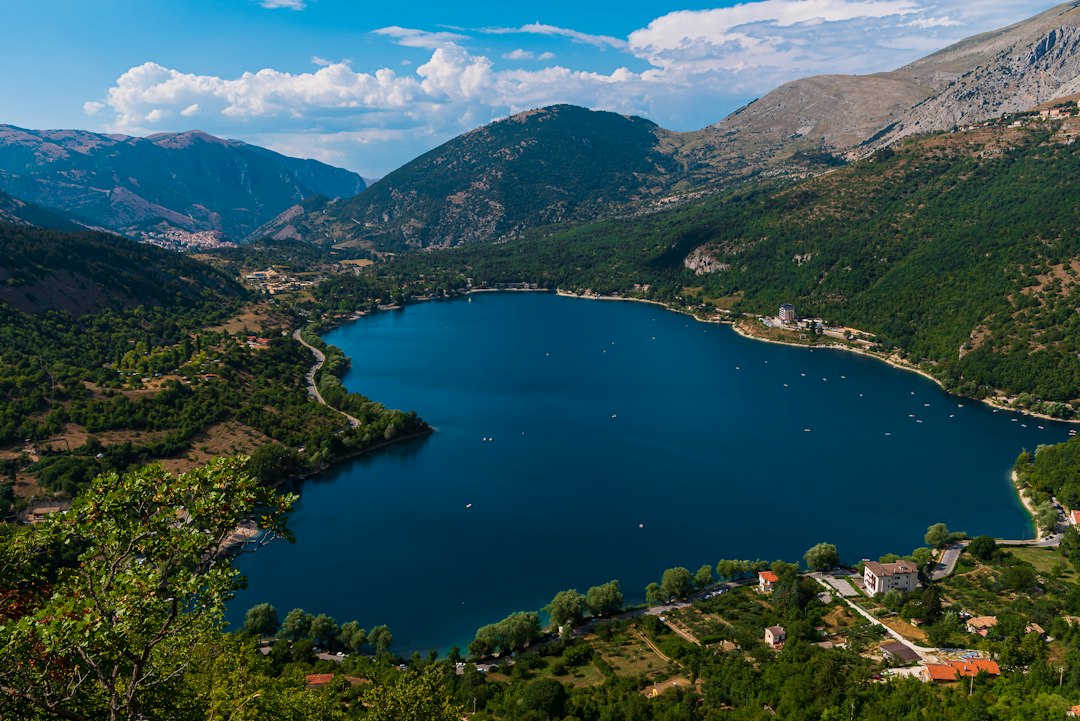

There is a precise moment, traveling along the state road SS479 that descends towards Scanno, when the sharp bend reveals something unexpected: down there, nestled among the mountains of the Abruzzo Apennines, a lake forms the perfect shape of a heart. It is neither an optical illusion nor a local legend. The Lago di Scanno, located at about 1,000 meters above sea level in the heart of the Abruzzo, Lazio and Molise National Park, truly has that shape — and seeing it from above, for the first time, produces an effect of silent wonder that is hard to describe.
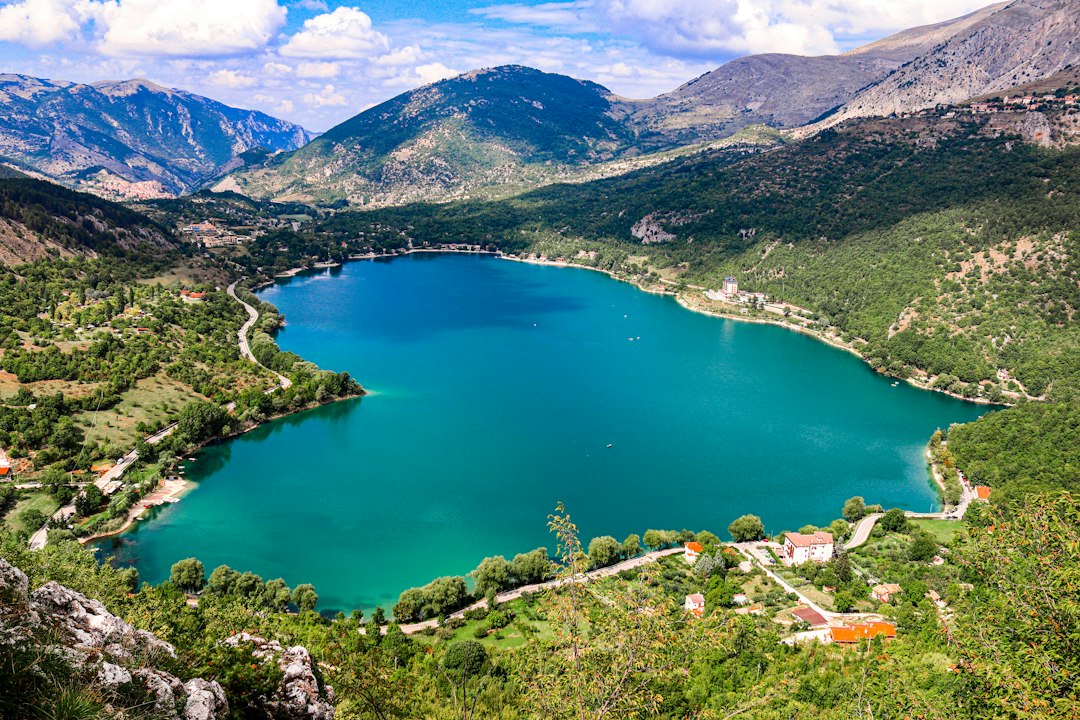
What makes this lake even more extraordinary is its almost total invisibility to international tourism. While the major Italian destinations are crowded with visitors from all over the world, Lago di Scanno remains a discovery almost exclusively Italian, frequented mainly by Abruzzese families and nature photographers who know the secret of the viewpoint on SS479. Yet the quality of the landscape, the clarity of the water, and the tranquility of the medieval village that lies next to it would deserve much greater fame.
A lake born from glaciers and landslides
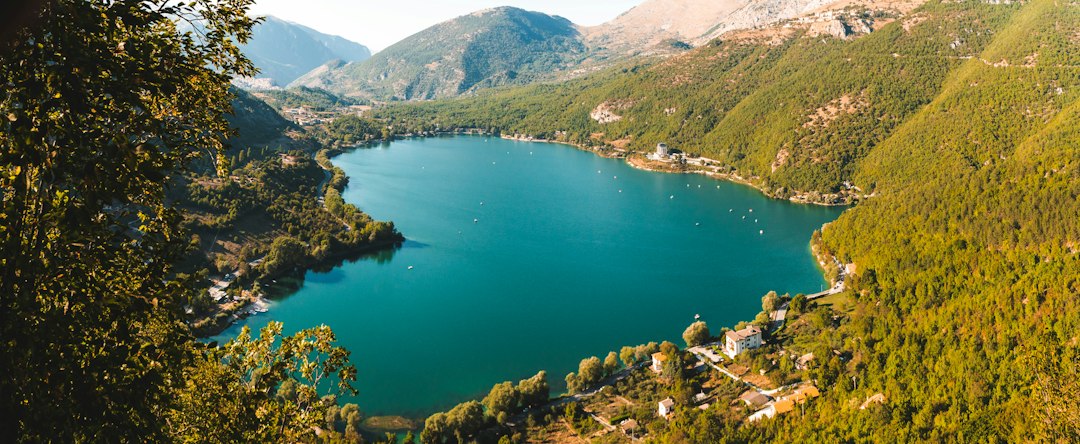
The Lake of Scanno is a lake of glacial and tectonic origin, formed thousands of years ago following a great landslide that blocked the course of the Sagittario River. It has a surface area of about 90 hectares and a maximum depth that exceeds 20 meters. Its waters change color with the light of day: emerald green in the central hours, almost black at dawn, silver at sunset when the surrounding mountains are reflected on the still surface.
The heart-shaped form, which is so clearly visible from above, is the result of the natural morphology of the two bends of the lake, separated by a thin isthmus of land. It is not visible from the water's edge: to catch a glimpse of it, one must ascend, travel along the SS479 towards Sulmona, and stop at the exact point where the road bends sharply. There, leaning over the guardrail, the landscape opens up and the heart appears in its entirety.

The village of Scanno: stone, wool, and costume
A few minutes from the lake lies the medieval village of Scanno, one of the best-preserved historic centers of inland Abruzzo. Its streets of white limestone intertwine in an almost labyrinthine way, dotted with ancient portals and small churches. The most important is the Church of Santa Maria della Valle, which houses valuable works from past centuries, including notable wooden sculptures.
Scanno is historically famous for its traditional female costume, with wide skirts and elaborate hairstyles, which the women of the village wore until a few decades ago on festive occasions. Today, it is possible to see these garments in local museums or during some traditional events. The village has also been a favorite destination for photographers such as Henri Cartier-Bresson and Mario Giacomelli, who in the 1950s and 1960s captured the daily life of the village in shots that became famous in the history of Italian photography.
What to do around the lake
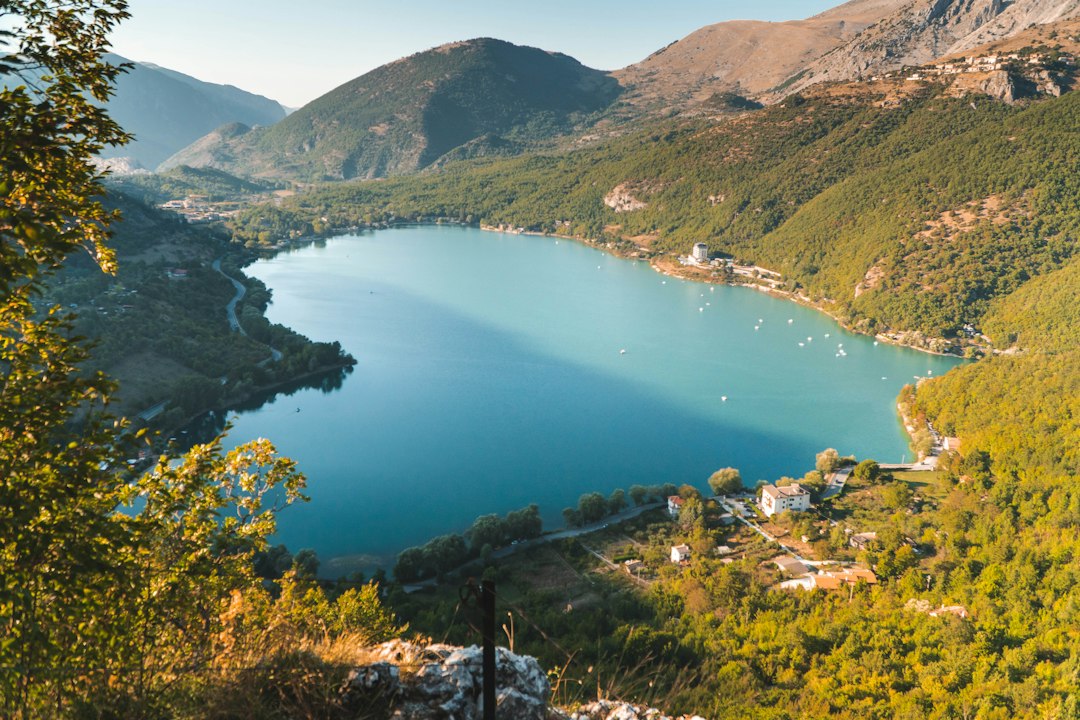
The perimeter of the lake can be walked along a path that runs along the shore and crosses areas of dense vegetation. The complete loop takes about an hour and a half of leisurely walking, suitable even for those without hiking experience. In summer, it is possible to rent pedal boats and small boats directly on the shore, and some equipped areas allow swimming in the cool waters of the lake.
For those who want to venture further, the Abruzzo National Park offers marked trails that lead to the surrounding mountains, where it is not uncommon to spot chamois and, with a bit of luck, the Marsican bear, a symbol species of the park. The wildlife is authentic and present: these are not captive animals or artificially constructed attractions.
How to get there and when to go
Scanno can be easily reached by car from Sulmona, which is about 50 kilometers away, following the SS479. The route is scenic but requires attention due to the tight curves. There is no direct train connection: the car remains the most practical means of transport. Alternatively, local buses with limited frequency depart from Sulmona.
The best time to visit the lake is in the late spring (May-June) or early autumn (September-October), when the colors of the landscape are more intense, the temperatures are pleasant, and the tourist presence is still limited. In August, the village becomes more lively, but the lake retains its tranquility in the early morning hours, which is also the best time to photograph the heart shape from the viewpoint on the SS479, before the light becomes too flat.


