



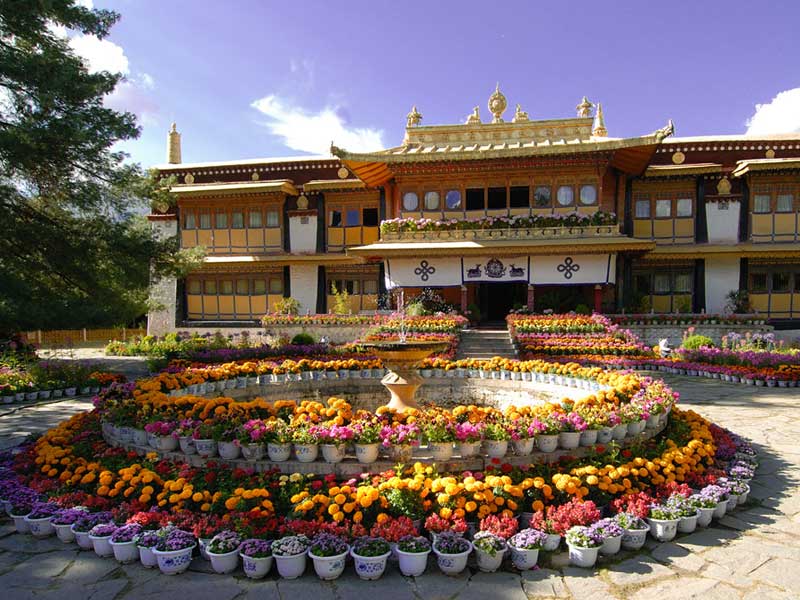
In the heart of Lhasa, the tranquil oasis of Norbulingka, meaning Jewel Garden, invites visitors to explore its rich tapestry of history, culture, and artistry. As the largest garden in Tibet, Norbulingka has served as a summer palace for generations of Dalai Lamas, offering a serene retreat from the bustling life of the city.
History and Origins
Established in 1751 during the reign of the Seventh Dalai Lama, Kelzang Gyatso, Norbulingka was initially designed as a retreat for the Dalai Lamas. This lush garden, located approximately 3 kilometers west of the Potala Palace, has witnessed significant historical events, particularly during the 1959 Tibetan Uprising, when many Tibetans sought refuge within its walls. Over time, it grew into a symbol of Tibetan identity and resilience, embodying the cultural and spiritual essence of the region.
The earliest structure within Norbulingka is the Gesang Pozhang Palace, built under the direction of Kelzang Gyatso. In the mid-20th century, the current Dalai Lama initiated the construction of the New Palace, which was completed in 1956. This modern addition, characterized by its intricate chapels, serene gardens, and tranquil fountains, further enhances the historical landscape of Norbulingka, making it a vital part of Tibet's heritage.
Art and Architecture
Norbulingka is a stunning fusion of Tibetan and Han Chinese architectural styles. The garden's layout reflects traditional Tibetan aesthetics, with carefully arranged flora complementing the stately buildings. The Kalsang Potang, built by the Seventh Dalai Lama, is a prime example of Yellow Hat architecture, marked by its vibrant colors and ornate decorations.
Visitors will find intricate murals depicting Buddhist themes, which showcase the artistic prowess of Tibetan artisans. The throne room, fully restored and adorned with exquisite details, allows guests a glimpse into the opulent past of the Dalai Lamas. Each corner of Norbulingka is a canvas, telling stories of devotion, artistry, and the deep-rooted spirituality of the Tibetan people.
Local Culture and Traditions
Norbulingka is not merely a historical site; it is a living embodiment of Tibetan culture. The garden serves as a backdrop for various festivals, including the Shoton Festival, which celebrates the unveiling of large thangkas (Buddhist paintings) and features traditional opera performances. This annual event, rooted in centuries-old traditions, draws locals and tourists alike, creating a vibrant atmosphere that echoes the spirit of Tibet.
Customs surrounding the garden are deeply intertwined with the Tibetan Buddhist faith. Pilgrims often visit Norbulingka to meditate, engage in prayer, or simply bask in the serenity of the surroundings. The harmonious blend of nature and spirituality found here fosters a sense of peace that resonates with all who enter.
Gastronomy
No visit to Norbulingka would be complete without indulging in Tibetan cuisine. Traditional dishes such as momo (steamed dumplings) and thukpa (noodle soup) are popular among visitors. The region is also known for its rich butter tea, a unique blend of tea, butter, and salt that offers a distinctive flavor and warmth, perfect for the cool climate of Lhasa.
Local eateries near Norbulingka often serve these delicacies, allowing guests to experience the authentic flavors of Tibetan culture while enjoying the stunning views of the garden. Sampling these traditional dishes not only satisfies the palate but also connects visitors to the vibrant culinary heritage of Tibet.
Lesser-Known Curiosities
While many tourists flock to Norbulingka for its beauty and historical significance, several hidden gems often remain unnoticed. For instance, the garden houses intricate stone carvings and inscriptions that reflect the deep connection between Tibetan Buddhism and nature. These subtle details tell stories of the land and its people, waiting patiently for curious visitors to discover.
Moreover, Norbulingka's expansive grounds include a small zoo, home to the unique Tibetan mastiff and other indigenous species. This lesser-known aspect of the garden showcases the region's commitment to preserving local wildlife and biodiversity.
Practical Visitor Information
The best time to visit Norbulingka is during the spring and autumn months, when the weather is mild and the gardens are in full bloom. Early mornings are particularly enchanting, as the soft light casts a golden hue over the landscape, creating perfect photo opportunities.
When exploring the garden, be sure to wear comfortable footwear, as the paths can be uneven. Take your time to wander through the various sections, appreciating the unique architecture, lush gardens, and tranquil atmosphere. Don’t forget to bring a camera to capture the breathtaking views of the Potala Palace framed by the vibrant flora.
To enhance your experience, consider using the Secret World app to craft a personalized itinerary that ensures you don’t miss any hidden treasures in Lhasa.
