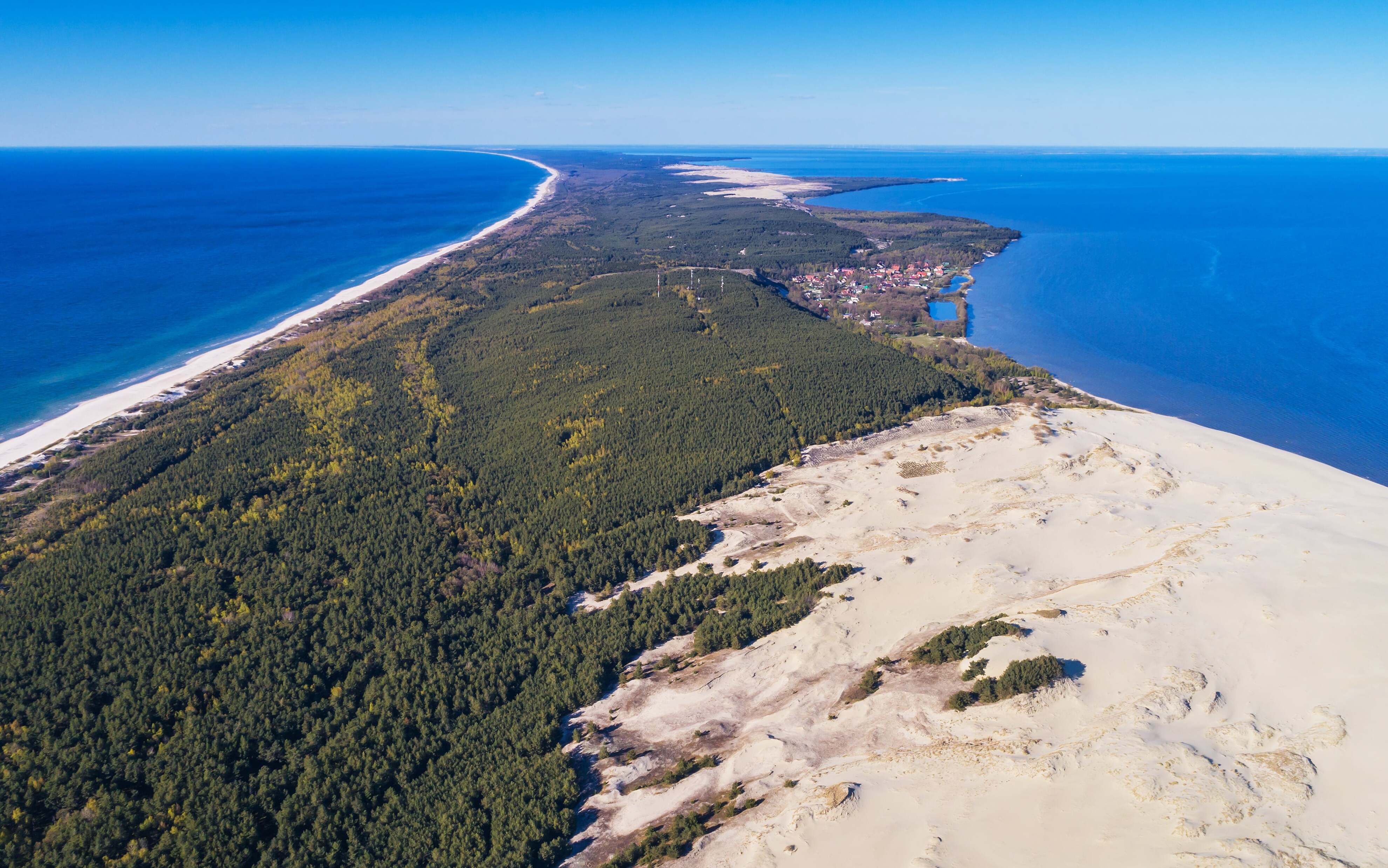

Nestled between the Baltic Sea and the Bay of Courland, the Isthmus of Courland is a stunning peninsula in Lithuania that enchants visitors with its unique blend of natural beauty, rich history, and vibrant local culture. Spanning 98 kilometers, this remarkable landform has been shaped over 5,000 years, creating a landscape defined by towering sand dunes—some reaching heights of 60 meters—and charming fishing villages that echo the traditions of days gone by.
### History and Origins The Isthmus of Courland has a rich tapestry of history woven through its landscape. The region's origins date back to the Stone Age, when it was inhabited by various tribes, including the Curonians, a Baltic tribe known for their seafaring skills. Over centuries, the isthmus has been influenced by various powers, from the Teutonic Knights in the 13th century to the Duchy of Courland, which flourished in the 17th and 18th centuries. Key events, such as the battles between the Swedes and Russians, shaped the political landscape, leaving behind a legacy that resonates in the local culture.
### Art and Architecture The architectural style found on the isthmus is a beautiful blend of traditional fishing village structures and more modern influences. The coastal town of Nida showcases wooden houses painted in vibrant colors, reflecting the maritime heritage of the region. Notable sites include the Nida Cemetery, where ancient funerary art tells stories of the past, with intricately carved wooden crosses and symbolic motifs. The Thomas Mann Cultural Centre, devoted to the German writer who spent summers here, is a testament to the enduring artistic significance of this coastal paradise.
### Local Culture and Traditions The culture of the Isthmus of Courland is steeped in local customs and traditions that have been preserved over generations. Festivals such as Jūratė ir Kastytis celebrate the region's folklore and maritime heritage, featuring traditional songs, dances, and crafts. The locals maintain a close connection to the sea, with fishing traditions that date back centuries. Visitors can witness this vibrant culture through workshops that teach traditional crafts like fishing net-making and wood carving, offering a hands-on experience of the local way of life.
### Gastronomy Culinary delights abound on the Isthmus of Courland, with an emphasis on fresh, local ingredients. Try the traditional dish Šaltibarščiai, a refreshing cold beet soup that showcases the region's vibrant produce. Smoked fish is a local specialty, particularly smoked eel and herring, often served with dark rye bread. Pair your meal with a glass of Kvass, a fermented beverage made from rye, or indulge in local berry liqueurs that capture the essence of the region’s wild fruits.
### Lesser-Known Curiosities While many tourists flock to the stunning views and local cuisine, there are intriguing aspects of the Isthmus of Courland that often go unnoticed. One such curiosity is the Dune of Parnidis, which not only offers breathtaking views of the Baltic Sea but also features an astronomical calendar etched into the sand, allowing visitors to track the sun’s path throughout the year. Additionally, the nearby Curonian Spit is a UNESCO World Heritage Site, recognized for its unique ecosystems, including pine forests and diverse bird populations that attract ornithologists and nature lovers alike.
### Practical Visitor Information The best time to visit the Isthmus of Courland is from late spring to early autumn, when the weather is mild, and the natural beauty is at its peak. For nature enthusiasts, hiking and cycling trails abound, offering opportunities to explore the stunning landscapes. Be sure to bring a camera to capture the magnificent sunsets over the Baltic Sea. Local accommodations range from charming guesthouses to modern hotels, catering to all budgets.
For a truly immersive experience, consider using the Secret World app to plan a personalized AI itinerary that highlights the hidden gems of this enchanting region.
In summary, the Isthmus of Courland is a treasure trove of history, culture, and natural beauty waiting to be explored.
