


A painted ceiling emerges in the shadow of a hall carved into the sandstone: vines, figures of winged Eros, and Hellenistic garlands in colors still surprisingly vivid, despite having endured two thousand years of desert. This is the first impact that leaves a mark at Little Petra, the hidden Nabatean site a few kilometers north of the famous Petra, in the village of Al-Baydha, in Jordan. Here there are no queues, no guides shouting into microphones, no vendors chasing tourists along the paths. There is only the rock, the silence, and one of the most underrated legacies of the entire Middle Eastern archaeology.
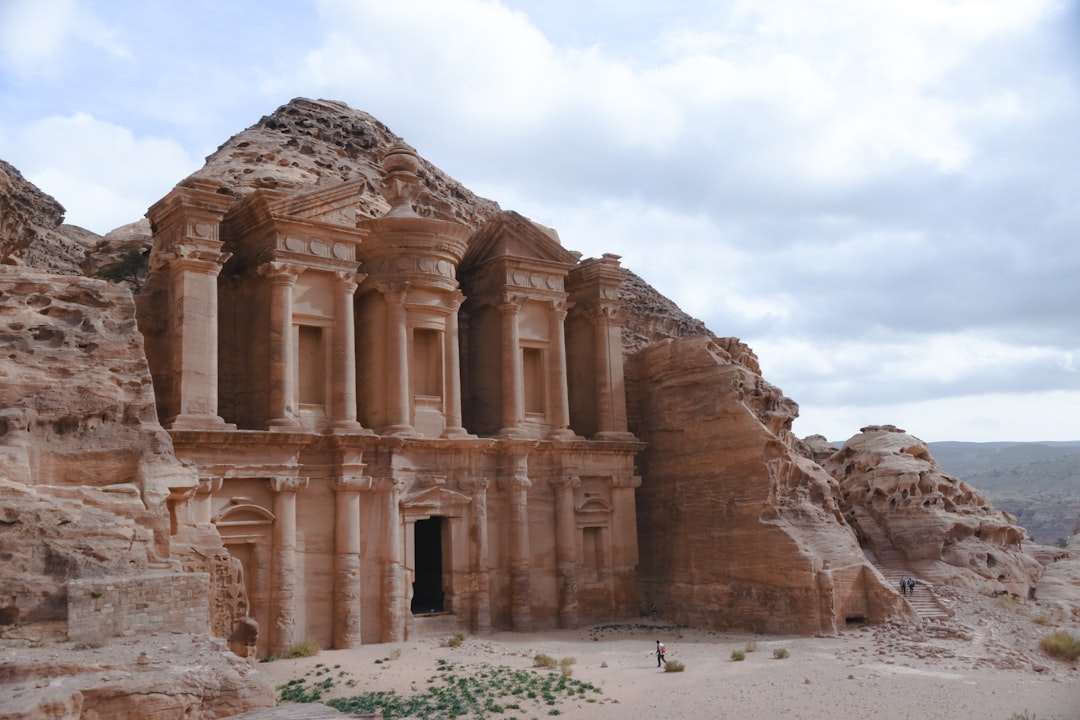
The site is also known as Siq al-Barid, literally "the cold canyon," a name that perfectly describes the feeling of entering the narrow sandstone gorge where sunlight penetrates in patches and the temperature drops a few degrees compared to the surrounding plateau. The Nabateans, that people of merchants and architects who built Petra between the 4th century BC and the 1st century AD, used this place as a commercial and residential outpost, a stopping point for caravans transporting incense, spices, and silk along the routes connecting southern Arabia to the Mediterranean.
A canyon carved by the Nabataeans: what to see

The Siq al-Barid is walked in about an hour and a half without haste, along a path of about 350 meters that crosses four main areas separated by natural narrow passages in the rock. Along the way, one encounters temples, cisterns for collecting rainwater, staircases carved directly into the stone, and — above all — the biclinia, rock dining halls where merchants gathered for ceremonial banquets. These spaces were equipped with stone benches along the walls and were used for both social and religious purposes.
The most extraordinary detail of the site is the painted ceiling of the Hellenistic biclinium, one of the rarest examples of Nabataean painting that has survived in situ. The figures of Eros, the vine tendrils, and the floral decorations reveal how deeply the Nabataean culture had absorbed Greek influence while maintaining its own architectural identity. This is not a restored or reconstructed fresco: what is seen is the original, faded but authentic, visible simply by looking up at the ceiling of the cavity.

The history of the Nabataeans and the context of Al-Baydha
The Nabataeans dominated this region for centuries, building a kingdom that had its capital in Petra and extended from present-day Saudi Arabia to the Israeli Negev. Their ability to manage water in a desert environment was extraordinary: in Little Petra, one can still observe the cisterns carved into the rock, designed to collect and store rainwater with engineering precision that allowed entire communities to survive in extreme climatic conditions.

Near the site is also the Neolithic village of Al-Baydha, considered one of the oldest human settlements in the Middle East, dating back to about 9,000 years ago. The ruins of this village, discovered by archaeologists in the 20th century, show circular stone structures that predate the Nabataean civilization by millennia, adding an additional layer of historical depth to this already extraordinarily rich area.
How to get there and practical tips
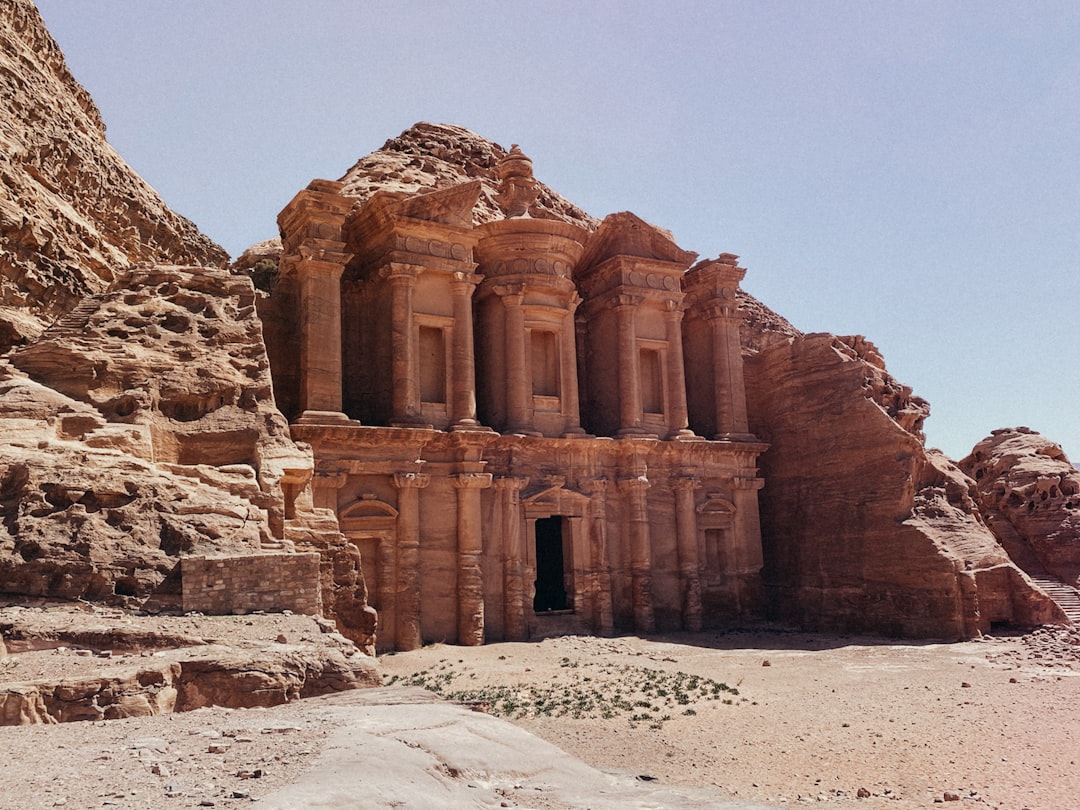
Little Petra is located about 8 kilometers north of the main entrance to Petra, accessible by taxi or rental car from the town of Wadi Musa. It is not included in the standard Petra ticket: entry to the site is free, which makes it even more surprising considering the quality of what it offers. The path is accessible on foot without special equipment, but closed shoes with non-slip soles are recommended because some sections of the trail are uneven.
The best time to visit is early in the morning, between 7:00 and 9:00, when the low sunlight illuminates the facades carved into the honey-colored sandstone and the temperature is still cool. In summer, the heat can become intense by mid-morning. Bringing enough water is essential: there are no refreshment points within the site. Those visiting Petra the day before can easily add Little Petra as a separate excursion the following day, dedicating an entire morning to enjoy it calmly and without the pressure of organized groups.
Why the trip is worth it
In an era when major archaeological sites are often overwhelmed by mass tourism, Little Petra offers something increasingly rare: direct contact with history, without physical barriers, without crowds, without the feeling of looking at the past through glass. You walk in the same corridors where Nabatean merchants concluded their business, you touch the same rock that their hands carved, you look up at the same painted ceiling that they contemplated during banquets.
It is not a reduced version of something larger. It is a complete place in itself, with its own logic, its own beauty, and its own story to tell to those who have the patience to listen.


