
🎄 Win a month in Italy for two — €10,000 · The Secret Italy Prize GO →
Lombard Temple — Cividale del Friuli
← Back
Historical Sites 📍 Cividale del Friuli, Italy 167 views

Lombard Temple

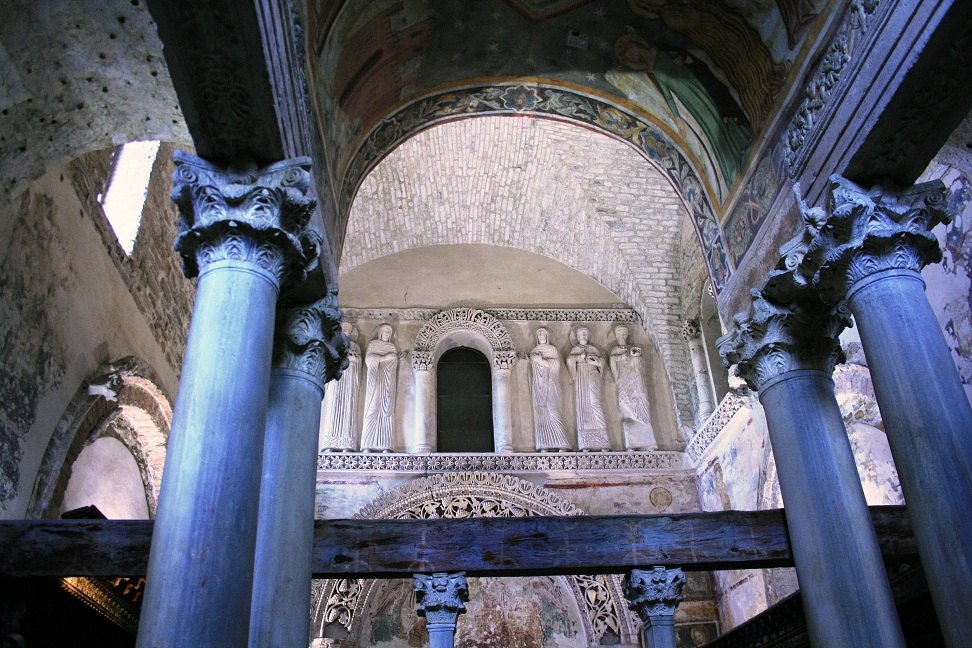
Its origins, dating and function are uncertain; the prevailing theory is that the Tempietto was built in the second half of the 8th century and is thought to have been the chapel of a female Benedictine monastery, the Monastery of Santa Maria in Valle. The Tempietto Longobardo is...

Photo · Ronda C.

Lombard Temple — Cividale del Friuli, Italy.

Location
Cividale del Friuli
Type
Historical Sites
Opening hours
Weather now
↗ Directions

About Lombard Temple

Lombard Temple - Cividale del Friuli | Secret World Trip Planner

Its origins, dating and function are uncertain; the prevailing theory is that the Tempietto was built in the second half of the 8th century and is thought to have been the chapel of a female Benedictine monastery, the Monastery of Santa Maria in Valle.
Lombard Temple - Cividale del Friuli | Secret World Trip Planner

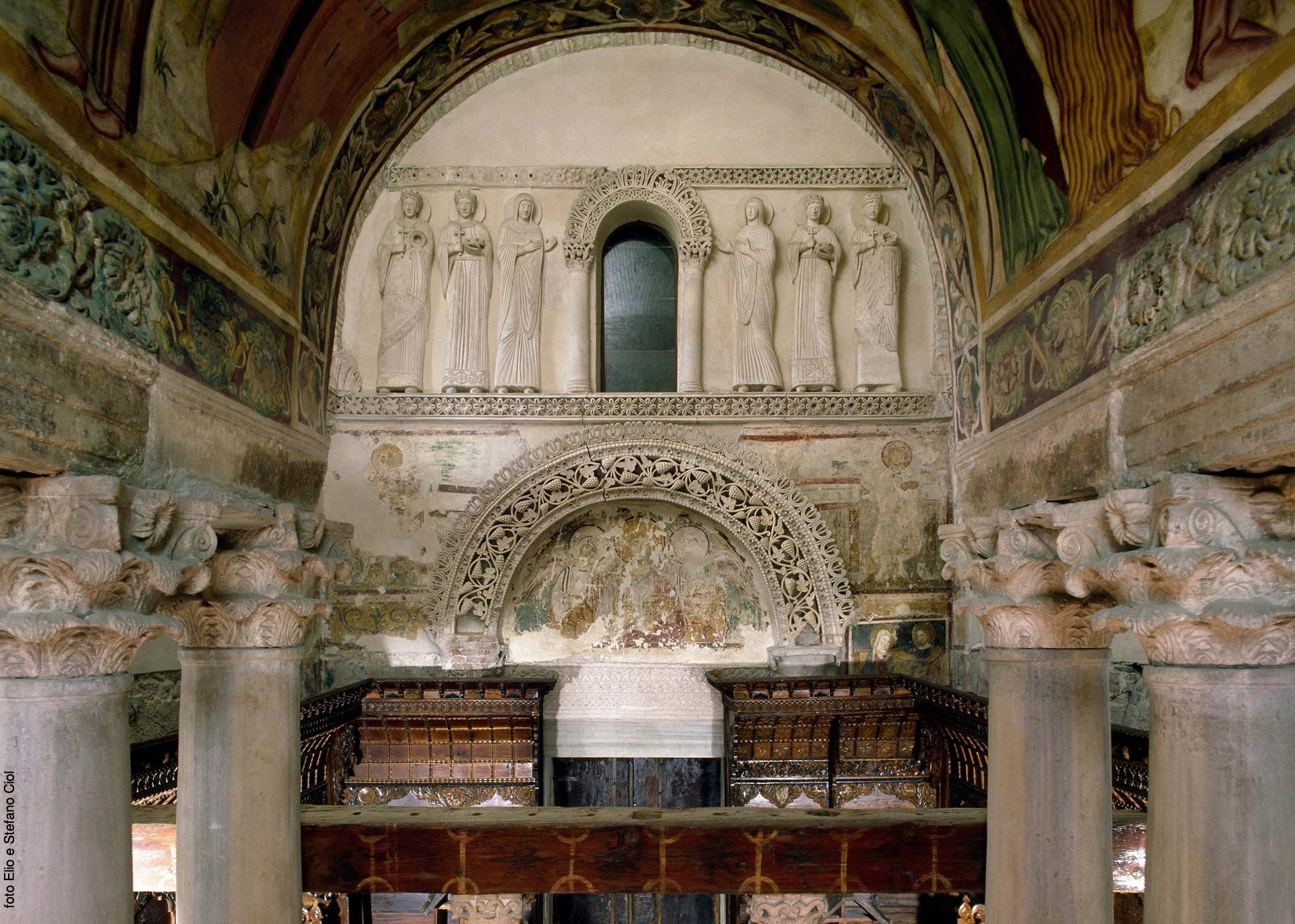
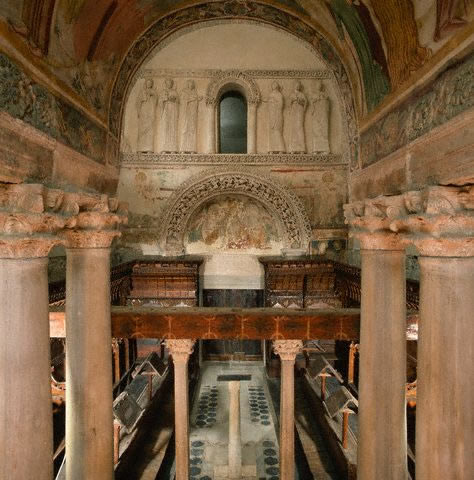
The Tempietto Longobardo is constituted by a square hall with a cross vault and by the presbiterio with three small barrel-vaulted naves, it is moreover characterized by frescos realized by Byzantine workers and by stucco decorations.

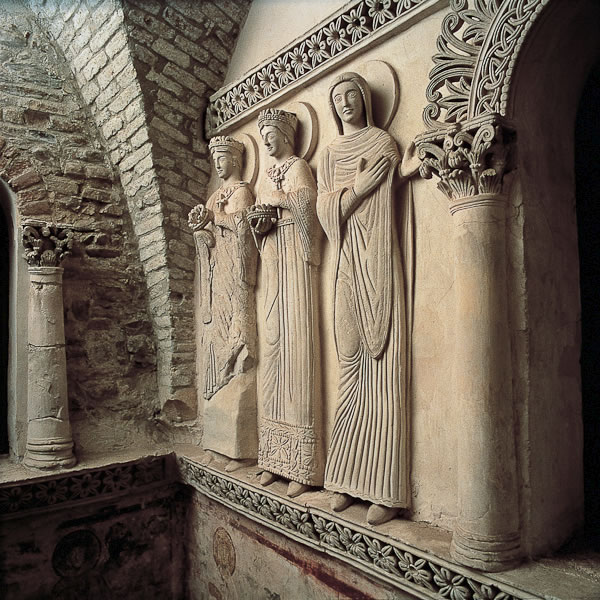
In the hall there are also wooden stalls dating back to the 14th century, decorated with foliate motifs and representations of fantastic animals. In the course of the centuries the Tempietto was "restructured" several times: the frescoes that decorate (or decorated, since many of them have recently been removed and exposed in the Christian Museum and in the Archaeological Museum) the walls are proof of this: frescoes that go from the XI to the end of the XIV century approximately. The building consists of a central body (externally with a square plan, with a weak cross inside) and of the presbytery with three apses, of which the central one is wider. The vault is cross vault in the hall, barrel vault in the apses. Monolithic lintels of the Roman age supported by twin columns with Corinthian capitals separate the naves, while an iconostasis with smooth plutei delimits the area of the hall from the presbytery. It is in the entrance wall (the western one) that one can admire, although partially, the original decoration of the Tempietto: in fact, the exceptional, famous stuccoes and some frescoes have remained in a good state of preservation. The stucco decoration (composed of plaster, lime and marble dust) is carried out on two registers. In the upper one, two horizontal bands, worked with a stylized rosette motif deeply engraved, with a cavity in the center once filled with glass paste (only in some visible), delimit a space in which there are six Saints in high relief leaning against the wall, flanked in ternary groups, to the right and left of a single blind hole, adorned with an archivolt, also in stucco with fine motif similar to a lace, resting on two columns topped by Corinthian capitals. In the lower register an admirable openwork band runs with decorative function around the lunette of the Christ Logos in fresco. The main element of the ornament is the beautiful spiral vine shoot with bunches and vine leaves enclosed in a double c
Lombard Temple - Cividale del Friuli | Secret World Trip Planner
✦ Secret World · suggested day

A perfect day in Cividale del Friuli

Start with Lombard Temple, then continue with nearby places selected by Secret World.

  1. 01
    Morning
    Lombard Temple
    📍 Cividale del Friuli
    Start here
  2. 02
    Afternoon
    📍 0 km away
  3. 03
    Evening
    📍 0.1 km away

Collect this place

Turn places you discover into stamps in your Secret Passport.

Open Secret Passport →

Keep exploring · Cividale del Friuli

Frequently Asked Questions

The Tempietto was most likely built in the second half of the 8th century and is believed to have served as the chapel of a female Benedictine monastery called the Monastery of Santa Maria in Valle. While its exact origins and dating remain somewhat uncertain, this prevailing theory is supported by architectural and historical evidence.
The Tempietto features a square hall with a cross vault and a presbytery with three barrel-vaulted naves, supported by monolithic Roman lintels and twin Corinthian columns. It is adorned with exceptional Byzantine-style frescoes and intricate stucco decorations made from plaster, lime, and marble dust, with six Saints depicted in high relief on the entrance wall.
Many of the original frescoes that decorated the walls—dating from the 11th to 14th centuries—have been removed and are now displayed in the Christian Museum and Archaeological Museum. However, some original frescoes and the most exceptional stucco decorations remain in good condition on the entrance (western) wall of the Tempietto.
The hall contains wooden stalls dating back to the 14th century that are beautifully decorated with foliate motifs and representations of fantastic animals. These pieces provide an excellent example of medieval craftsmanship and add to the historical richness of the interior.
The Tempietto has undergone multiple restructurings throughout the centuries, which is evident from the layering of frescoes from different periods (11th-14th centuries). The building maintains its original central square body with a weak cross plan inside, along with a presbytery featuring three apses separated by an iconostasis, despite these various renovations and modifications.

Experiences nearby · Cividale del Friuli

Powered by Viator

See more on Viator.com

Secret World Hidden places, real stories — plan your trip
Get the app
