
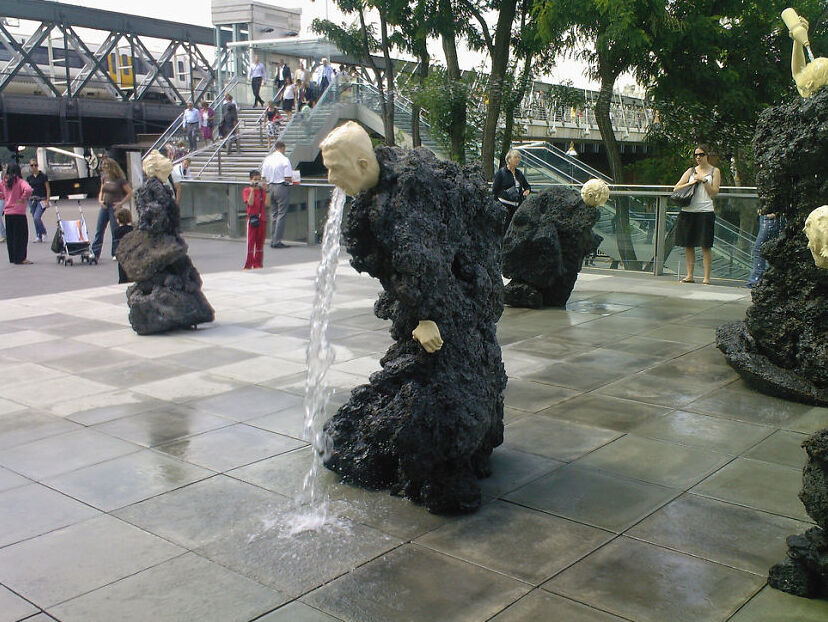

In the heart of London, where the hum of urban life meets the soothing sound of water, lies a unique artistic feature known as The Big Giving Fountain. This striking installation, created by German artist Klaus Weber, offers a refreshing splash of creativity and joy to the South Bank, drawing locals and visitors alike into its playful embrace.
History and Origins
The Big Giving was unveiled in the summer of 2007, marking a significant moment in London's public art landscape. Situated directly in front of the Royal Festival Hall, the fountains emerged as part of a larger initiative to enhance the cultural offerings of the South Bank Centre, a vibrant hub for arts and entertainment established in the 1950s. Originating from the post-war aspiration to rejuvenate this area, the South Bank has since transformed into a cultural powerhouse, hosting concerts, exhibitions, and performances that attract millions each year.
Weber’s installation builds on a rich tradition of public art in London, harkening back to the city’s historical fountains and water features that have served both aesthetic and functional purposes. The design showcases a contemporary interpretation of the fountain, where water literally spews from various parts of the seven sculptures, creating a dynamic and interactive experience for onlookers.
Art and Architecture
The artistic significance of The Big Giving lies not only in its playful interaction with water but also in its bold sculptural forms. Each of the seven fountains features unique designs that reflect Weber's conceptual approach, merging elements of whimsy with the everyday. The combination of industrial materials and organic shapes creates a dialogue between man-made structures and nature.
The fountain's location is equally noteworthy. The South Bank has long been a canvas for artistic expression, with its surrounding architecture, including the iconic National Theatre and the Hayward Gallery, contributing to a rich visual and cultural tapestry. This blend of old and new, historic and contemporary, is what makes the South Bank an essential destination for art lovers and casual strollers alike.
Local Culture and Traditions
The South Bank is not just about art; it’s a living, breathing community that celebrates London's diversity. Local customs flourish here, from the spontaneous performances of street artists to the bustling markets offering handmade crafts and global cuisines. The annual Southbank Centre's Meltdown Festival, which showcases a different artist each year, draws crowds for its eclectic mix of music, spoken word, and visual arts.
Moreover, the area is home to the London Eye, providing stunning views of the city, and the Southbank Centre's Book Market, where book lovers can peruse second-hand titles along the riverside. On certain weekends, visitors can experience pop-up events that celebrate food, music, and culture, making each visit a unique experience.
Gastronomy
No visit to the South Bank is complete without indulging in its culinary delights. The area boasts a variety of eateries, from casual street food stalls to more refined dining options. Traditional British fare can be savored at the nearby Skylon, known for its modern take on classic dishes, or at one of the many pubs offering hearty meals paired with local ales.
For a taste of global flavors, the Borough Market, just a short walk away, provides an array of fresh produce, artisanal goods, and delicious street food. Sample fish and chips from a local vendor or enjoy a gourmet burger while soaking up the vibrant atmosphere. Don’t forget to try the quintessentially British afternoon tea at one of the nearby cafés for a truly indulgent experience.
Lesser-known Curiosities
While The Big Giving attracts many visitors, there are curious details often overlooked. One fascinating aspect is the way Weber's fountains encourage playfulness; children and adults alike are drawn to the water jets, often leading to spontaneous moments of joy and laughter. The installation also reflects a deeper commentary on the relationship between nature and urban life, prompting visitors to reflect on how art can enhance public spaces.
Additionally, the South Bank is known for its legendary book market, which takes place every weekend beneath the Waterloo Bridge. Here, you can uncover hidden literary treasures, collectible editions, and rare finds, all while surrounded by the sounds of the bustling riverfront.
Practical Visitor Information
The best time to visit The Big Giving Fountain is during the warmer months, from late spring to early autumn, when the weather is more conducive to enjoying outdoor art. Weekdays tend to be quieter, offering a more serene experience, while weekends bring a vibrant atmosphere filled with music and cultural events.
When visiting, take a moment to explore beyond the fountain itself. Walk along the Thames and enjoy the riverside views, or catch a performance at the Royal Festival Hall. Don't forget to bring your camera; the interplay of light on water and the surrounding architecture makes for stunning photographs.
For those seeking a personalized experience, consider using the Secret World app to craft an itinerary that highlights the hidden gems of London, ensuring a memorable trip tailored just for you.


