
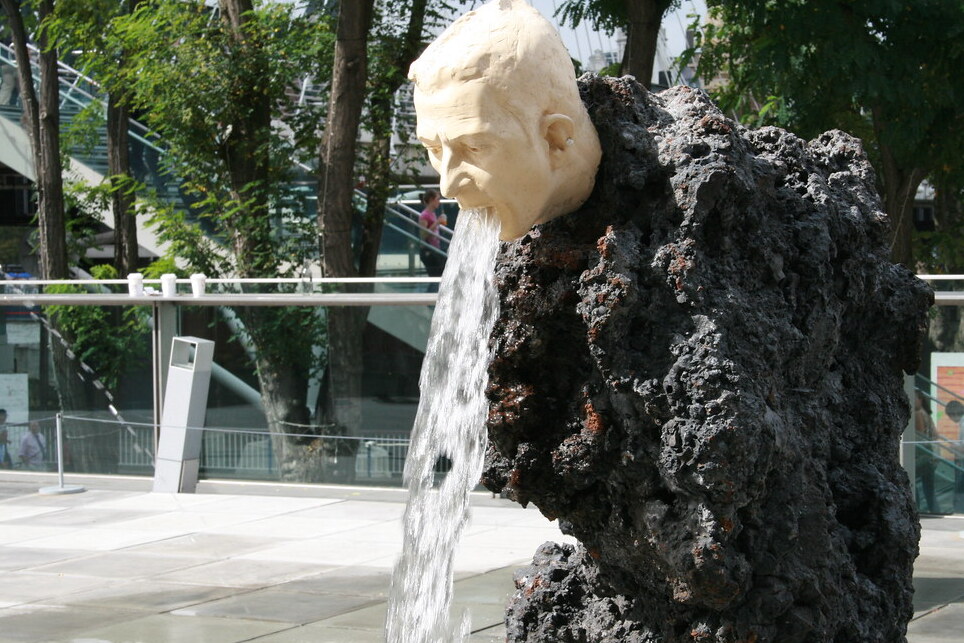

On the banks of the River Thames, where the rhythmic flow of water meets the vibrant pulse of London, lies a striking piece of contemporary art that evokes fascination and a hint of discomfort. The Big Giving, a remarkable installation by German sculptor Klaus Weber, stands defiantly against the backdrop of the iconic Jubilee Footbridge. This arresting artwork features a figure that appears to be vomiting water from a white head on a black, lava-like body, challenging viewers to confront the visceral connections between bodily functions and the natural world.
History and Origins
The South Bank area of London has a rich historical tapestry, dating back to the Roman era when it served as a vital ferry crossing. By the 19th century, it evolved into a cultural hub, home to the London County Council and the renowned Southbank Centre. The introduction of art installations like The Big Giving is part of a broader trend of revitalizing public spaces through contemporary art. Klaus Weber's work, unveiled in 2011, fits seamlessly into this narrative. His exploration of bodily forms as a means of expression reflects a historical dialogue with the human condition, drawing from the ancient practice of using art to depict the corporeal and the spiritual.
Art and Architecture
Weber's The Big Giving is a striking example of contemporary art that pushes the boundaries of traditional sculpture. Rendered in black stone reminiscent of volcanic rock, the piece captures the essence of primal energy. The contrasting white head not only draws the eye but also symbolizes purity and the juxtaposition of life and decay. This artistic tension resonates with the surrounding urban landscape, which is punctuated by buildings like the National Theatre and the Hayward Gallery, both known for their bold architectural styles. The South Bank is celebrated for its commitment to public art, making it a focal point for both locals and tourists alike.
Local Culture and Traditions
The South Bank is not just an artistic enclave; it’s a vibrant cultural district that embodies the spirit of London. The area hosts numerous festivals throughout the year, including the Southbank Centre’s Winter Market and the London Literature Festival, which celebrate creativity in all its forms. Additionally, the proximity to institutions like the Royal Festival Hall fosters a rich musical tradition, making it a hotspot for live performances ranging from classical concerts to contemporary gigs. Local customs often revolve around community engagement, with street performers adding to the lively atmosphere, creating a microcosm of London’s diverse cultural landscape.
Gastronomy
A visit to the South Bank is incomplete without indulging in its culinary offerings. The area boasts a variety of eateries that reflect the melting pot of London’s gastronomic scene. From the artisanal delights of Borough Market to the casual dining options along the river, visitors can savor everything from traditional fish and chips to innovative street food. Don’t miss out on trying a London Dry Gin, a spirit that captures the essence of the city’s rich distilling history, often enjoyed in one of the many riverside pubs with a view of the Thames.
Lesser-known Curiosities
While many flock to see the iconic London Eye and the majestic Houses of Parliament, few take the time to appreciate the subtler nuances of the South Bank. Did you know that the area was once home to the Festival of Britain in 1951? This event marked a post-war celebration of British arts and innovation, leaving a lasting legacy on the cultural landscape. Additionally, if you look closely at The Big Giving, you may notice its water flow is not merely decorative; it symbolizes the cycle of giving and receiving, a reminder of nature’s interconnectedness that often goes unnoticed amidst the urban hustle.
Practical Visitor Information
The best time to visit the South Bank is during the spring and summer months when outdoor events and festivals flourish. Early morning or late afternoon visits offer a more tranquil experience, allowing you to fully engage with the art installations and street performances. When exploring, take a moment to soak in the views of the Thames, and look out for the myriad of sculptures that dot the landscape. Don’t forget to wear comfortable shoes, as the area is best experienced on foot, allowing you to meander through its lively streets and hidden gems.
As you wander through the rich tapestry of art, culture, and history that the South Bank offers, consider using the Secret World app to effortlessly plan a personalized itinerary that captures the essence of London.


