



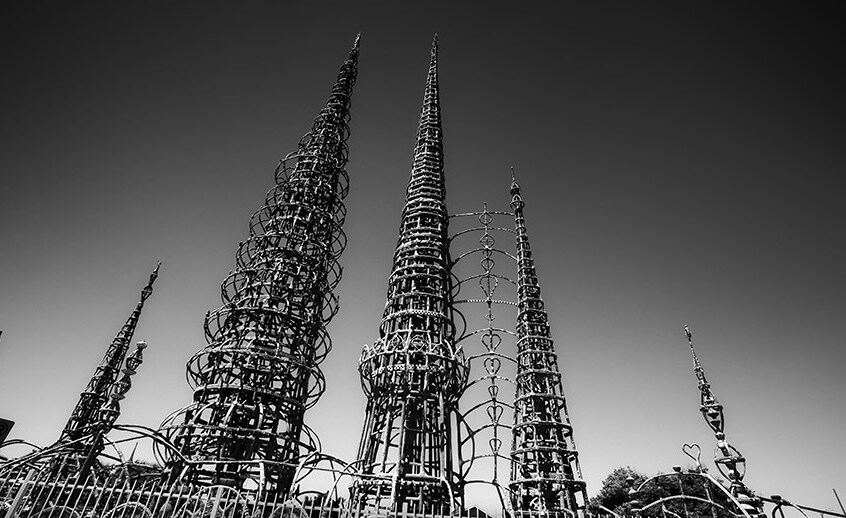
In the vibrant tapestry of Los Angeles, where modernity and history dance in a delicate balance, the Watts Towers stand as a testament to human creativity and resilience. Rising from the heart of the Watts community, these awe-inspiring sculptures are not merely physical structures but symbols of hope and determination. Conceived by Italian immigrant Sabato "Simon" Rodia over a span of 33 years, from 1921 to 1954, the towers tell a story of individual vision and community spirit.

Rodia, arriving in America with nothing but dreams, dedicated his life to the creation of the towers he lovingly named "Nuestro Pueblo," or "Our Town." Using steel pipes and rods, he meticulously adorned them with a mosaic of found objects—glass bottles, seashells, pottery shards—transforming refuse into radiant beauty. The towers, reaching nearly 100 feet at their peak, are an extraordinary example of outsider art, built without formal architectural training or machinery, relying solely on hand tools and sheer determination.
The architecture of the Watts Towers is an eclectic blend of naïve art and ingenious engineering. Rodia's Italian heritage is evident in the structures' resemblance to the spires of Italian cathedrals, yet they remain firmly rooted in the local landscape. The use of reinforced concrete and unconventional materials like broken tiles and mirror fragments gives the towers an ethereal quality, reflecting sunlight in a dazzling display of colors. This unique architectural style has cemented the towers as a significant piece of the Los Angeles art scene, drawing comparisons to Antoni Gaudí's works in Barcelona.

Beyond their artistic allure, the Watts Towers hold profound cultural significance for the local community. Situated in a historically marginalized area, they have become a symbol of resilience and pride. The local culture is rich with traditions that echo the diversity of the neighborhood. One of the most celebrated events is the Watts Towers Day of the Drum Festival and the Simon Rodia Watts Towers Jazz Festival, which take place annually, celebrating the area's artistic and cultural heritage through music, dance, and community gatherings.
As you explore the vibrant streets surrounding the Towers, you'll find a culinary scene as diverse as the community itself. The gastronomy here reflects the multicultural makeup of Los Angeles, with influences ranging from Mexican street tacos to soul food classics like fried chicken and collard greens. A visit to Watts isn't complete without sampling dishes such as tamales or gumbo, which capture the spirit of the neighborhood's rich cultural tapestry.
Amidst the well-trodden paths, the Watts Towers harbor lesser-known curiosities that often escape the casual observer. For instance, each tower is adorned with embedded objects that tell their own stories—some pieces of crockery are believed to have been used by Rodia's family, while others were contributed by local residents, creating a collective memory etched in concrete. Furthermore, the towers have withstood numerous challenges over the decades, including attempts at demolition and natural disasters, yet they continue to stand, a testament to their resilience and the community's dedication to preserving them.
For those planning to visit, the best time is during the fall, when the weather is mild and the annual festivals breathe life into the area. The Watts Towers Arts Center offers guided tours that provide insights into Rodia's life and vision, enhancing the visitor experience. It's advisable to wear comfortable walking shoes, as exploring the neighborhood can be a delightful yet extensive endeavor. Pay attention to the intricate details in the mosaics, and try to spot the myriad of repurposed items that form the towers' skin—each piece tells a fragment of a story.
In a city known for its sprawling urban landscape and glittering entertainment industry, the Watts Towers stand apart as a symbol of what can be achieved through passion and perseverance. They are a reminder that beauty can arise from the most unexpected places and that art has the power to unite communities across boundaries of time and culture.
