



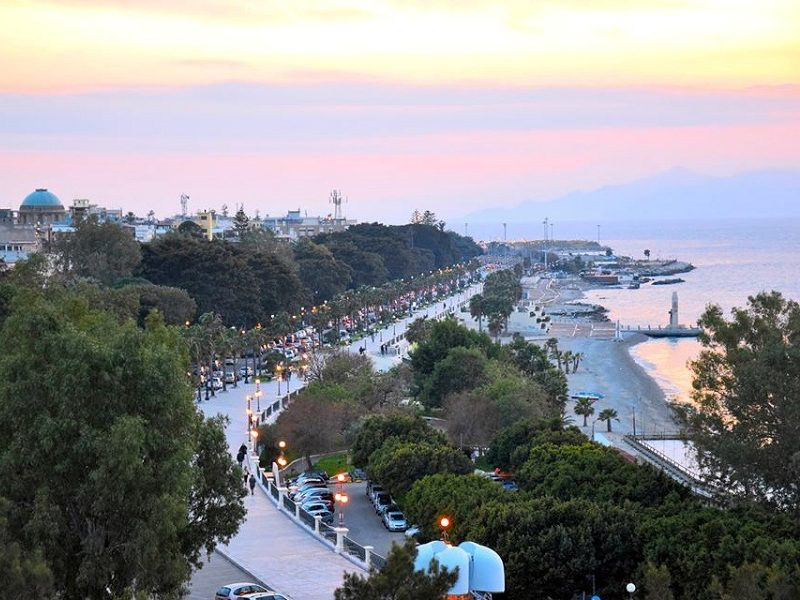
The Lungomare Falcomatà in Reggio Calabria, often hailed as Italy's most beautiful kilometer, is actually a stunning seaside promenade stretching about 1.7 km along the shores of the Strait of Messina. This magical, romantic walkway serves as the natural extension of the city's historic center and remains an essential destination for locals and visitors alike who cherish the allure of the Mediterranean Sea, breathtaking views, and timeless charm.
Locally known as Via Marina, the promenade is a vibrant pedestrian avenue lined with lush palm trees, majestic ficus magnolioides, and other exotic Mediterranean plants. It offers panoramic vistas across the strait to Sicily and, on clear days, the majestic silhouette of Mount Etna—creating an unforgettable postcard-perfect scene that evolves beautifully from sunrise to sunset.
A History of Resilience and Rebirth
The Lungomare Falcomatà has been reborn multiple times, shaped by Reggio Calabria's turbulent seismic past. Its origins trace back to the aftermath of the devastating 1783 earthquake, when engineer Giovan Battista Mori designed an open seafront space with elegant buildings known as the Real Palazzina. The modern incarnation emerged after the catastrophic December 28, 1908 earthquake, which destroyed much of the city and claimed over 25,000 lives. During the post-quake reconstruction in the early 20th century, the avenue was lined with graceful Liberty-style (Art Nouveau) buildings that still define its elegance today.
In the 1990s, under Mayor Italo Falcomatà (to whom the promenade has been dedicated since 2008), it underwent its "fourth rebirth" during the celebrated Primavera di Reggio ("Spring of Reggio"). Major urban renewal projects added multi-level terraces, pedestrian paths, integrated gardens, and seamless beach-city connections, transforming it into one of Europe's most expansive and harmonious public waterfronts.
Liberty Architecture and Hidden Historical Gems
This open-air museum features exquisite Liberty architecture from the early 1900s reconstruction era:
- Palazzo Zani, with its intricate floral motifs and wrought-iron details.
- Palazzo Spinelli, a refined example of eclectic Liberty design.
- Villa Genoese Zerbi, a fairy-tale villa with turrets and balconies that evoke pure romance.
Scattered along the path are traces of ancient history: remnants of Greek walls from Rhegion (founded in 720 BC by Chalcidian Greeks), a section of Roman baths, and a monumental fountain that quietly narrate the city's Greco-Roman roots.
Rising between the sea and the promenade—with its stone parapet and classic Liberty street lamps—stands the Arena dello Stretto (also known as Arena Ciccio Franco), a Greek-style open-air theater that hosts summer concerts, theater performances, dance shows, and cultural festivals. In recent years, it has featured events like the Sunsetland Summer Festival and Festival Morgana, with DJ sets at sunset and national/international artists drawing lively crowds.
On the nearby Porto Salvo pier facing the arena, the monument to King Vittorio Emanuele III commemorates his first landing on Italian soil as monarch on July 31, 1900, after the assassination of his father Umberto I.
The Enchanting Fata Morgana Mirage
What truly elevates the Lungomare to legendary status is the rare Fata Morgana mirage, one of the world's most spectacular optical phenomena, visible primarily from the Calabrian coast of the Strait of Messina. On hot, muggy days—especially at dawn or dusk—temperature inversions and air density layers refract light, making distant Sicily appear dramatically enlarged, inverted, floating, or impossibly close, with crystal-clear details of buildings, vehicles, and even people. Named after the Arthurian sorceress Morgan le Fay (Fata Morgana in Italian), who legend says conjured illusory castles to lure sailors to their doom, this mirage is a unique natural spectacle rarely seen with such intensity elsewhere.
The True Story Behind "Italy's Most Beautiful Kilometer"
The iconic phrase is frequently credited to poet Gabriele D'Annunzio, but historical research by local scholar Agazio Trombetta proves this attribution false: D'Annunzio never visited Reggio Calabria, and no reference exists in the Dannunziana archives. The quote likely originated in 1957 during a live radio broadcast of the Giro d'Italia from Reggio, when sportscaster Nando Martellini enthusiastically repeated it—attributing it to D'Annunzio—after hearing it from excited locals. The legend stuck, and the promenade has worn the title proudly ever since!
Why Visit Lungomare Falcomatà Today
Whether for a leisurely stroll, artisan gelato by the sea, sunset aperitivo, or simply soaking in the views, this avenue delivers pure Mediterranean magic. In the evening, the lights of Sicily twinkle across the water; at golden hour, the strait glows. It's a perfect blend of history, nature, culture, and romance.
SEO keywords: Lungomare Falcomatà Reggio Calabria, most beautiful kilometer in Italy, Fata Morgana mirage Strait of Messina, Arena dello Stretto events, Liberty buildings Reggio Calabria, Via Marina Reggio, Italo Falcomatà promenade.
If you're exploring Calabria, make time for this gem—it's far more than a kilometer; it's a living slice of Mediterranean paradise!
