
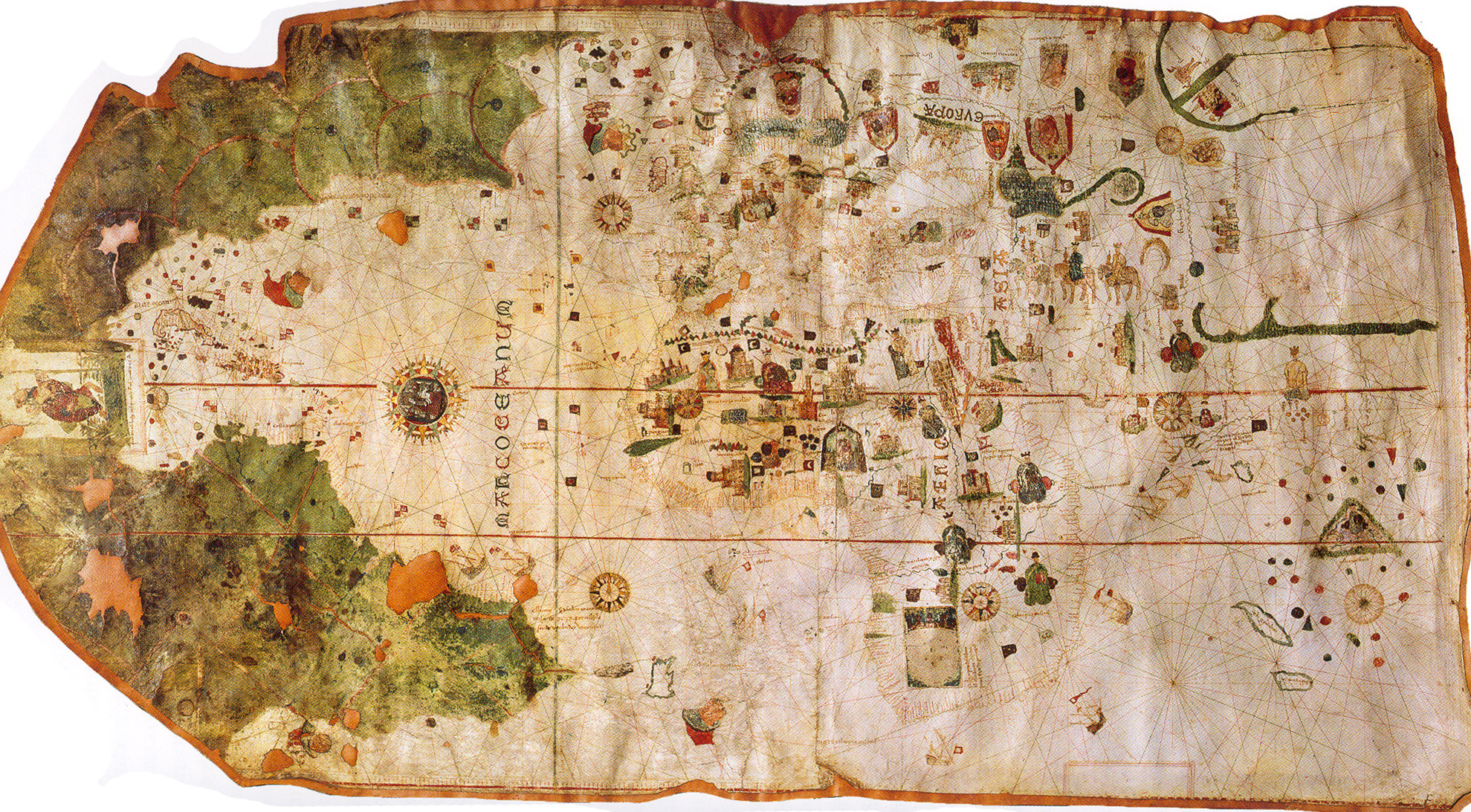

Nestled within the walls of Museo Naval in Madrid, the Juan de la Cosa Map holds a significant place in the annals of exploration. Discovered serendipitously in a Parisian bookshop in the early 20th century, this remarkable artifact is celebrated as the earliest known map to depict the Americas. The map is a testament to the spirit of adventure and discovery that characterized the Age of Exploration, a period marked by daring voyages and uncharted territories.
History and Origins The origins of the Juan de la Cosa Map date back to the early 16th century, crafted by Juan de la Cosa, a navigator and cartographer who joined Christopher Columbus on three of his voyages. Born in Cantabria around 1460, de la Cosa was not only a skilled sailor but also a prominent figure in the maritime history of Spain. His map, completed in 1500, is a culmination of knowledge gained from these expeditions and reflects the changing understanding of the world during that time.
De la Cosa’s most notable contribution was his role as captain of the Santa Maria, Columbus's flagship on the first voyage to the New World in 1492. After the shipwreck of the Santa Maria in 1492, he continued his voyages aboard the Marigalante and later, La Niña. Interestingly, while Columbus was known for his explorations, he left behind no surviving maps of his own, making de la Cosa's contributions even more invaluable.
Art and Architecture The Juan de la Cosa Map is not just a navigational tool; it is a work of art that showcases the artistic styles of the era. The map features intricate illustrations and labels, beautifully rendered in a style typical of the late Gothic period. The craftsmanship and attention to detail reflect the cartographic practices of the time, with regions depicted in vibrant colors and embellished with illustrations of flora, fauna, and mythical creatures.
The Museo Naval, where the map is housed, is a striking example of modern architecture that complements its historical exhibits. Opened in 1843, this museum stands as a tribute to Spain’s maritime history, featuring a blend of contemporary design and traditional elements that enhance the visitor experience.
Local Culture and Traditions Madrid is a city rich in culture, and its connection to the Age of Exploration is celebrated through various local customs and festivals. The Fiesta de la Hispanidad, celebrated on October 12, commemorates Christopher Columbus's arrival in the Americas and highlights Spain's historical ties to the New World. During this festive occasion, Madrid comes alive with parades, cultural events, and a sense of national pride.
Another local custom is the tradition of tapas, small dishes that reflect the communal spirit of Spanish dining. Visitors to the city can enjoy tapas in various neighborhoods, with each offering its unique twist on classic dishes. The La Latina district is particularly famous for its vibrant tapas bars, making it a perfect spot to soak in local culture.
Gastronomy Speaking of food, Madrid's culinary scene is a feast for the senses. Traditional dishes like cocido madrileño, a hearty stew made of chickpeas, meats, and vegetables, offer a taste of the region's rich agricultural heritage. Churros con chocolate is another beloved treat, often enjoyed for breakfast or as a snack, providing a sweet contrast to the savory offerings of the city.
To wash it all down, locals recommend vermouth, a fortified wine that has become a staple in Madrid’s tapas culture. Enjoying a glass at a local bar is a must, especially in the historic La Latina neighborhood.
Lesser-Known Curiosities Beyond its historical significance, the Juan de la Cosa Map houses lesser-known stories. For instance, the map includes references to Tierra de Labrador, highlighting early European interest in Newfoundland long before it was widely known. Additionally, the map was initially intended as a commercial tool to attract investment for further exploration, showcasing the economic motivations behind these voyages.
Another intriguing detail is the map’s inclusion of various inaccuracies that reflect the limited geographical knowledge of the time. Yet, it is precisely these quirks that provide insights into the evolving understanding of the world during the Age of Exploration.
Practical Visitor Information The best time to visit Madrid is during the spring (March to May) and fall (September to November) when the weather is mild and the city is vibrant with local events. The Museo Naval is open year-round, but checking its schedule for special exhibitions or events is advisable.
When visiting, look for the detailed illustrations on the map, which reveal much about the contemporary worldview of the early 16th century. Additionally, consider exploring nearby attractions such as the Royal Palace and Plaza Mayor, which further enrich the historical narrative of Madrid.
In conclusion, the Juan de la Cosa Map is more than just a historical artifact; it represents a pivotal moment in our understanding of geography and exploration. Its preservation within the Museo Naval allows visitors to connect with a legacy that shaped our world. To fully experience the rich tapestry of Madrid, utilize the Secret World app to craft a personalized itinerary that suits your travel desires.


