A narrow path that descends along the rock, a few minutes of walking through the coastal vegetation, and then the sea opens up before your eyes in all its transparency. White Sand Beach, locally known as Pantai Pasir Putih, is located in the Manggis district, in the Karangasem region, in the eastern part of Bali. It is one of the few beaches on the island that can only be reached on foot, via a short but steep path that descends from the cliff, which keeps it away from the more intense tourist flows that characterize the southern coasts of the island.

What strikes immediately, even before setting foot on the sand, is the color of the water. Not the usual flat blue of postcards, but a sequence of shades that ranges from aquamarine green in the shallower areas near the shore to a deep blue almost cobalt where the seabed drops sharply. The sand is light, fine, and sharply contrasts with the dark volcanic rocks that frame the cove on both sides, creating a natural frame that visually isolates this corner of the coast from the rest of the landscape.
The seabed visible from the shore
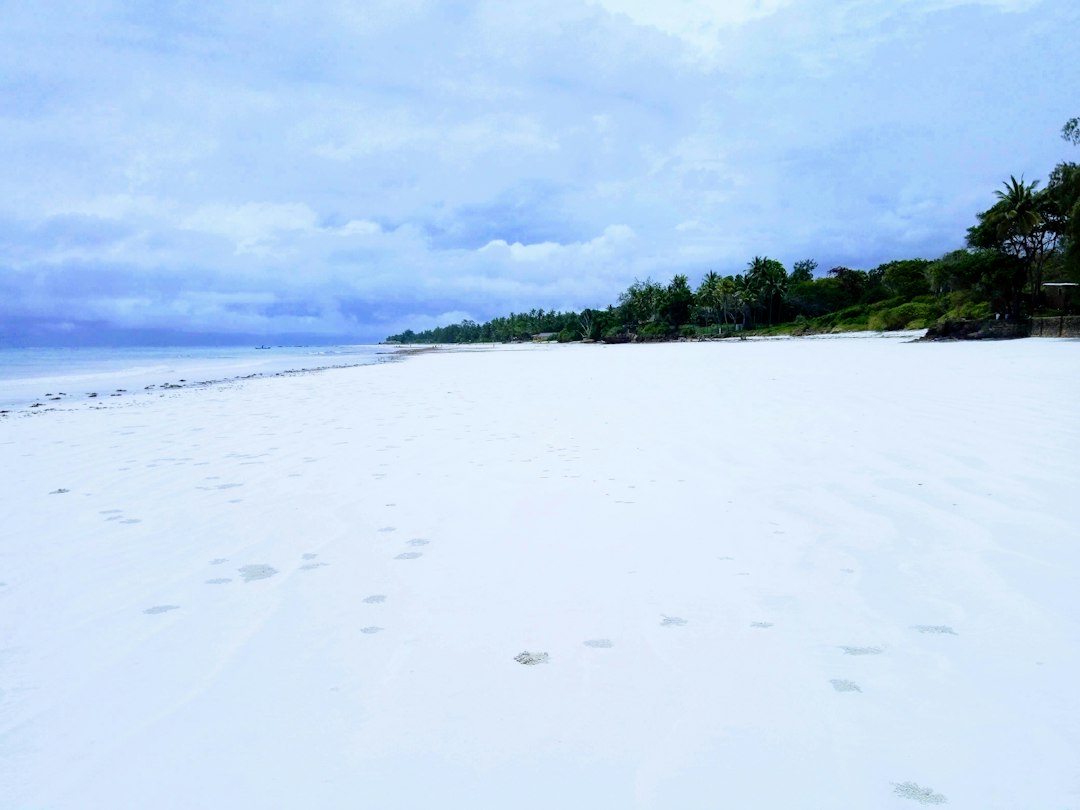
One of the most extraordinary features of this beach is the ability to observe the coral reef directly from the shore, without the need for a mask or fins. The clarity of the water is such that during the central hours of the morning, when sunlight strikes almost perpendicular to the surface, the coral formations can be clearly distinguished just a few meters from the shore. The silhouettes of fish can be seen moving among the corals, and in some areas it is possible to follow the contour of the seabed up to where the light no longer reaches.
This exceptional visibility is linked to the geographical position of the bay: being sheltered from the stronger winds and currents that affect the southern coast of Bali, the water remains almost always still and free of suspended sediments. Those who bring a mask and snorkel can explore the reef just a few steps from the shore, finding a variety of corals and tropical fish that are now difficult to see on many more crowded beaches.

How to get there and the path from the cliff
The beach can be reached from the village of Manggis, located along the provincial road that connects Padangbai — the main ferry port of Bali to the Gili Islands and Lombok — with Candidasa. Padangbai is about 3 kilometers from Manggis, and many visitors combine the two destinations in the same day. From the main road, it is necessary to take a marked path that descends towards the coast: the walk takes about 10-15 minutes and has some downhill sections on rocks, so it is advisable to wear closed shoes or sandals with non-slip soles.

There is no equipped parking, but it is possible to leave the scooter or car along the road near the entrance of the path. Services on the beach are minimal: a few local vendors offer cold drinks and snacks, but do not expect organized beach facilities. This lack of infrastructure is, in fact, part of the charm of the place.
The atmosphere and the best time to visit it

The atmosphere of White Sand Beach is that of a nearly private cove. On weekdays, especially early in the morning, you may find the beach almost deserted, with only a few local fishermen setting their nets. The background noise is that of the sea and the wind among the vegetation, without amplified music or voices from organized groups. It is a setting that encourages slow pauses, reading, or simply observing the water.
The best time to visit is between 8 and 11 in the morning, when the light is optimal for seeing the seabed and the heat is not yet unbearable. The dry season, which typically runs from April to October, ensures more stable marine conditions and better visibility. During the rainy season, from November to March, the sea can be rougher and visibility reduced, although the beach remains accessible. It is preferable to avoid weekends, when local visitors from Denpasar and nearby towns tend to crowd the lesser-known beach destinations in eastern Bali.
What to bring and what to expect
Given the scarcity of services, it is essential to arrive prepared. Bringing enough water, sunscreen, and something to eat is indispensable, especially if you plan to stay for more than an hour. Mask and snorkel transform the visit into a completely different experience: the reef near the shore is accessible even to those without snorkeling experience, thanks to the calm waters and not overly deep bottoms in the coastal area.
The beach is not suitable for very small children without constant supervision, as the bottom drops off quickly and some areas have slippery rocks just below the surface. For everyone else, it is one of the few opportunities in eastern Bali to find a stretch of coast that is still intact, where the marine and terrestrial landscape shows itself in its most authentic form.