
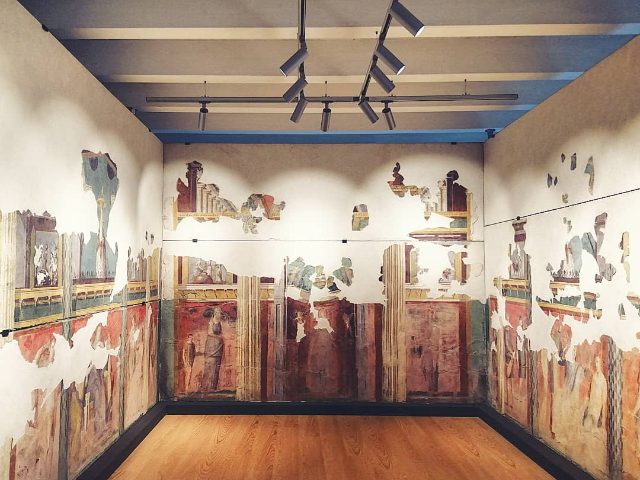

Hidden in the shadow of Mount Vesuvius and in close proximity to Pompeii, lies the small community of Terzigno. Though it may appear to be a modest, primarily agricultural area, its roots trace back to ancient times when the land was dotted with rustic Roman villas. These villas, primarily concerned with the production of goods like oil and wine, offer a fascinating glimpse into the daily lives of those who lived here millennia ago.
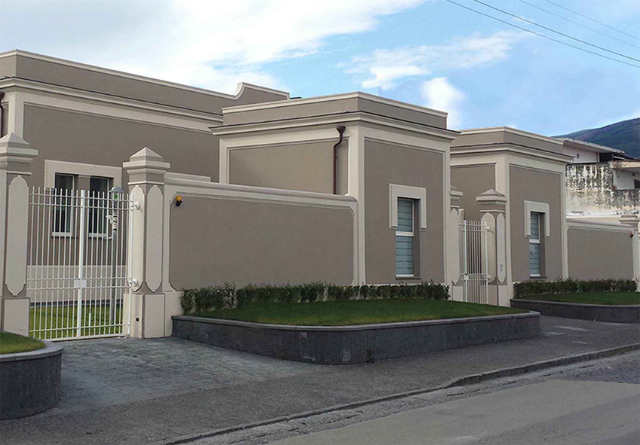
In 1981, the extraction of volcanic material at the Ranieri quarry led to an astonishing discovery: three ancient Roman villas, known as Villa 1, Villa 2, and Villa 6. Buried approximately 20 meters below the ground level, these structures were enveloped by the debris of the infamous AD 79 Vesuvius eruption—the same one that decimated Pompeii. These villas have yielded a treasure trove of artifacts, which have now found a home in Terzigno’s new MATT - Museo Archeologico Territoriale di Terzigno.
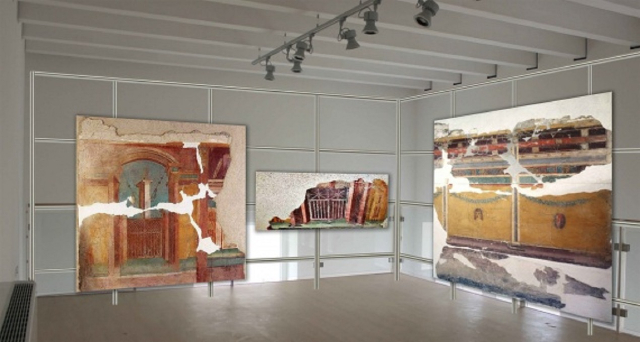
This museum is housed in a building that was originally a slaughterhouse constructed in the 1940s and subsequently abandoned. Thanks to a partnership between local authorities and the Vesuvius National Park, this structure has been returned to its former splendor. Located on the first floor, the museum exhibit delves into the Roman villas discovered at the Ranieri quarry. On display, you’ll find an array of pottery, agricultural tools, and stunning frescoes from Villa 6—the largest of the three and the only one that also includes a residential area. Remains of five individuals were discovered here, including a woman adorned with precious jewelry and a purse containing 21 denarii.
Among the artifacts, the gold jewelry stands out as a particularly exquisite find. These pieces have gained international recognition, symbolizing the fine craftsmanship and elegance of Roman goldsmithing.
The MATT museum serves as a poignant reminder that even in the most unassuming places, history can be hiding just beneath the surface, waiting to be rediscovered. So, if you find yourself in the vicinity of Vesuvius or Pompeii, a detour to Terzigno offers an enriching, off-the-beaten-path experience that should not be missed.


