


Nestled in the heart of Hyderabad, the Mecca Masjid stands as a majestic testament to the city's rich cultural tapestry. This architectural marvel, which can accommodate up to 10,000 worshippers, is not just one of the largest mosques in India but also a beacon of the city's Islamic heritage. Its origins date back to 1617 when it was commissioned by Mohammed Quli Qutb Shah, the founder of Hyderabad, embedding it deeply into the city's historical narrative.
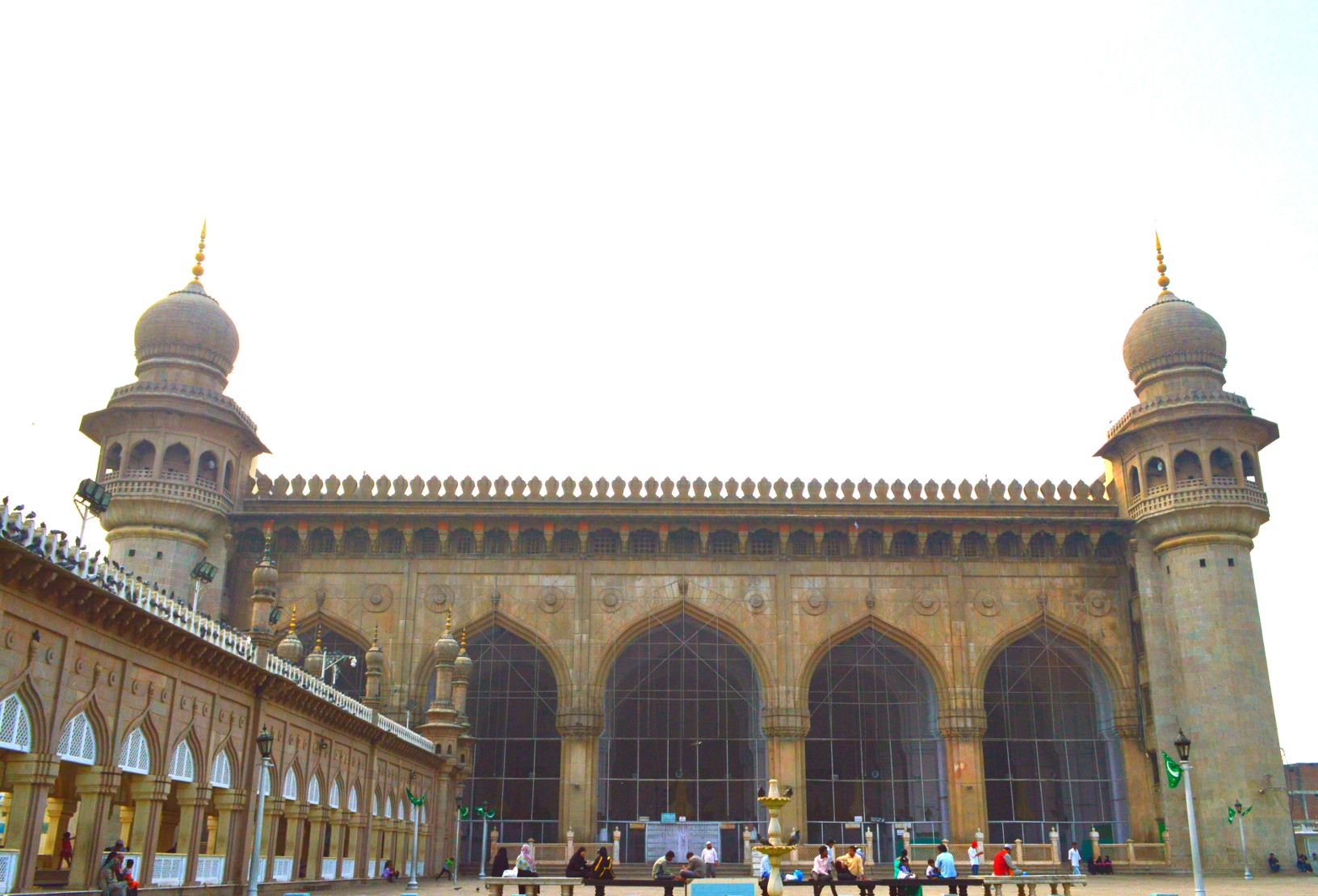
The mosque's construction spanned almost eight decades, enduring through the reigns of several rulers. The foundation stone is said to have been laid by the Qutb Shahi rulers themselves, with bricks made from the soil brought from Mecca, lending the mosque its sacred name. It was finally completed in 1694 under the reign of the Mughal Emperor Aurangzeb, who ensured its grandeur by infusing Mughal architectural elements into its design.
Architecturally, the Mecca Masjid is a breathtaking fusion of Islamic art and indigenous motifs. The vast prayer hall, over 75 feet high, is supported by soaring granite columns, each carved from a single slab. The main hall's ten arches, split into five on either side, are adorned with intricate carvings that reflect the artisanship of the era. The mosque's façade, with its towering minarets and ornate balustrades, offers a glimpse into the Mughal influence, yet retains the distinctive styles of the Qutb Shahi dynasty. Within the courtyard, the tombs of the Asaf Jahi dynasty rest peacefully, adding layers of history to this sacred space.

The mosque is not only a place of worship but also a vibrant cultural hub. During Eid, the atmosphere transforms into a scene of spiritual fervor and communal harmony. Thousands gather here to offer prayers, and the mosque resonates with the chants of the faithful. This confluence of spirituality and tradition makes Mecca Masjid a pivotal point for Hyderabad's Muslim community. The mosque's location near the historic Charminar and vibrant bazaars adds to its cultural significance, making it a centerpiece in the social and religious tapestry of the city.
Hyderabad itself is famed for its rich gastronomy, with dishes like Hyderabadi Biryani and Haleem being culinary treasures. Visitors to Mecca Masjid often explore the nearby streets to indulge in these local flavors. During Ramadan, the area around the mosque becomes a gastronomic delight, bustling with food stalls offering an array of delicacies like Sheer Khurma and Qubani ka Meetha. The aroma of spices and the sizzle of kebabs create an irresistible allure for food lovers.
Beyond its architectural splendor and cultural significance, the Mecca Masjid holds several lesser-known curiosities. One intriguing feature is the massive stones in the courtyard, which are believed to be remnants of the original structure. Legends also speak of a secret tunnel that once connected the mosque to the Golconda Fort, a testament to its strategic importance in times of yore. The mosque houses a library with ancient texts and manuscripts, preserving the scholarly heritage of the Islamic world.
For those planning a visit, the best time to explore Mecca Masjid is during the cooler months from November to March. This allows visitors to comfortably experience not just the mosque, but the surrounding historical landmarks. It's advisable to dress modestly, as a sign of respect, and to remove shoes before entering the prayer area. Engage with the locals, who are often eager to share stories of the mosque’s past, adding personal narratives to its rich history.
When visiting Mecca Masjid, pause to admire the intricately carved stone latticework, or jalis, which filter sunlight into mesmerizing patterns on the mosque's floors. Look for the marble slabs containing inscriptions of the Quran, each a testament to the artistic and religious devotion of its creators. As you stand in this centuries-old mosque, you are not merely a visitor but a part of a living history, surrounded by echoes of prayer and the enduring spirit of a city that has seamlessly blended its past with its present.


