
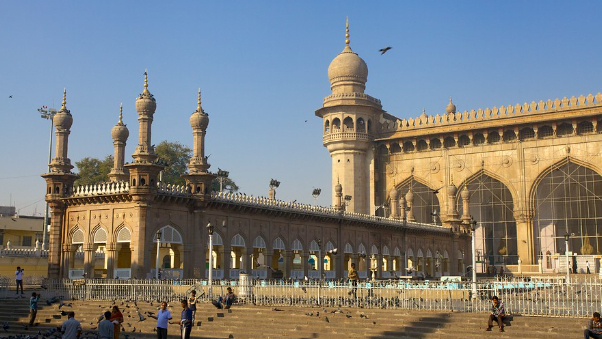

In the heart of Hyderabad, a city where history breathes through its every street and monument, stands the magnificent Mecca Masjid. A true marvel of architectural grandeur, this mosque is more than just a place of worship; it is a testament to the city's rich tapestry of history and culture. Originally commissioned by Mohammed Quli Qutub Shah, the fifth ruler of the Qutb Shahi dynasty, the construction of the mosque began in 1614 and spanned almost eight decades, finally reaching completion in 1694 under the reign of Mughal Emperor Aurangzeb.
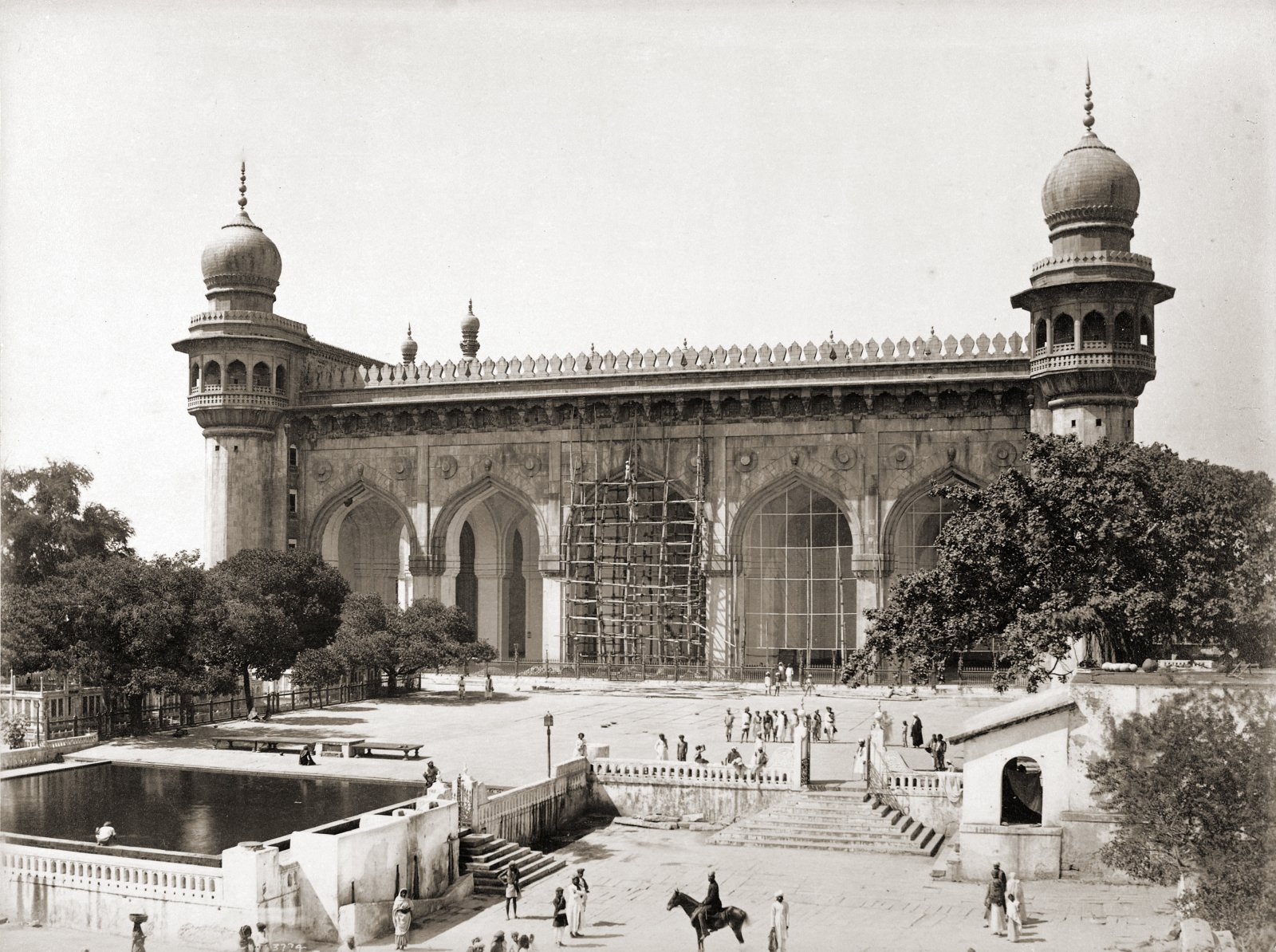
The origins of Mecca Masjid are steeped in reverence and ambition. Legend has it that Quli Qutub Shah had soil brought from the holy city of Mecca, which was then used in the construction of the mosque's central arch—an act that bestowed the mosque with its sacred name. The mosque's foundation was laid during a period of architectural flourishing in Hyderabad, blending Qutb Shahi artistry with later Mughal influences, creating a structure that is both imposing and serene.
The architecture of Mecca Masjid is a harmonious blend of Indo-Islamic styles. Built primarily of granite, the mosque's facade is adorned with intricate floral motifs and inscriptions. Its grandeur is accentuated by the massive arches and colonnades that greet visitors with a sense of awe and tranquility. The mosque's prayer hall, with its soaring height and vast space, is capable of accommodating up to 10,000 worshipers. Notably, the mosque houses a series of fifteen arches, each meticulously carved and symmetrically aligned, a testament to the precision and skill of the artisans of the time.
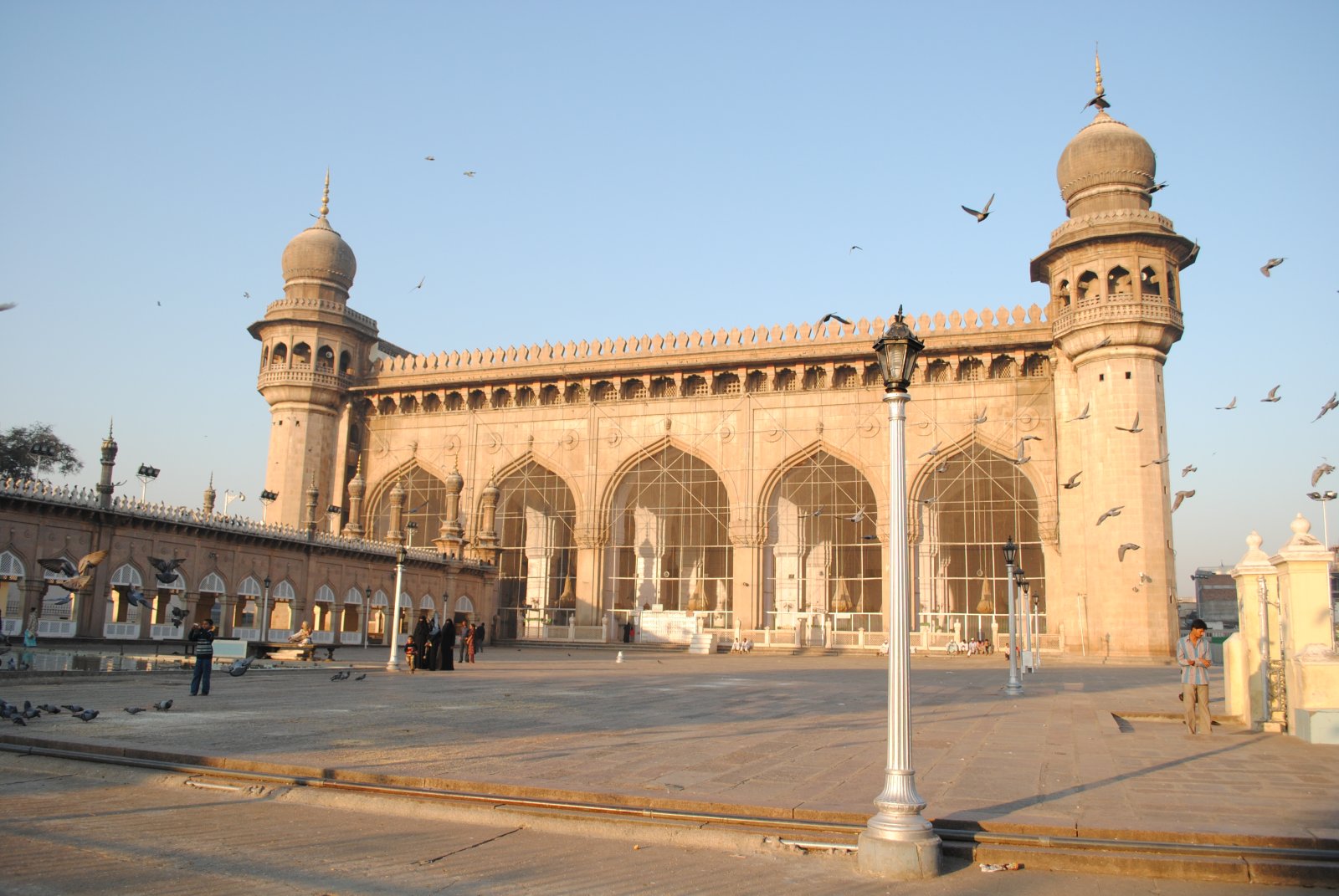
Beyond the architectural splendor, Mecca Masjid is deeply woven into the cultural and spiritual fabric of Hyderabad. It serves as a central hub for the city's Muslim community, particularly during the holy month of Ramadan and the festival of Eid al-Fitr, when the mosque comes alive with worshippers and the air is filled with a sense of devotion and community. The mosque is also a focal point during the annual Milad-un-Nabi, which celebrates the birth of the Prophet Muhammad, drawing thousands of visitors who gather to commemorate the occasion with prayers and sermons.
A visit to Mecca Masjid offers a sensory journey into Hyderabad's culinary traditions as well. The area surrounding the mosque is a haven for food lovers, offering a taste of the city's famed cuisine. Street vendors and small eateries serve up a variety of delicious dishes, from the aromatic Hyderabadi biryani, a fragrant rice dish cooked with marinated meat and spices, to the sweet indulgence of Qubani ka Meetha, a traditional dessert made from dried apricots. Don't miss out on the refreshing Haleem, a slow-cooked stew that is especially popular during Ramadan.
While the grandeur of Mecca Masjid is evident, there are lesser-known curiosities that enhance its allure. One such feature is the intricately designed courtyard, which houses a small pond believed to have been used for ablutions by the worshippers. Additionally, the mosque is flanked by two massive stone benches, said to have been hewn from single slabs of granite, which provide a quiet place for reflection and rest. These details, often overlooked, add depth to the understanding of the mosque's historical and cultural significance.
For those planning a visit, the best time to experience Mecca Masjid is during the cooler months from October to March, when the weather is pleasant and conducive to exploring the surrounding areas. Visitors are advised to dress modestly, respecting the sanctity of the site, and to remove their shoes before entering the prayer hall. As you wander through the mosque, take a moment to admire the craftsmanship of the arches and the serene ambiance that envelops this historic site.
In conclusion, Mecca Masjid is not just a monument of stone and mortar; it is a living, breathing relic of Hyderabad's past, echoing the city's legacy of cultural diversity and architectural brilliance. Whether you are drawn by history, architecture, or spirituality, a visit to Mecca Masjid promises an enriching experience, offering insights into the heart of a city that has, for centuries, been a crossroads of cultures and traditions.


