

In Meißen, a town of three thousand inhabitants on the Elbe in Saxony, the scent of wet clay mixes with that of coffee in the small cafés of the historic center. Here, since 1710, white porcelain has been produced that has made Germany famous throughout Europe. It is not the museum that is special, but the fact that around it, even today, artisans hand-paint every single plate, every cup, every figurine with the same gestures as three centuries ago.

The markets of Meißen are not souvenir stalls. They are shops where the owner knows the name of the person who decorated that teapot, where you can observe through the windows the artists at work, where the price reflects hours of manual painting. It is a rare experience: to see where what you buy truly originates, not to read on a sign that it was made by a machine in Asia.
The factory founded by Böttger
In 1710, King Augustus the Strong of Saxony had the porcelain factory built in Meißen, entrusting it to the chemist Johann Friedrich Böttger who had discovered the formula for creating European hard porcelain. This was not a minor detail: before that, only China and Japan knew how to do it. The factory occupied a strategic position in the Albrechtsburg castle, a Gothic building from the fifteenth century that overlooks the city from the hill.
Today the factory is still active on the same site, although only part of it is open to visitors as a museum. What impresses is not the size, but the continuity: the same kilns, the same techniques, the same blue marks of two crossed swords that certify authenticity from the eighteenth century to today. The entrance ticket costs around 12-15 euros and the visit takes on average 2-3 hours if you really want to observe the details.

The artisan markets of the historic center
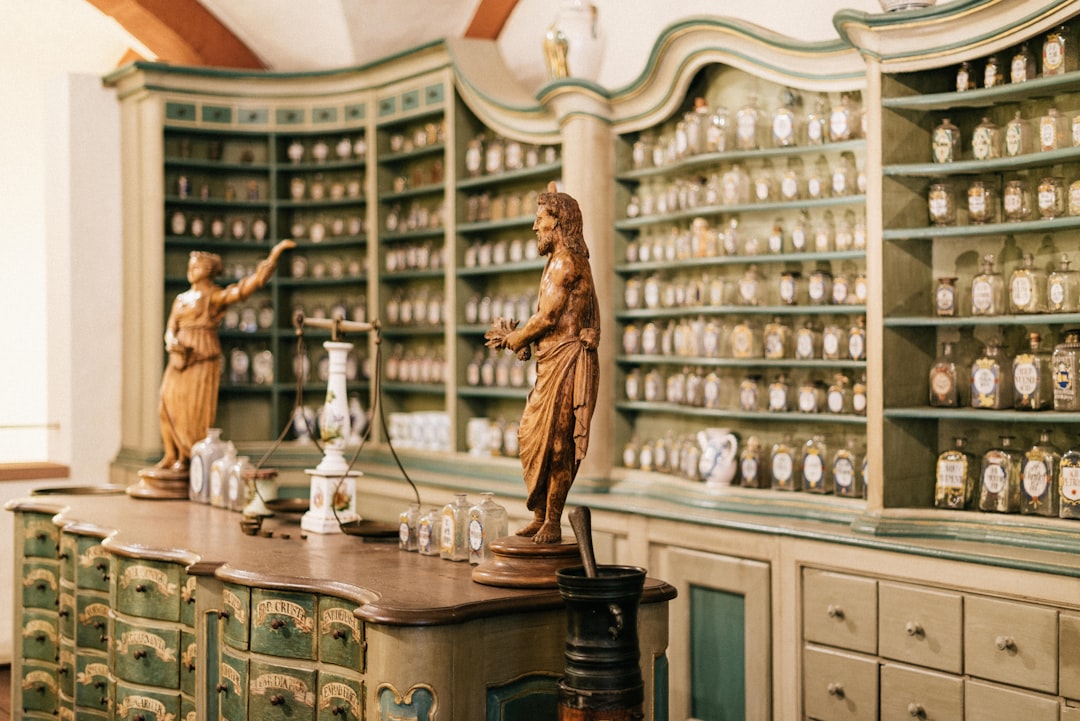
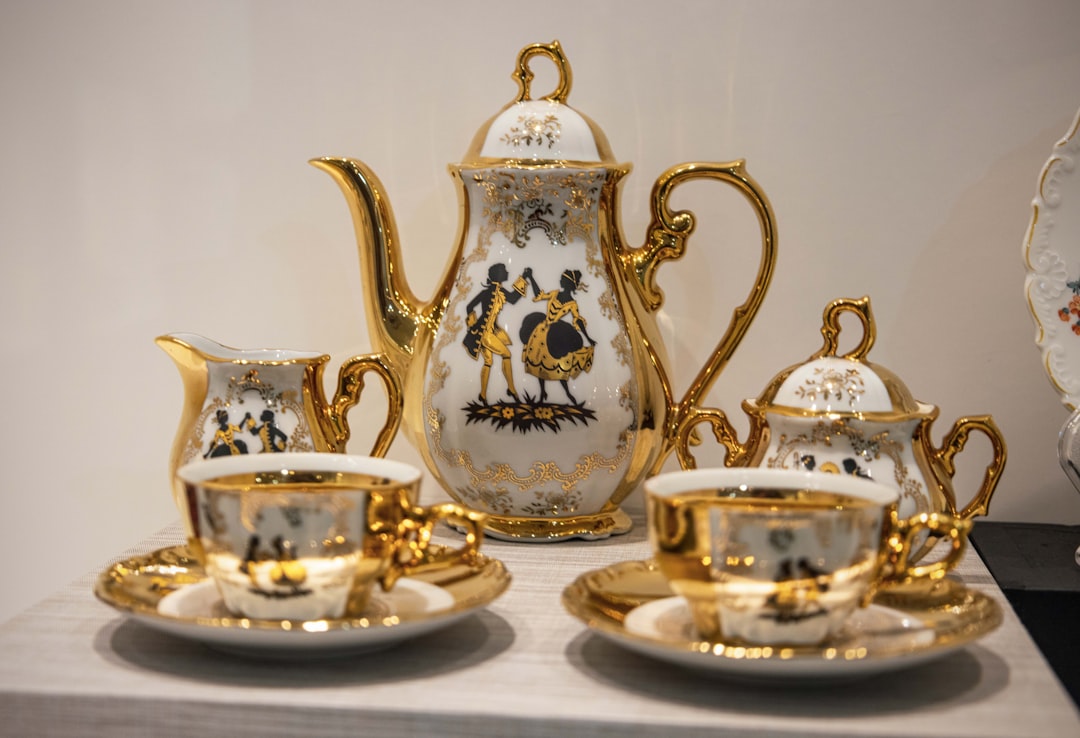
Descending from the castle towards the market square, you will find a dozen porcelain shops scattered along the cobblestone streets. They are not all the same. Some sell modern pieces still produced by hand, while others keep stocks of historical pieces from the 18th and 19th centuries. The windows display coffee sets painted with blue roses, figurines of shepherds in 18th-century clothing, dessert plates with golden edges.

In these spaces, you can hear the sound of brushes scraping the porcelain, the noise of the kilns, the concentrated silence of the artisans. Many shops have workshops visible to the public, separated by glass. It is common to see a woman hand-painting the details of a cup while customers watch, unhurried, without sales pressure. Prices vary greatly: a simple hand-painted plate costs between 30 and 60 euros, while rare or antique pieces can exceed 500 euros.
Colors, smells, and the rhythm of manual labor

The porcelain of Meißen has a particular white, almost translucent when viewed against the light. The predominant colors are cobalt blue (used from the very beginning), pink, and gold. The artisans work with oil color palettes, not modern chemical paints. The smell in the workshops is that of warm porcelain, slightly metallic, mixed with the scent of natural colors.
If you visit Meißen, the most important practical advice is this: go to the factory museum early in the morning, between 9 and 10, when the artisans are starting their work and concentration is at its peak. Avoid the crowded afternoons of organized groups. Spend at least an hour observing the work in the workshops, not rushing between the displays. Bring cash: many small shops in the center still do not accept cards. Meißen is easily reachable by train from Dresden (30 minutes), and it is a perfect half-day trip.
What to take away from Meißen
Do not buy the first piece you see. Browse through various shops, observe the differences in quality and style. A true piece from Meißen has the mark of two crossed swords on the bottom, often accompanied by a letter indicating the year of production. If you purchase from a shop with a visible workshop, ask for the name of the artisan who painted your piece: many will do so and will add a note with their signature.
Meißen is not a tourist destination built for quick consumption. It is a place where tradition is still alive, where the ancient craft still holds economic and cultural value. Returning home with a hand-painted cup, knowing who decorated it and in which workshop, means taking away a small part of that three-century continuity.


