
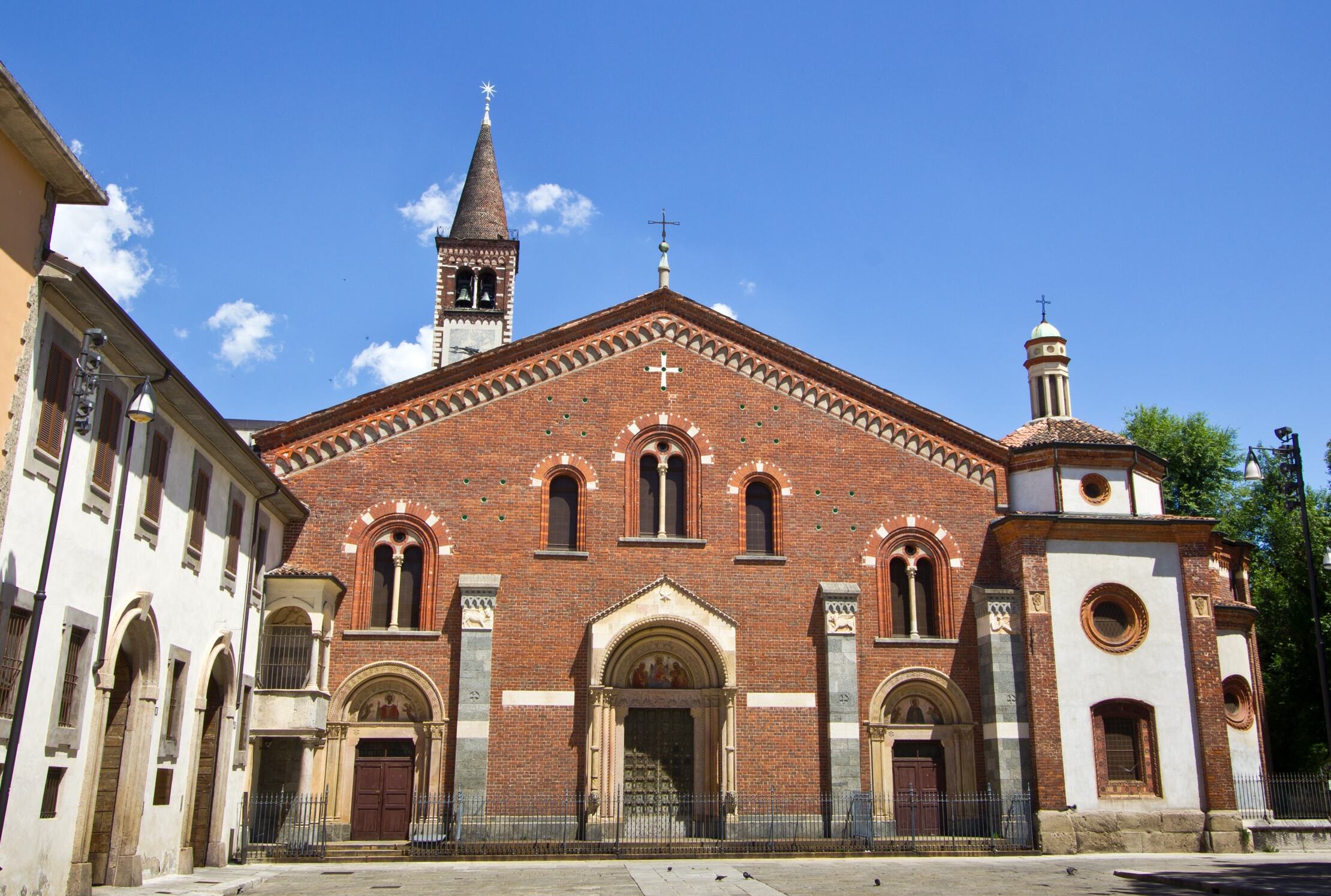

Nestled along one of Milan's vital thoroughfares leading to Pavia, the Basilica of S. Eustorgio stands as a testament to the city's rich tapestry of history and faith. This venerable church not only serves as a spiritual sanctuary but also as a cultural landmark that has witnessed centuries of Milanese life.
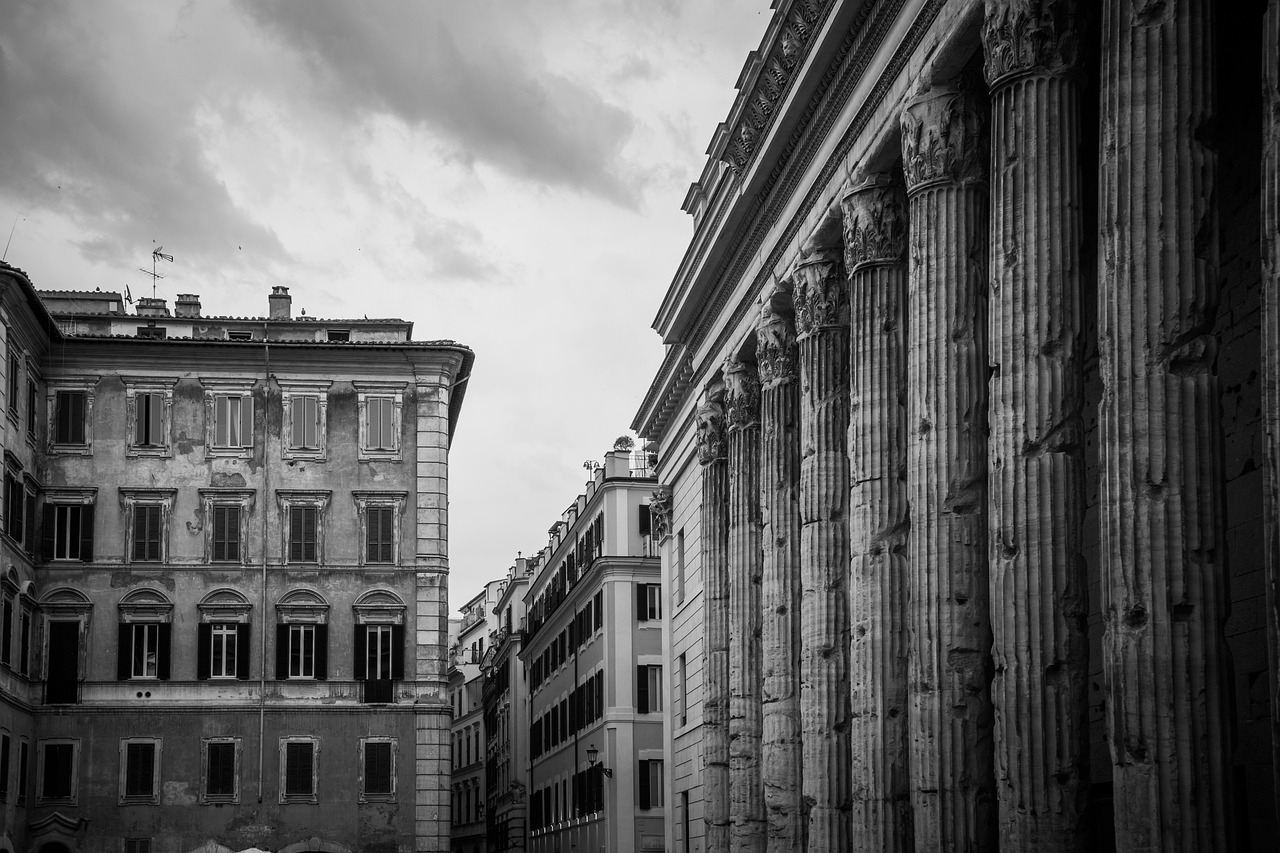
The origins of the Basilica of S. Eustorgio are steeped in legend and early Christian history. Founded in the 4th century by St. Eustorgius, who is believed to have brought the relics of the Three Magi to Milan, the basilica has undergone numerous transformations. The current structure reflects a blend of architectural styles, primarily influenced by Romanesque and Gothic designs. Beneath the apse, visitors can still glimpse remnants of the original early Christian church, a silent witness to the faith that flourished here.
Throughout the centuries, the basilica has been pivotal in the ecclesiastical landscape of Milan. In the 13th century, it became associated with the Dominican Order, leading to significant modifications aimed at enhancing its functionality for preaching. The open layout, characterized by a harmonious blend of the main and side spaces, was designed to foster a sense of community among congregants, allowing them to engage fully with the liturgy.
The architectural beauty of the basilica is exemplified by its striking bell tower, completed between 1297 and 1309. Standing at an impressive 73 meters, it is the tallest in Milan, adorned with a star on its spire — a nod to the guiding star of the Magi. The façade, with its distinct gabled roof, houses a marble pulpit installed in 1597, replacing the original from which St. Peter Martyr is said to have preached. The intricate capitals and the rich Romanesque elements in the apse area further enhance its architectural significance.
Inside the basilica, art aficionados will find a treasure trove of masterpieces. The nave is lined with stunning frescoes and sculptures that narrate biblical stories and the lives of saints. Notable among these is the Fresco of the Holy Trinity by Giovanni Battista Crespi, also known as Il Cerano, which captivates with its vivid colors and emotional depth. The church also houses important relics and altarpieces that reflect the spiritual heritage of Milan.
Local culture and traditions surrounding the Basilica of S. Eustorgio are deeply entwined with the city's religious life. The basilica serves as the starting point for the procession of the new bishop of Milan, a ritual that underscores its historical importance. Additionally, the area around the basilica comes alive during the Feast of the Three Magi, celebrated every January 6th, drawing both locals and tourists to partake in the festivities that honor the church's patronage.
No visit to the basilica would be complete without indulging in the local gastronomy. The surrounding neighborhoods are dotted with charming cafes and trattorias where visitors can savor traditional Milanese dishes. From creamy Risotto alla Milanese, flavored with saffron, to succulent Osso Buco, a slow-cooked veal shank, the culinary offerings reflect the city's rich agricultural heritage. Pair your meal with a glass of Nino Negri, a renowned local wine, for a true taste of Lombardy.
For those seeking lesser-known curiosities, the basilica holds surprises that often go unnoticed by tourists. Hidden within its walls are several intriguing relics, including a fragment of the True Cross and an ancient altar dedicated to the Virgin Mary. Additionally, the church's crypt is home to the tomb of St. Eustorgius, a revered figure in Milanese history, attracting pilgrims and scholars alike. Keep an eye out for the unique Magi Chapel, adorned with frescoes depicting the journey of the Three Wise Men, a homage to the basilica's founding legend.
The best time to visit the Basilica of S. Eustorgio is during the spring and early fall when the weather in Milan is mild and conducive to exploration. To fully appreciate the basilica's serene ambiance, consider visiting during a weekday morning when the crowds are thinner, allowing for quiet reflection. Don't miss the opportunity to explore the adjacent Porta Ticinese, where you can soak in the vibrant atmosphere of the local market and perhaps enjoy a leisurely stroll along the nearby canals.
As you plan your visit, consider using the Secret World app to craft a personalized itinerary that captures the essence of Milan.


