
← Back

Montagnana, the walled city

35044 Montagnana PD, Italia ★★★★☆ 418 views
Meredith Shaw
Montagnana
🏆 AI Trip Planner 2026

Get the free app

Discover the best of Montagnana with Secret World — the AI trip planner with 1M+ destinations. Get personalized itineraries, hidden gems and local tips. Free on iOS & Android.

🧠 AI Itineraries 🎒 Trip Toolkit 🎮 KnowWhere Game 🎧 Audio Guides 📹 Videos
Download on the App Store Get it on Google Play
Scan to download Scan to download

Villages · Montagnana

Montagnana, the walled city - Montagnana | Secret World Trip Planner

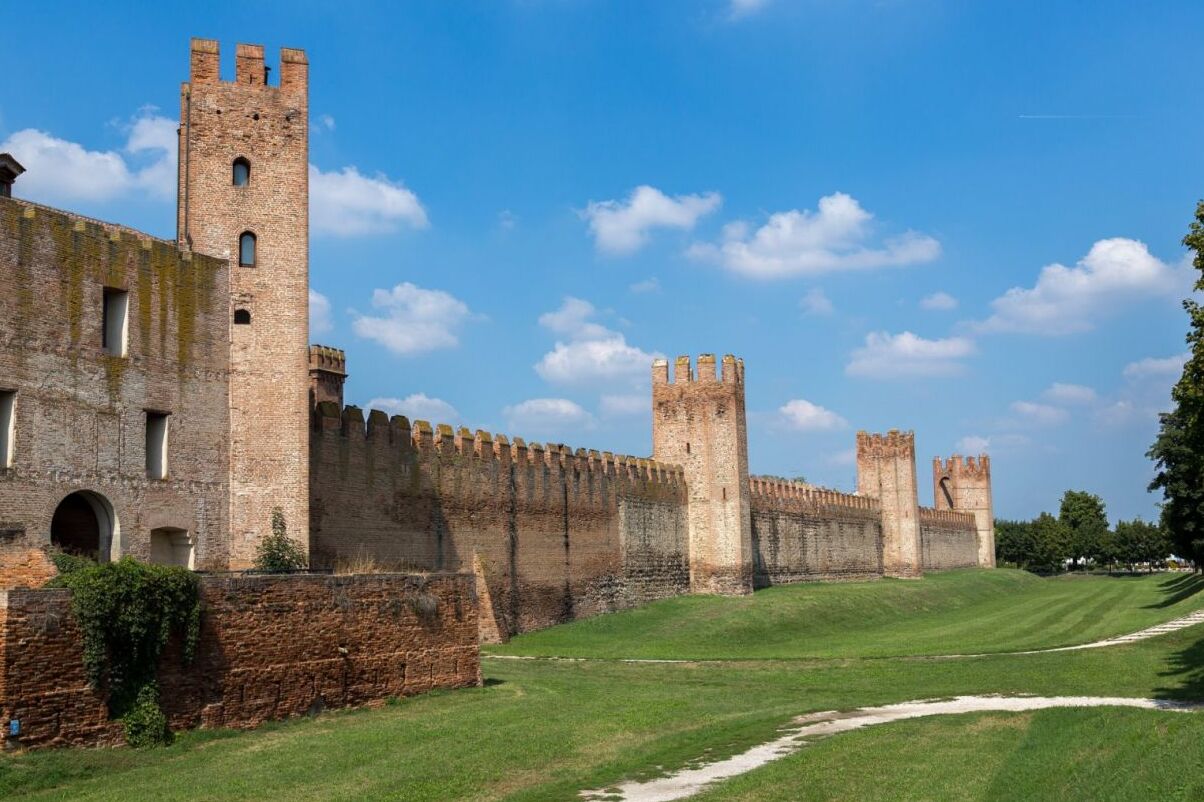
Of the many walled cities in the Veneto region, Montagnana is the one that best preserves its medieval walls: there has been little or no human intervention or damage over time and the town appears today, majestic and strong, almost as it must have been in the fourteenth century. In fact, the town has a 2 km long wall, one of the best preserved in the world, and is part of the Most Beautiful Villages in Italy, as well as being Orange Flag of the Touring Club. The first fortification, built around the urban core to defend against barbarian invasions, dates back to the Late Antiquity and was made up of embankments, ditches, bramble barriers and palisades. The extraordinary fortification is due to the intervention of the Carraresi who, in the middle of the fourteenth century, wanted to strengthen the defences against the nearby Scaligeri of Verona. The new walls, built in brick and trachyte of the Euganean Hills, enclosed an area of about 24 hectares, was crowned by Guelph battlements and had 24 perimeter towers about 18 meters high. Inside, the towers were used as warehouses and accommodation for soldiers during wartime emergencies. A large moat was dug around the walls, which conveyed the waters of the river Frassine through a fortified canal called "il Fiumicello". Outside the walls there were only marshy areas at that time, so Montagnana was the beacon of the Paduan frontier towards the West. The two entrances in the walls of Montagnana, were placed one to the East, towards Padua and the other to the West towards Verona: the Castle of San Zeno and the Rocca degli Alberi. In the sixteenth century, however, was opened a further access in the northernmost part of the walls to get closer to the landing point and the port on the river Frassine, this was called "Porta Nova" or "of Vicenza". In the nineteenth century was added the last door, called "XX Settembre", this was opened to the south, in the direction of the railway station.
Montagnana, the walled city - Montagnana | Secret World Trip Planner
🗺 AI Trip Planner

Plan your visit to Montagnana

Suggested itinerary near Montagnana, the walled city

MAJ+
500.000+ travelers worldwide
  1. 🌅
    Morning
    Montagnana, the walled city
    📍 Montagnana
  2. ☀️
    Afternoon
    Museum of the Fioroni Foundation
    📍 12.8 km · Montagnana
  3. 🌆
    Evening
    Colli Euganei:natural oasis in the heart of the Veneto
    📍 18.6 km · Montagnana

Buy Unique Travel Experiences

Powered by Viator

See more on Viator.com

Explore nearby · Montagnana

Frequently Asked Questions

Montagnana's walls stretch for 2 km and are among the best preserved in the world, with little to no human intervention or damage over time. The walls have remained remarkably intact since their construction in the fourteenth century, maintaining their medieval appearance and defensive structure almost as they were originally built.
The Carraresi family strengthened Montagnana's defenses in the middle of the fourteenth century to protect against the nearby Scaligeri of Verona. They constructed impressive brick and trachyte walls from the Euganean Hills that enclosed about 24 hectares and featured 24 perimeter towers approximately 18 meters high, crowned with Guelph battlements.
Montagnana originally had two main gates: the Castle of San Zeno to the East (toward Padua) and the Rocca degli Alberi to the West (toward Verona). Two additional gates were added later��Porta Nova in the sixteenth century to the north for access to the river port, and Porta XX Settembre in the nineteenth century to the south toward the railway station.
The towers served dual purposes during medieval times: they functioned as warehouses for storing supplies and as accommodation for soldiers during wartime emergencies. This design allowed the city to be self-sufficient and well-defended during attacks or sieges.
Montagnana is part of the Most Beautiful Villages in Italy and has been awarded the Orange Flag designation by the Touring Club, recognizing its exceptional medieval architecture and preservation. The walled city stands as one of the most majestic examples of fourteenth-century fortifications in Europe.
