
← Back

Moon Valley

CWM4+3C4, La Paz, Bolivia ★★★★☆ 321 views
Raika Kapoor
La Paz
🏆 AI Trip Planner 2026

Get the free app

Discover the best of La Paz with Secret World — the AI trip planner with 1M+ destinations. Get personalized itineraries, hidden gems and local tips. Free on iOS & Android.

🧠 AI Itineraries 🎒 Trip Toolkit 🎮 KnowWhere Game 🎧 Audio Guides 📹 Videos
Scan to download iOS / Android
Scan for AppGallery Huawei users

About Moon Valley

Moon Valley - La Paz | Secret World Trip Planner

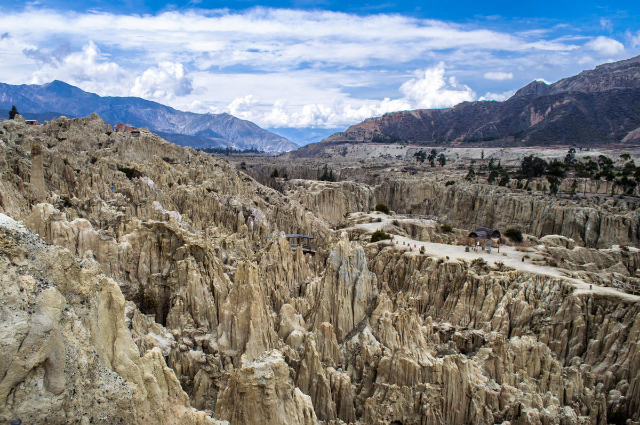
About 10 kilometers from Bolivia’s capital of La Paz lies the stark, alien landscape of El Valle de la Luna, or Moon Valley. This area is a protected geological area. It’s easy to see why it’s considered important to Bolivia, and the rest of the world.
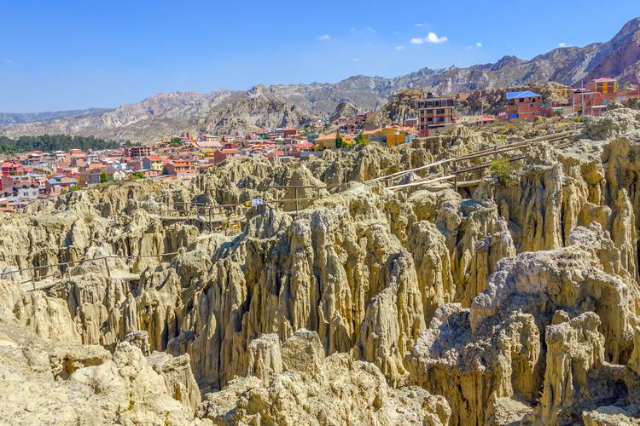
Moon Valley - La Paz | Secret World Trip Planner

The mountains here are not made of stone but of a hard clay. There are also many different minerals, which give different colors to the many various forms. Due to the varied densities and durability of these different minerals, they erode at different rates. This is why the rains and winds of the Andes here have created these unusual formations, making the area almost a forest of stalagmites out in the open.

Each of these formations is very different from the others, and many have names all on their own. The most well known is the “Buen Abuelo”, or the Nice Grandfather, which looks very much like an old man wearing a hat. There are a ton of formations there with different names; some appear to look like animals, such as the Turtle Shell, while others may look like things people use in their daily lives, such as the Cholita’s Hat.

This valley does have the feeling of being on another planet, with its tall spires, interesting figures, and colored minerals weaving through the clay formations. It was made very evident just how otherworldly this place was when Neil Armstrong visited in 1969, soon after his journey to the moon. As he wandered through the towers and formations, he was reminded of his time spent on the moon. Because of this, he christened the area Moon Valley, or the Valle de la Luna.

Unfortunately, the same forces that created Moon Valley are also in the process of destroying it. The strong Andean winds and rains are continuing to we.ar away at the clay of the mountains, eroding away the formations that make this place so eerie. This ever-changing landscape is a stark reminder of the passage of time, and that no matter how permanent something may seem, nothing truly lasts forever. Although the area of Moon Valley currently rests at 3,650 meters / 11,975 feet above sea level, thousands of years ago, it laid at the bottom of the ocean. Fossils have been found of sea creatures, and it’s not hard to imagine fish and other sea creatures swimming through the formations that make up the strange formations all around the valley.

🗺 AI Trip Planner 2026

Plan your visit to La Paz

Suggested itinerary near Moon Valley

MAJ+
500.000+ travelers worldwide
  1. 🌅
    Morning
    Moon Valley
    📍 La Paz
  2. ☀️
    Afternoon
    Valle de la Luna (Moon Valley) in Bolivia
    📍 2.2 km · La Paz
  3. 🌆
    Evening
    Murillo Square
    📍 4.2 km · La Paz

Buy Unique Travel Experiences

Powered by Viator

See more on Viator.com

Explore nearby · La Paz

Frequently Asked Questions

Moon Valley is located approximately 10 kilometers from Bolivia's capital city of La Paz, making it an accessible day trip for visitors. You can reach this protected geological area by taking a guided tour or hiring transportation from La Paz, which is the most convenient way to explore the formations safely.
The area was christened 'Moon Valley' (Valle de la Luna) by astronaut Neil Armstrong in 1969, shortly after his historic moon landing. As Armstrong walked through the tall spires and mineral-colored formations, he was reminded of his experience on the moon's surface, inspiring him to give the valley its now-famous name.
The most well-known formation is 'Buen Abuelo' (the Nice Grandfather), which resembles an old man wearing a hat. Other named formations include the Turtle Shell and the Cholita's Hat, each created by the different erosion rates of minerals and clay in the area, giving the valley its distinctive otherworldly appearance.
Moon Valley's mountains are composed of hard clay mixed with various minerals that display different colors throughout the formations. Due to the different densities and durability of these minerals, Andean winds and rains erode them at different rates, creating an unusual forest of stalagmite-like spires that appear almost alien in appearance.
Yes, the same forces that created Moon Valley—strong Andean winds and rains—are continuously eroding the clay formations, slowly destroying this remarkable landscape. This ever-changing environment serves as a reminder that despite seeming permanent, nothing truly lasts forever, making a visit even more meaningful.
