
← Back

Mosaic of Otranto

Via Basilica, 73028 Otranto LE, Italia ★★★★☆ 226 views
Monica Ruesh
Otranto
🏆 AI Trip Planner 2026

Get the free app

Discover the best of Otranto with Secret World — the AI trip planner with 1M+ destinations. Get personalized itineraries, hidden gems and local tips. Free on iOS & Android.

🧠 AI Itineraries 🎒 Trip Toolkit 🎮 KnowWhere Game 🎧 Audio Guides 📹 Videos
Scan to download iOS / Android
Scan for AppGallery Huawei users

About Mosaic of Otranto

Mosaic of Otranto - Otranto | Secret World Trip Planner

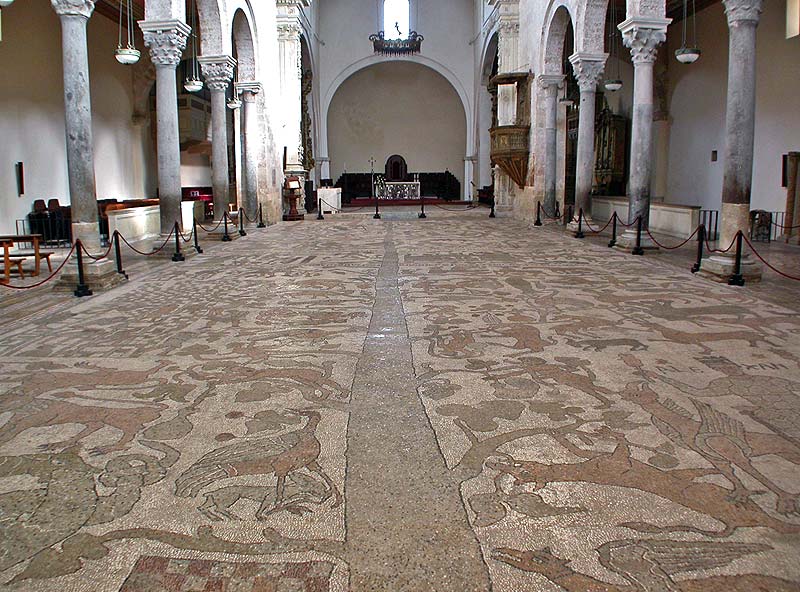
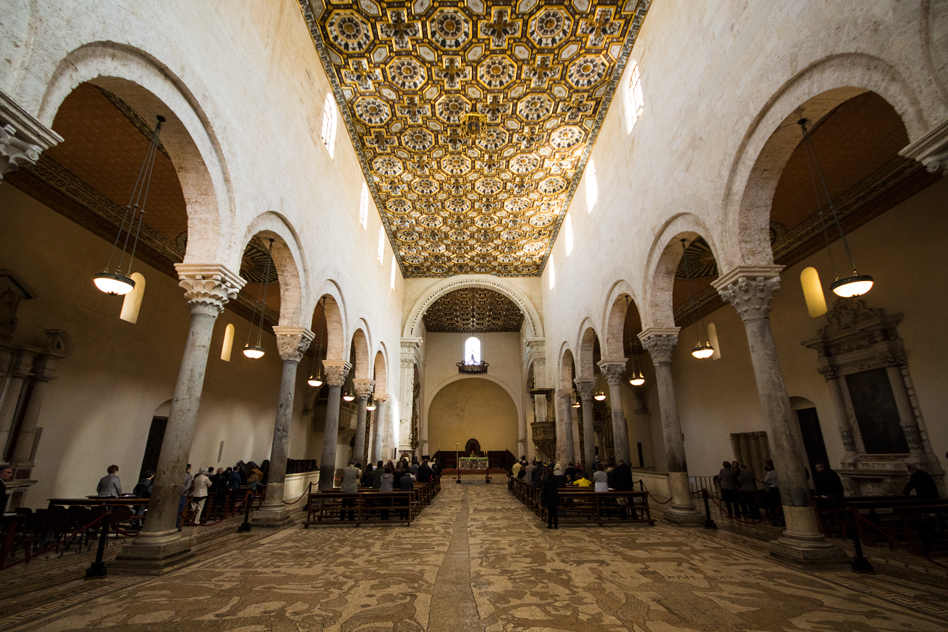
The floor mosaic of the Cathedral has considerable dimensions, extending the entire length of the main nave, and being made up of about 600,000 polychrome tiles of local limestone composition. It depicts the Tree of Life and was commissioned by Bishop Jonathan back in 1163 and made by the monk Pantaleone of the Abbey of St. Nicholas of Casale in Otranto, who finished the masterpiece in 1165. A first peculiarity of the mosaic is precisely the fact that it has its author's name engraved on it, at the main entrance, a fact at least unusual for the time and probably due to the privilege of wanting to give credit to the artist as thanks for the splendid success of the work. As mentioned, the meaning that most experts give to the depiction is that of the Tree of Life, but there are controversial theories and no conclusion has ever been reached that can satisfy all schools of thought, always causing a veil of mystery to remain around the work. What is evident, however, is that around the tree, which stretches from the entrance to the chancel, a multitude of scenes from the Old Testament unfold, symbolizing the tortuous path taken by man to sort out his sins and achieve eternal salvation: the events of Adam and Eve, those of Cain, Abel, the conception of Hell and Paradise. There is no shortage, however, of mythological and historical references such as those to King Arthur and Alexander the Great. Also very striking is the depiction of the twelve months of the year to which a circular part is dedicated in addition to the representation of the related seasonal labors. The richness and variety of the elements and symbols present is further evidence of how Otranto has always represented a meeting point between cultures, between peoples, between different artistic and cultural currents. The geographical position enjoyed by the city has facilitated the meeting and exchange between West and East, often exposing the place to attacks and invasions that have more than favored, imposed its own culture. After millennia of history what remains is a series of treasures, imprints, signs of the passage of different peoples, who have also and especially artistically enriched Otrantine treasures.
Mosaic of Otranto - Otranto | Secret World Trip Planner
🗺 AI Trip Planner 2026

Plan your visit to Otranto

Suggested itinerary near Mosaic of Otranto

MAJ+
500.000+ travelers worldwide
  1. 🌅
    Morning
    Mosaic of Otranto
    📍 Otranto
  2. ☀️
    Afternoon
    Puglia, the easternmost region of Italy
    📍 0.2 km · Otranto
  3. 🌆
    Evening
    Water Mill Bay
    📍 2.8 km · Otranto

Buy Unique Travel Experiences

Powered by Viator

See more on Viator.com

Explore nearby · Otranto

Frequently Asked Questions

The mosaic was created by monk Pantaleone from the Abbey of St. Nicholas of Casale in Otranto, commissioned by Bishop Jonathan in 1163 and completed in 1165. Pantaleone's name is actually engraved on the mosaic at the main entrance, an unusually progressive practice for the time that gave credit to the artist for this magnificent work.
The mosaic is extraordinarily large, extending the entire length of the main nave and composed of approximately 600,000 polychrome tiles made from local limestone. Its impressive scale makes it one of the most significant medieval mosaics in existence.
The mosaic primarily depicts the Tree of Life stretching from the entrance to the chancel, surrounded by scenes from the Old Testament that symbolize humanity's spiritual journey to overcome sin and achieve eternal salvation. The work includes representations of Adam and Eve, Cain and Abel, Hell and Paradise, along with mythological and historical references to figures like King Arthur and Alexander the Great.
Beyond Old Testament narratives, the mosaic features a striking circular section depicting the twelve months of the year with their corresponding seasonal labors, blending biblical content with practical medieval life. This rich combination of religious, mythological, historical, and cultural elements reflects Otranto's position as a meeting point between Eastern and Western artistic traditions.
While most experts interpret the work as depicting the Tree of Life, controversial theories persist and scholars have never reached a consensus explanation that satisfies all perspectives, intentionally maintaining an air of mystery around the masterpiece. This ongoing scholarly debate adds to the fascination and intrigue of visiting this medieval treasure.
