
← Back

Mother Church of San Nicola di Pàtara in Cisternino

Piazza Giuseppe Garibaldi, 72014 Cisternino BR, Italia ★★★★☆ 235 views
Sharma Kapoor
Cisternino
🏆 AI Trip Planner 2026

Get the free app

Discover the best of Cisternino with Secret World — the AI trip planner with 1M+ destinations. Get personalized itineraries, hidden gems and local tips. Free on iOS & Android.

🧠 AI Itineraries 🎒 Trip Toolkit 🎮 KnowWhere Game 🎧 Audio Guides 📹 Videos
Download on the App Store Get it on Google Play
Scan to download Scan to download

About Mother Church of San Nicola di Pàtara in Cisternino

Mother Church of San Nicola di Pàtara in Cisternino - Cisternino | Secret World Trip Planner

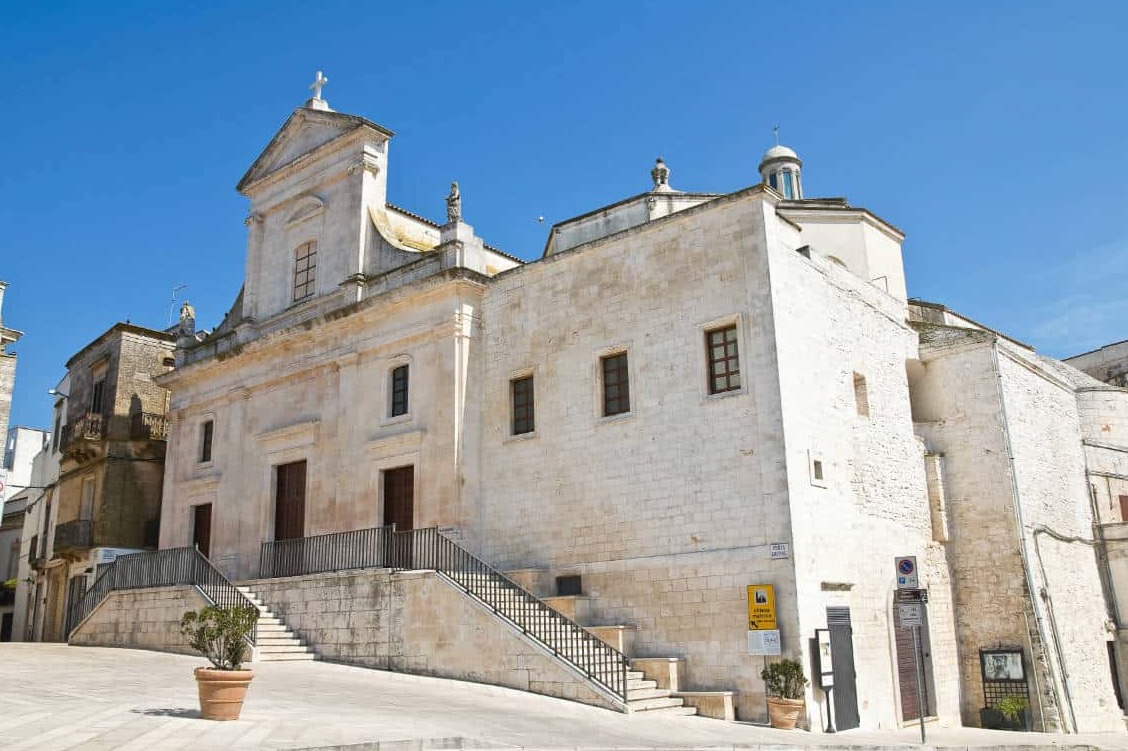
Over time, the building has undergone modifications and renovations, which have altered its primitive medieval appearance. The facade, for example, of neoclassical taste, was erected around 1848 demolishing the previous one, of Romanesque inspiration. It is composed of a very high triangular fastigium and a central walled niche, surmounted by a lunette. On the upper corners are the statues of two saints in prayer. Below the lintel, in the lower part, there are three simple portals that echo the linearity of the four pilasters that divide the façade. The interior layout has three naves, marked by columns with stone capitals that still retain the ancient medieval imprint. In the right aisle there are two chapels with domes. The first is that of the Rosary with a sculpture of the Imago pietatis attributed to the school of Stefano da Putignano, the second is the chapel of Ss. Sacramento. Between the wall that joins the two chapels there is the most prestigious sculpture of the Apulian Renaissance: the Madonna with Child and Offerers, also known as the "Madonna del Cardellino"(1517). On the wall of the left aisle there are traces of paintings; one depicts the Madonna of Constantinople in the middle of St. George and St. Catherine of Alexandria, the other, the figure of a Madonna with a very slight sign, the rest of the fresco has been lost. On the high altar stands the wooden statue of St. Nicholas. The sacristy is also a treasure chest of works of art of interest; the wooden bas-relief of the Madonna della Madia and the canvas of Saints Quirico and Giulitta by Barnaba Zizzi, a painter from Cisternino.

🗺 AI Trip Planner

Plan your visit to Cisternino

Suggested itinerary near Mother Church of San Nicola di Pàtara in Cisternino

MAJ+
500.000+ travelers worldwide
  1. 🌅
    Morning
    Mother Church of San Nicola di Pàtara in Cisternino
    📍 Cisternino
  2. ☀️
    Afternoon
    Symbol of Cisternino, the Clock Tower
    📍 0.1 km · Cisternino
  3. 🌆
    Evening
    Cisternino and its famous butcher shops
    📍 0.1 km · Cisternino

Buy Unique Travel Experiences

Powered by Viator

See more on Viator.com

Explore nearby · Cisternino

Frequently Asked Questions

The most prestigious sculpture is the 'Madonna del Cardellino' (Madonna with Child and Offerers) from 1517, considered one of the finest works of the Apulian Renaissance. This masterpiece is located between the two chapels on the right aisle and is attributed to the school of Stefano da Putignano.
The neoclassical facade was constructed around 1848, replacing the original Romanesque facade. It features a very high triangular pediment, a central niche with a lunette, statues of two saints in prayer at the upper corners, and three simple portals divided by four pilasters.
The interior has three naves divided by columns with medieval stone capitals, two domed chapels on the right aisle (the Rosary Chapel and the Sacrament Chapel), a wooden statue of St. Nicholas on the high altar, and frescoed walls depicting the Madonna of Constantinople with saints. The sacristy also contains important artworks including a wooden bas-relief and paintings by local artist Barnaba Zizzi.
The Rosary Chapel features a sculpture of the Imago pietatis (an image of Christ's suffering) attributed to the school of Stefano da Putignano, a renowned Renaissance sculptor. This chapel is one of two domed chapels located in the right aisle of the church.
The building has undergone significant modifications and renovations over time that altered its primitive medieval appearance. Most notably, the original Romanesque facade was demolished around 1848 and replaced with a neoclassical one, though the interior medieval columns and capitals have been preserved, retaining the ancient structure.
