


At three in the morning, when the air is still chilly and the sky is dotted with stars, the 4x4 jeeps begin to move in a line along the dark roads leading to the Bromo Tengger Semeru National Park, in the heart of East Java. The sound of the engines mixes with the thin wind of the plateau, and the smell of sulfur — faint but unmistakable — begins to be felt even before approaching the crater. Mount Bromo is a volcano that cannot be ignored: it is active, smoking, and every dawn spent there is different from the last.

The volcano is located in the district of Kecamatan Sukapura, in the Probolinggo region, at about 2,329 meters above sea level. It is part of a larger caldera called Tengger, which hosts other volcanoes including Semeru, the highest point in Java at 3,676 meters. The Tengger people who inhabit the area descend from a Hindu community that took refuge on the slopes of the volcano during the Islamic expansion in the 16th century, and even today they practice ancient rituals such as the Yadnya Kasada festival, during which offerings of food, flowers, and animals are thrown into the active crater.
The Crossing of the Sea of Sand

What makes the experience of Bromo truly unique is the landscape that one traverses to reach it. Between the base of the viewpoint of Penanjakan and the volcano lies the Sea of Sand: a volcanic plain of fine gray ash that extends for about ten square kilometers. At night, illuminated only by the torches and headlights of jeeps, it resembles a lunar landscape. On foot, the crossing takes about twenty minutes, but navigation can be difficult in the fog, which at certain times can be thick and sudden.
Once at the base of the cone, one faces the famous 253 steps of stone that lead to the edge of the crater. They are not particularly steep, but at that altitude and with the pre-dawn cold, every single step is felt. Upon reaching the top, one is confronted with a smoking mouth about 800 meters wide: sulfur gas rises in thick white columns, and at times the wind pushes it directly towards the visitors. Having a mask or a scarf is not optional.

The sunrise from the Penanjakan viewpoint
Most tourists choose to witness the sunrise from the viewpoint of Penanjakan, located at about 2,770 meters above sea level. From there, when weather conditions permit, you can see the sun emerging over the horizon while Bromo blows its white smoke against the orange sky. In the background, the silhouette of Semeru with its peak touching the clouds. It is a sight that is unforgettable, but it requires getting up in the middle of the night to arrive on time — generally by 4:30 in the morning.
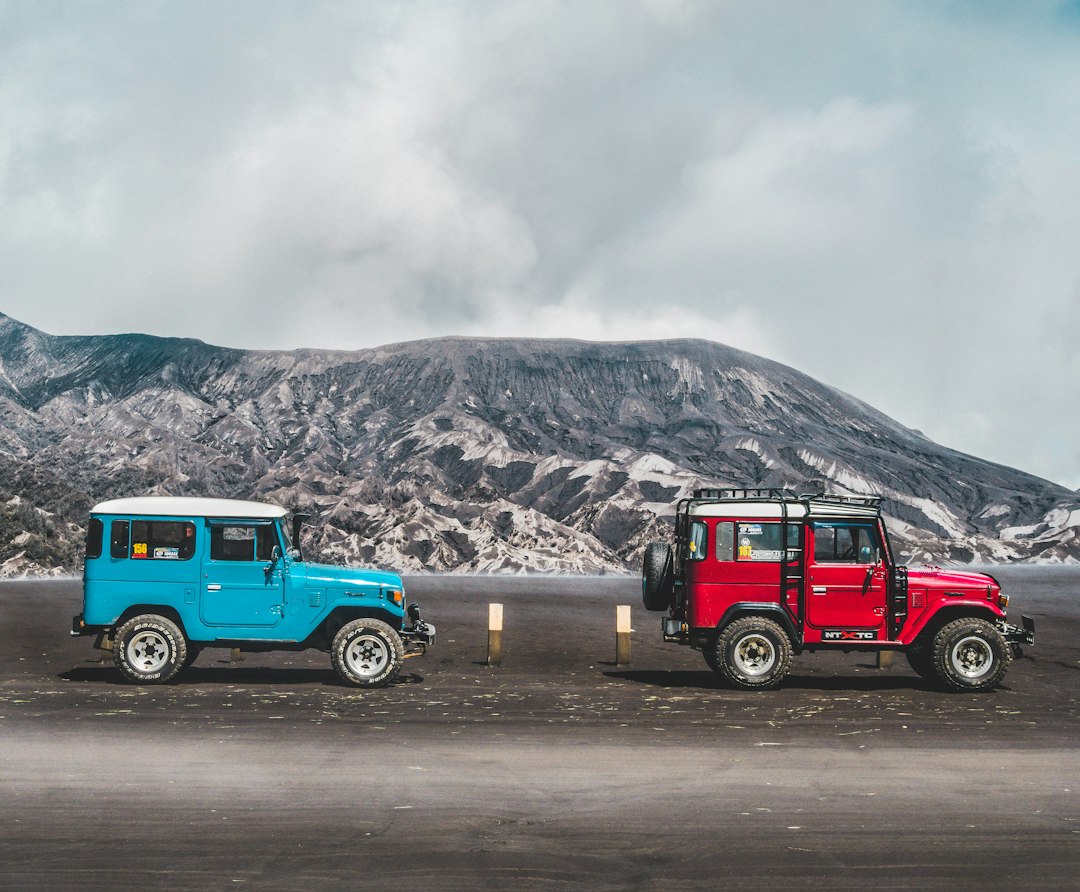
The viewpoint is only accessible by local jeeps, which can be rented from the villages of Cemoro Lawang or Wonokitri. The cost of a shared jeep typically ranges from 300,000 to 500,000 Indonesian rupiah per person, depending on the season and the number of passengers. It is advisable to book the day before, especially in the months of July and August when tourist influx is at its peak.
When to go and how to prepare

The dry season, from April to October, offers the best conditions for visiting Bromo. During the rainy season, from November to March, clouds often cover the sunrise view and the trails can become slippery. Even in the dry season, however, nighttime temperatures on the plateau drop below 5°C, and the wind at the crater's edge can be biting. Dressing in layers — with a thermal jacket, gloves, and a head covering — is not excessive.
The entrance ticket to the national park ranges from 220,000 to 320,000 rupiah for foreign visitors depending on the day (weekday or holiday), and must be purchased at the entrance. The village of Cemoro Lawang is the most convenient starting point: it has several budget guesthouses and mid-range hotels, and it is directly overlooking the caldera's edge. Staying there the night before allows you to avoid the night transfer from Probolinggo and enjoy the sunset over the volcano on the day of arrival — a bonus that few indulge in but is worth planning for.
A place that requires respect
Bromo is still an active volcano monitored by the Indonesian Volcanology Agency, which periodically raises the alert level and restricts access to the crater. Before departing, it is useful to check the activity status on the official website of the PVMBG (Center for Volcanology and Geological Hazard Mitigation). It is not uncommon for authorities to close the crater rim for weeks during periods of increased eruptive activity.
The Tengger community that manages much of the local tourist services — from rental horses for those who do not want to cross the Sea of Sand on foot, to guides who accompany groups — relies almost entirely on the tourism that Bromo generates. Choosing local operators, avoiding leaving waste in the caldera, and respecting the religious rituals that still take place at the foot of the volcano are small but concrete gestures to avoid turning a living place into a mere photographic attraction.


