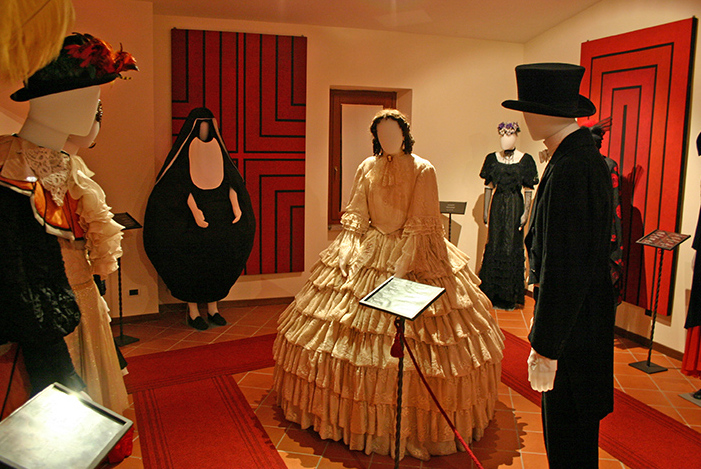

Nestled in the picturesque town of Serrone, the Museum of Theatre Costumes offers a captivating glimpse into Italy's rich theatrical heritage. This museum, located in the upper part of town, stands as a testament to the artistry and craftsmanship that have defined Italian theatre for centuries.
### History and Origins
The museum is home to a remarkable collection of theatrical costumes made by Beatrice Minori, a renowned dressmaker who left an indelible mark on the world of Italian performing arts. Her career spanned several decades, during which she served as the personal dressmaker for the legendary actor and playwright Eduardo de Filippo, as well as collaborating with notable Italian directors. Established in the early 21st century, the museum preserves not only Minori's creations but also the essence of theatrical history, allowing visitors to connect with the narratives that shaped Italian culture.
The town of Serrone, with its medieval architecture and charming streets, has its own history dating back to ancient times. Originally inhabited by the Volsci, the area later became a settlement influenced by Roman culture. As the region evolved, so too did its connection to the arts, culminating in the establishment of this museum, which serves as a cultural anchor for both locals and visitors.
### Art and Architecture
The museum itself is a fusion of traditional and modern architectural styles, reflecting the historical significance of its contents. The building is characterized by its elegant stone façade, which harmonizes with the surrounding landscape of Serrone. Inside, the exhibition spaces are thoughtfully designed to enhance the viewing experience, with natural light illuminating the intricate details of the costumes.
Each costume is displayed on specially designed mannequins, arranged in a way that makes them appear almost alive, as if they are greeting visitors. The careful curation allows guests to appreciate the craftsmanship, from the quality of the fabrics to the delicate stitching that brings each character to life. The museum's collection includes costumes inspired by the works of Machiavelli, Goldoni, Pirandello, and even Shakespeare, making it a treasure trove for theatre enthusiasts.
### Local Culture and Traditions
Serrone is not just a repository of theatre history; it is a vibrant community steeped in cultural traditions. The town hosts various festivals throughout the year, celebrating both local customs and the performing arts. One of the most notable events is the Sagra della Castagna, a chestnut festival that takes place in the autumn, drawing visitors from far and wide to enjoy local delicacies and traditional music.
The people of Serrone take great pride in their cultural heritage, often reenacting historical events and showcasing traditional crafts. This sense of community enriches the experience of visiting the museum, as it is intertwined with the local identity.
### Gastronomy
No visit to Serrone would be complete without indulging in its culinary delights. The region is known for its hearty Italian cuisine, with local specialties that reflect the agricultural bounty of the surrounding countryside. One must-try dish is Pasta alla Gricia, a simple yet flavorful pasta dish made with guanciale, pecorino cheese, and black pepper, celebrating the region's rustic flavors.
Additionally, the area is famous for its chestnuts, particularly during the autumn harvest. Visitors can savor roasted chestnuts or enjoy them in sweet confections. Pair your meal with a glass of Lazio wine, which beautifully complements the local flavors and adds to the immersive experience of Serrone's gastronomy.
### Lesser-known Curiosities
While the Museum of Theatre Costumes is the star attraction, there are hidden gems that many tourists overlook. For instance, the museum often hosts workshops and talks that provide insight into the art of costume design, allowing visitors to engage with the craft on a deeper level. Additionally, the museum's location offers stunning views of the surrounding hills, making it an ideal spot for photography enthusiasts.
Another intriguing detail is the museum's collection of historical documents and photographs that showcase the evolution of Italian theatre and its influential figures. These artifacts provide context to the costumes, enhancing the storytelling aspect of the exhibition.
### Practical Visitor Information
The best time to visit the Museum of Theatre Costumes is during the spring and autumn months when the weather is mild, and the surrounding landscape is in full bloom. To make the most of your visit, consider joining a guided tour to gain deeper insights into the exhibits and the history behind them. Don't forget to take some time to explore the charming streets of Serrone, where quaint cafes and local shops await.
As you plan your visit, ensure you allocate enough time to fully appreciate the intricate costumes and their stories. The museum is open year-round, but check their schedule for special exhibitions or events that might coincide with your visit.
For a personalized experience that captures the essence of Serrone, consider using the Secret World app to plan your itinerary seamlessly.
