
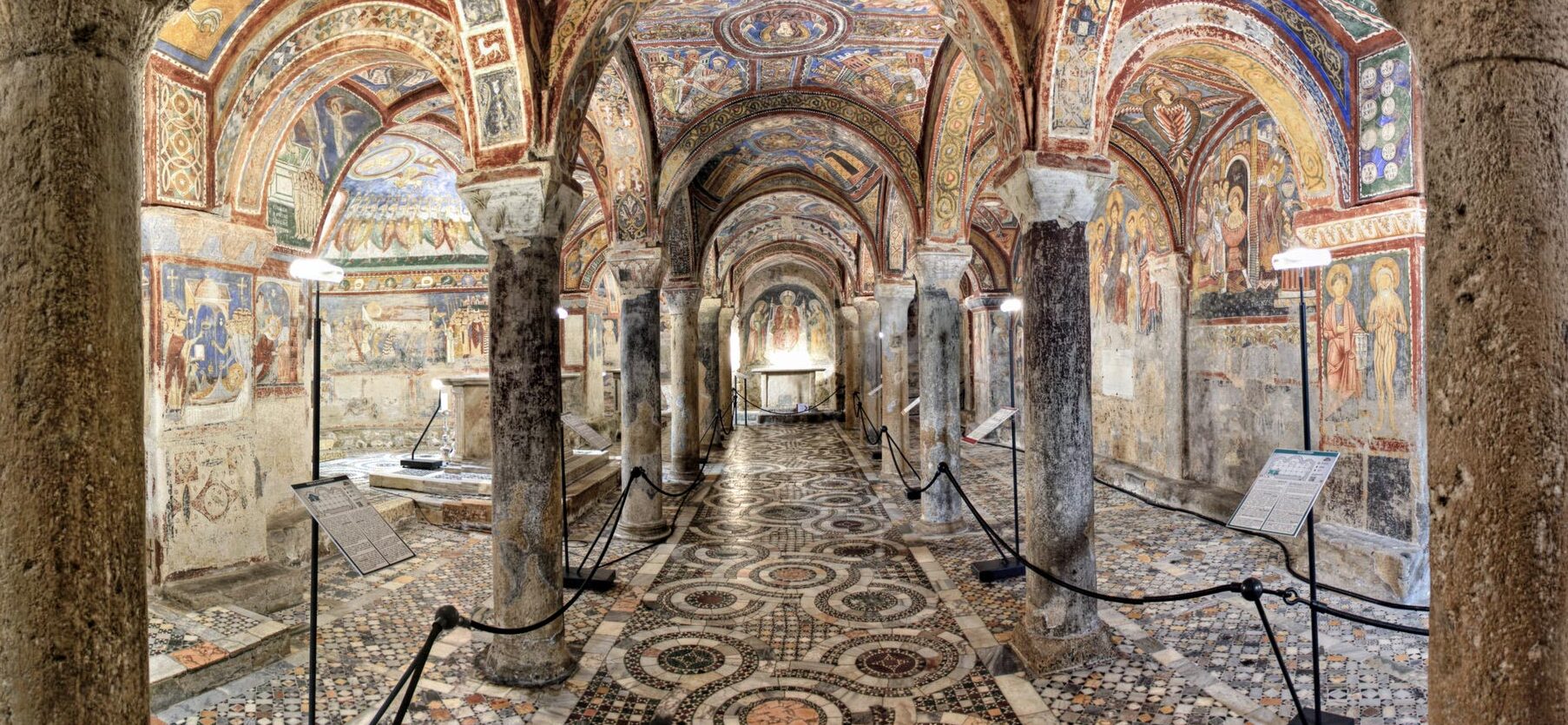

Nestled in the heart of Anagni, Italy, lies a hidden gem that encapsulates centuries of spirituality and artistry: La Cripta di San Magno. This remarkable site, constructed between 1072 and 1104 under the watchful eye of Bishop Pietro da Salerno, serves as a sacred repository for the relics of saints, embodying the reverence and devotion of the medieval Christian world.
The origins of the Cripta di San Magno are steeped in the rich tapestry of Anagni’s history. This ancient town, perched on a hilltop, has been a significant religious center since Roman times. Anagni was not only a strategic location for trade but also a stronghold for popes and bishops, making it a focal point of religious power. The construction of the crypt coincided with the rise of Papal authority, which sought to solidify its presence through monumental architecture.
As you step into the crypt, you are immediately enveloped by an atmosphere of hushed reverence. The layout features three transverse aisles that diverge from the upper church, supported by twelve majestic columns. These columns lead to three apses, each adorned with stunning frescoes that narrate the Salvation history of humankind, from Creation to the Apocalypse. The artworks, created by anonymous but talented artisans known as the Primo Maestro di Anagni, Secondo Maestro di Anagni, and Terzo Maestro di Anagni, are a testament to the skill and dedication of their creators. Dating between the late 12th century and early 13th century, these frescoes are pivotal in the study of medieval art, showcasing a unique blend of Byzantine and early Gothic styles.
The artistic significance of the Cripta di San Magno cannot be overstated. The intricate frescoes are not merely decorative; they serve as visual sermons, designed to educate the predominantly illiterate populace of the time. The vivid colors and complex iconography invite viewers to immerse themselves in biblical narratives, making the sacred stories accessible and engaging. The crypt thus stands as a powerful reminder of the role art played in the spiritual and communal lives of medieval Christians.
Culturally, Anagni is a town that prides itself on its traditions and local customs. Every year, the town hosts the Festa di San Magno, a celebration that honors the town's patron saint. This festival, typically held in early September, features processions, music, and local delicacies that bring the community together in a joyful expression of faith and heritage. The festival is a vibrant showcase of Anagni’s rich history, and it’s a perfect opportunity for visitors to experience the local culture firsthand.
Gastronomy in Anagni is as rich as its history. The area is known for its porchetta, a succulent roasted pork that is seasoned with herbs and enjoyed as a street food delicacy. Pair this with a glass of Cesanese del Piglio, a red wine native to the region, and you have a culinary experience that reflects the local terroir. Other local specialties include pasta alla gricia and supplì, which are often enjoyed in the quaint trattorias that dot the town’s picturesque streets.
For those eager to uncover the hidden treasures of La Cripta di San Magno, there are several lesser-known curiosities that enhance the experience. One such detail is the crypt’s unique lighting, which has been carefully designed to evoke a mystical atmosphere, highlighting the frescoes in a way that accentuates their spiritual message. Additionally, the crypt is home to a number of ancient inscriptions that provide insight into the lives of early Christians in Anagni, often overlooked by casual visitors.
To make the most of your visit, consider timing your trip during the spring or early autumn, when the weather is mild and conducive to exploration. The Cripta di San Magno is less crowded during these seasons, allowing for a more intimate experience with the artwork. Be sure to look for guided tours, as knowledgeable guides can offer invaluable context and stories that breathe life into the ancient walls.
As you wander through the crypt, take a moment to reflect on the history that surrounds you. It’s a space that invites contemplation, where art and faith intertwine in a celebration of human creativity and spirituality.
To truly appreciate the beauty and significance of Anagni, consider using the Secret World app to plan a personalized AI itinerary for your visit.


