



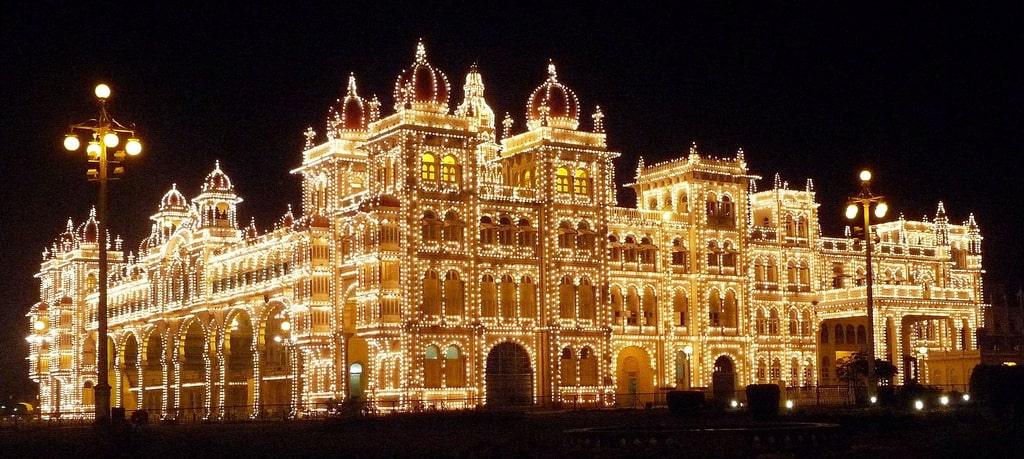
In the heart of the vibrant city of Mysuru, a masterpiece of opulence and grandeur stands invitingly — the Mysore Palace. This architectural marvel is not just a building but a living testament to the glorious past of the Wodeyars, who reigned over the princely state of Mysore from 1399 to 1950. As you step onto its grounds, you are transported to a bygone era where history, culture, and artistry converge in splendid harmony.
The history of the Mysore Palace is a tapestry woven with legends and pivotal moments. The current structure, completed in 1912, is the third iteration of the palace. The original wooden palace was razed by fire during a wedding ceremony in 1897, and the second was a temporary structure. Commissioned by Maharaja Krishnaraja Wadiyar IV and designed by the renowned British architect Henry Irwin, the palace was built in the Indo-Saracenic architectural style, a blend of Hindu, Muslim, Rajput, and Gothic influences. This rich fusion is a tribute to the diverse cultural influences that have shaped Mysore over the centuries.
The art and architecture of Mysore Palace are nothing short of a visual feast. The façade is adorned with intricate carvings and a series of domes that catch the light in a spectacular dance of colors. Inside, the grandeur continues with the Ambavilasa, or the Diwan-e-Khas, where the Maharajas once held private audiences. Its stained glass ceiling, embellished with peacock motifs, and the ornate Belgian crystal chandeliers are a testament to the opulence of the Wodeyar dynasty. The palace houses a remarkable collection of paintings, including works by the famed artist Raja Ravi Varma, whose depictions of Indian mythology are legendary.
Delve into the local culture and traditions, and you'll find that Mysore Palace is at the heart of the city's vibrant festivals, most notably Dasara. This ten-day festival, celebrated with unmatched fervor, culminates in a grand procession that starts from the palace grounds. The palace itself is illuminated with nearly 100,000 bulbs, creating an ethereal glow that captivates thousands of visitors. During Dasara, the palace becomes a cultural hub, showcasing traditional music, dance, and theater performances that reflect the rich heritage of Karnataka.
No visit to Mysore is complete without indulging in its gastronomy. The local cuisine is as rich as its history, with signature dishes such as Mysore Pak, a sweet made from gram flour, sugar, and ghee, believed to have originated in the royal kitchens of the palace. The aromatic Bisi Bele Bath, a spicy rice dish, and the delectable Mysore Masala Dosa are must-tries for any food enthusiast. These culinary delights offer a taste of the region’s diverse flavors.
For those intrigued by lesser-known curiosities, the palace holds many secrets. One such marvel is the underground network of tunnels, believed to have been used as escape routes during times of war. The palace also houses a collection of rare musical instruments and a grand elephant gate with a life-sized sculpture of the royal elephant, Balarama, a tribute to the beloved animal that once led the Dasara procession.
When planning your visit, consider the practical visitor information to make the most of your experience. The palace is open to visitors daily, with a sound and light show in the evenings that vividly narrates the history of Mysore. The best time to visit is during the cooler months from October to February, with the Dasara festival offering an unparalleled experience. As you wander through the halls, take note of the exquisite craftsmanship in the intricate woodwork and the vibrant murals that adorn the ceilings and walls.
Mysore Palace is more than just a royal residence; it is a vibrant embodiment of the city's history, culture, and art. Whether you are a history buff, an architecture enthusiast, or a curious traveler, this iconic landmark promises an unforgettable journey into the heart of Mysuru's regal past.
