
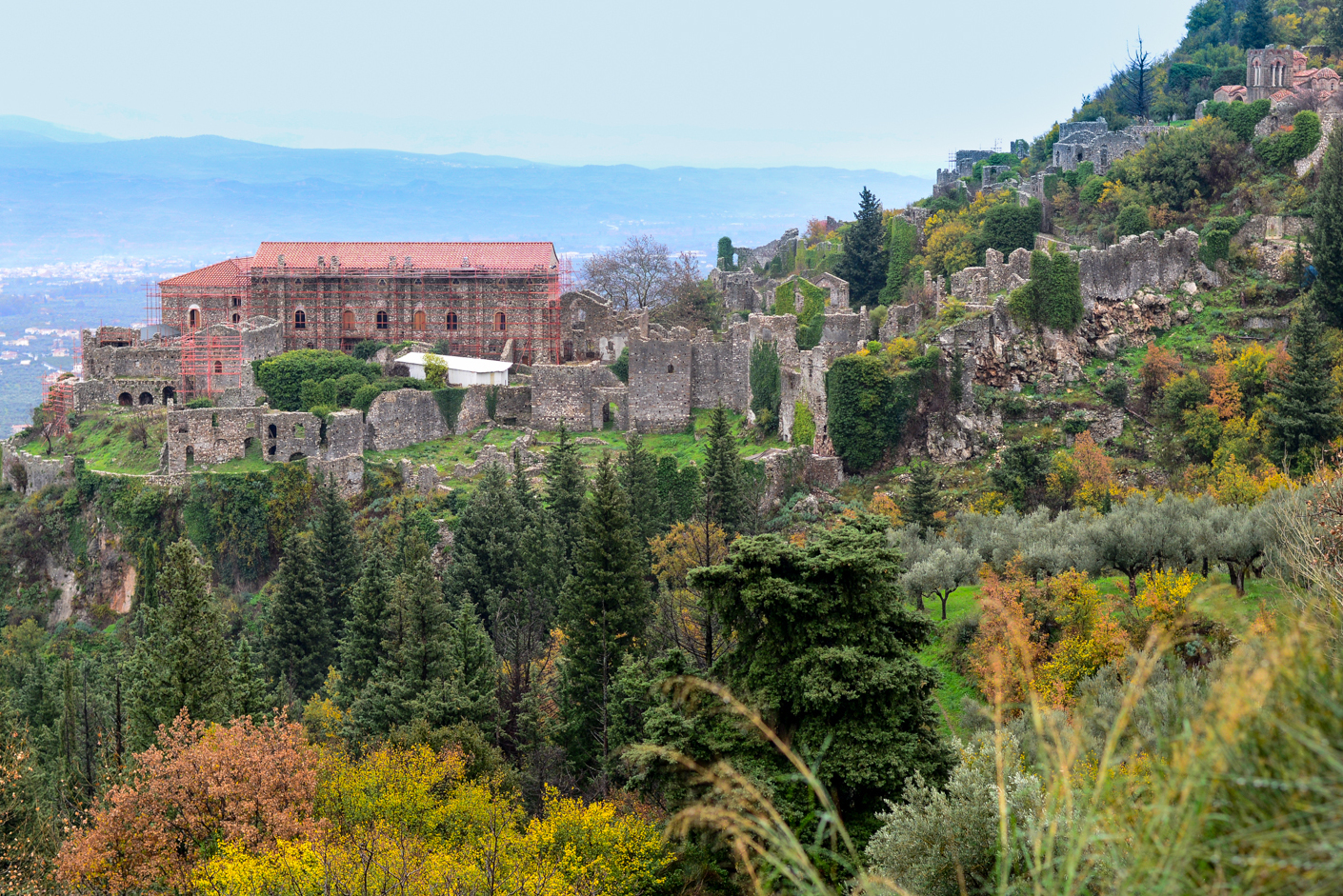

Mystras, the 'wonder of the Morea', is a treasure trove of history and culture nestled in the Peloponnese region of Greece. Founded in 1249 by William of Villehardouin, a prince of Achaia, Mystras emerged as a significant political and cultural hub during the Byzantine era. Its strategic location made it a fortification against invasions, eventually falling to the Byzantines, Turks, and Venetians throughout its tumultuous history. The city was abandoned in 1832, leaving behind a breathtaking array of medieval ruins that blend seamlessly with the surrounding natural landscape, leading to its designation as a UNESCO World Heritage site in 1989.

The architecture of Mystras is a stunning reflection of its rich past. The city is characterized by its Byzantine style, featuring a mix of churches, palaces, and fortifications. Notable sites include the Church of Agios Dimitrios, adorned with exquisite frescoes, and the Palace of the Despots, showcasing the grandeur of the Byzantine nobility. Visitors will be captivated by the intricate stonework and decorative elements that highlight the artistic significance of this once-thriving city.
Local culture in Mystras is deeply rooted in its history. Although the city is largely a historical site today, remnants of its vibrant past can still be felt. Traditional festivals, such as the Feast of Agios Dimitrios in late October, celebrate the patron saint of the city and draw locals and visitors alike. These events often feature traditional music, dance, and local delicacies, providing a unique glimpse into the region's cultural fabric.

Speaking of local flavors, Mystras is a delightful introduction to Peloponnesian gastronomy. Visitors can enjoy specialties such as Mizithra, a soft cheese made from sheep or goat milk, and Bougatsa, a sweet or savory pastry filled with custard or cheese. The local wine is also worth sampling, particularly varieties produced from indigenous grapes grown in the surrounding hills. Paired with traditional dishes, these culinary experiences are a feast for the senses.
Among the hidden gems of Mystras are the stories that linger in its ruins. One such tale involves the Despotate of Mystras, where the last Byzantine emperor, Constantine XI, held court before the fall of Constantinople in 1453. The remnants of the palatial residence still evoke the grandeur of this era. Additionally, the site's dramatic landscape, with its steep hills and lush vegetation, has inspired countless artists and writers seeking to capture the essence of its beauty.
The best time to visit Mystras is during the spring and autumn months when the weather is mild and the surrounding nature is in full bloom. To make the most of your visit, consider starting early in the morning to beat the crowds and witness the sunrise casting a golden hue over the ruins. Be sure to wear comfortable shoes, as exploring the hilly terrain can be challenging. Don't miss the chance to climb to the Fortress of Mystras, where panoramic views of the Peloponnese await.
Whether you’re a history buff, architecture enthusiast, or simply seeking a serene escape, Mystras offers a unique experience that is both enriching and soul-stirring. For a personalized itinerary that captures the spirit of this enchanting destination, consider using the Secret World app to plan your visit to Mistra.


