
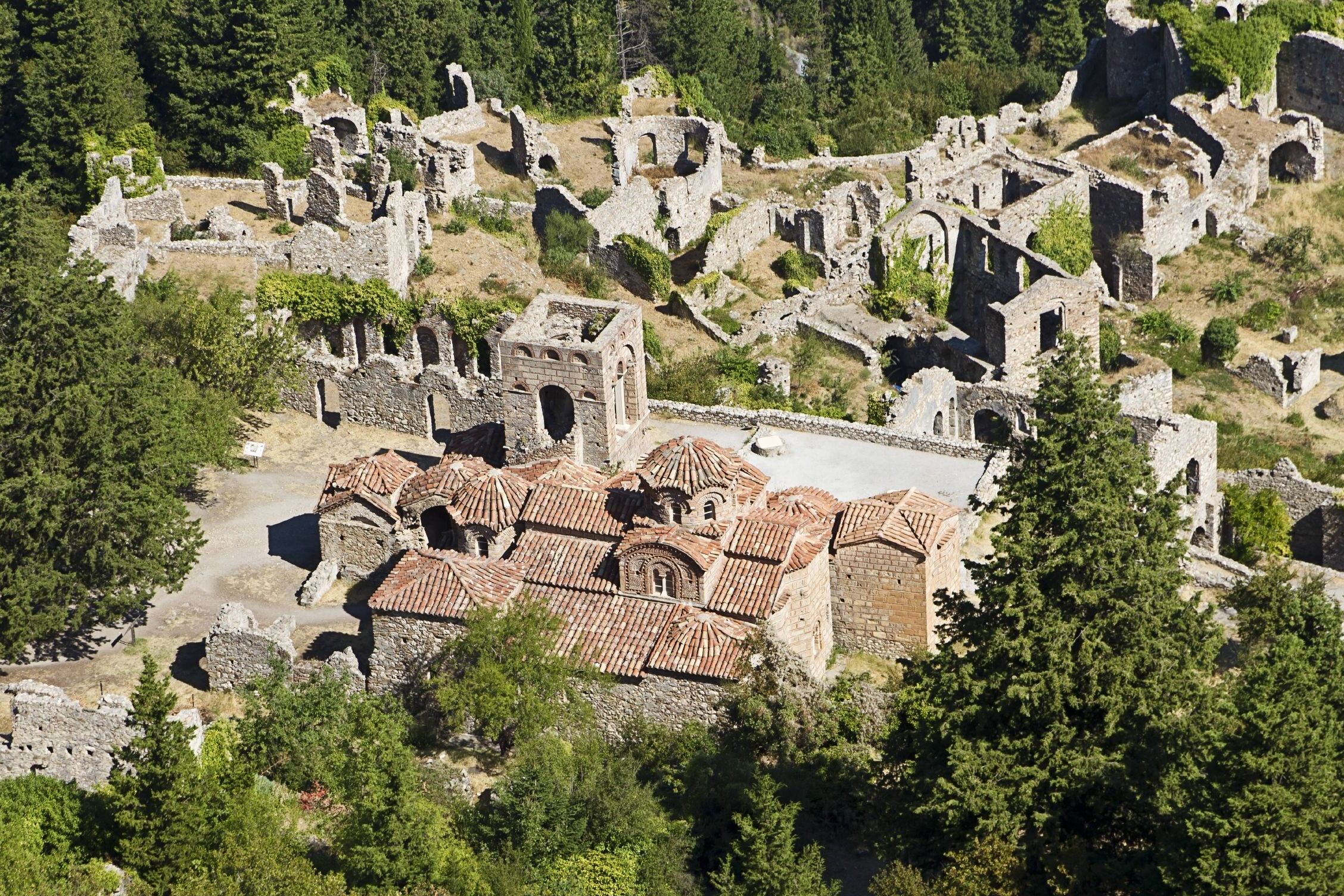

Be the knight or princess of your childhood fairytales in the Byzantine town of Mystras! Nestled in the Peloponnese, just six kilometers northwest of Sparta, Mystras stands as a testament to the grandeur of Byzantine architecture and history, a place where time seems to stand still amidst crumbling stone walls and majestic ruins.
History and Origins
Mystras was founded in 1249 by William II of Villehardouin, a Frankish prince, following the Fourth Crusade. Its strategic location on the slopes of Mount Taygetus allowed it to flourish, serving as the capital of the Despotate of Morea in the 14th century. Mystras became a cultural and political hub, attracting scholars and artists. In 1448, it gained historical significance when Constantine XI Palaeologos, the last Byzantine emperor, was crowned here. Despite its decline after the fall of Constantinople in 1453, Mystras remains a powerful symbol of Byzantine legacy, reflecting the rich tapestry of Greek history.

Art and Architecture
The architectural landscape of Mystras is nothing short of breathtaking. The Palace of the Despots (Anaktora) emerges dramatically against the backdrop of the mountains, showcasing elements of Byzantine and Frankish styles. The intricate frescoes adorning the walls of the Cathedral of Saint Dimitrios are masterpieces of Byzantine art, depicting saints and biblical scenes that are both vivid and ethereal.
The Monastery of Our Lady Pantánassa is another highlight, renowned for its stunning architecture and serene atmosphere. Visitors can marvel at the Monastery of Our Lady Perivleptos, which features exquisite frescoes dating back to the 14th century, illustrating the artistic prowess of Byzantine craftsmen. Every corner of Mystras tells a story, whispering the tales of its artistic significance to those willing to listen.
Local Culture and Traditions
Nestled in a region steeped in history, Mystras celebrates its cultural heritage with various local customs and festivals. The most notable is the Feast of Saint Dimitrios, held every October, where locals honor their patron saint with religious processions and celebrations that echo the town's Byzantine roots. Traditional music, dance, and storytelling breathe life into the ancient streets, allowing visitors to connect with the enduring spirit of this remarkable place.
As you wander through Mystras, you may also encounter local artisans practicing age-old crafts, from pottery to weaving, preserving traditions that have been passed down through generations. Engaging with these artisans offers a unique glimpse into the local culture, emphasizing the town’s role as a cultural beacon in Greece.
Gastronomy
No visit to Mystras would be complete without indulging in the region's culinary delights. The local cuisine is a rich blend of flavors influenced by Byzantine traditions. One must-try dish is moussaka, a hearty casserole of eggplant, ground meat, and béchamel sauce, often served with a side of village salad. Another local specialty is pastitsio, a baked pasta dish layered with ground meat and béchamel, embodying the comfort of traditional Greek home cooking.
Pair your meal with a glass of retsina, a unique Greek white wine flavored with pine resin, or sample the region’s olive oil, renowned for its rich taste and golden hue. Dining in Mystras is not just about the food; it's an experience steeped in the flavors of history.
Lesser-known Curiosities
Beyond its well-trodden paths, Mystras holds many hidden gems. One such curiosity is the ancient aqueduct, which once brought water to the town from the nearby mountain springs. Visitors can still trace its route, discovering the ingenuity of Byzantine engineering.
Another fascinating detail is that the archaeological site is still an active area of research, with ongoing excavations revealing more about the lives of its past inhabitants. The Tomb of the last Byzantine emperor, located just outside the town, remains a poignant reminder of the city’s historical significance.
Practical Visitor Information
The best time to visit Mystras is during the spring (April to June) and fall (September to October), when the weather is mild, and the landscape is alive with wildflowers. Wear comfortable shoes, as the terrain can be uneven, and take your time to explore the winding paths of the Upper and Lower Towns.
When visiting the Archaeological Museum of Mystras, plan to spend time absorbing the artifacts and displays that illuminate the rich history of the region. Don’t forget to bring your camera; the panoramic views from the castle ramparts are simply breathtaking.
As you step into the enchanting world of Mystras, let the whispers of its past guide you through the ruins and stories of yore. For a personalized itinerary to make the most of your visit to Lower Town, consider using the Secret World app to plan your journey.


