
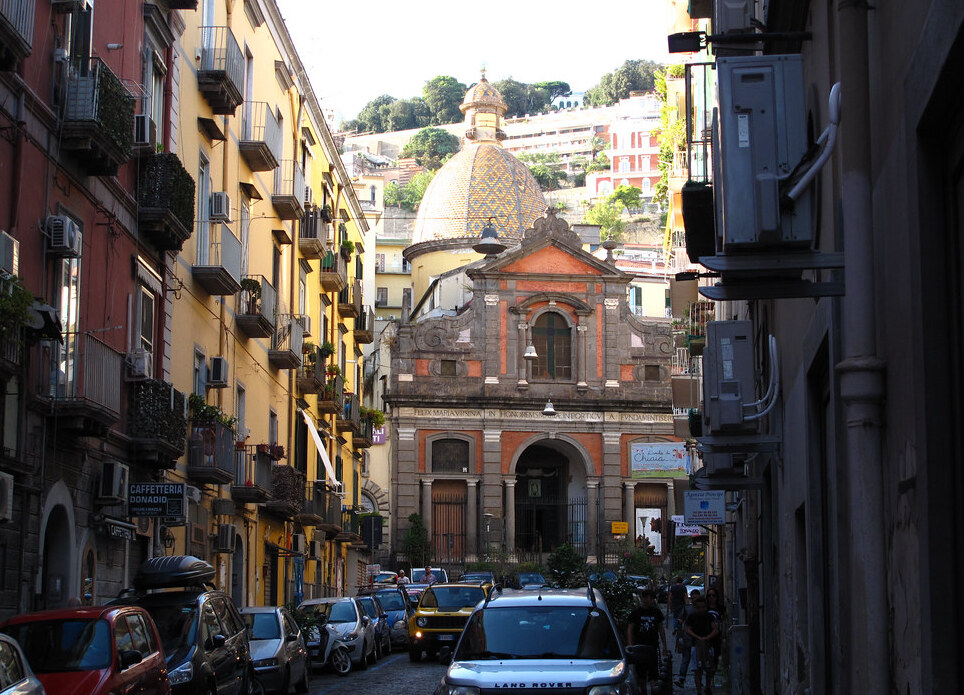

Nestled within the vibrant streets of Naples, the Church of Santa Maria in Portico stands as a testament to the city’s rich tapestry of history, art, and culture. Built in the early 17th century, this church serves not only as a place of worship but also as a canvas showcasing the artistic vision of its era.

The origins of Santa Maria in Portico date back to 1632 when the Duchess of Gravina, Felice Maria Orsini, generously donated her properties to the Lucchese Fathers of the Mother of God. This act of benevolence led to the establishment of the church, which takes its name from the Roman church of Santa Maria in Campitelli, located on the Portico d'Ottavia—the original home of the Lucchese Fathers. Over the centuries, the church has weathered both the passage of time and the tides of history, becoming a cherished landmark of Naples.
The architectural style of Santa Maria in Portico is a splendid example of Baroque design, characterized by its elaborate details and grand façade. The polychrome façade, crafted from piperno—a volcanic stone native to Naples—is the work of the talented architect Arcangelo Guglielminelli. As you approach the church, the intricate ornamentation draws you in, hinting at the beauty that lies within.

Stepping inside, visitors are greeted by a breathtaking interior adorned with 18th-century paintings and stunning stuccoes by the renowned artist Antonio Vaccaro. He not only designed the altar but also infused the church with an ethereal quality, making it a sanctuary of faith and artistry. Among the treasures housed in the sacristy is a remarkable crib featuring 17th-century pieces, offering a glimpse into the artistic styles and traditions of the period.
Local culture flourishes around Santa Maria in Portico, where the church plays a central role in various traditions and festivals. One notable event is the Feast of the Assumption, celebrated every August 15th. The church becomes a focal point for locals as they gather to honor the Virgin Mary, often accompanied by vibrant processions and communal feasts that showcase Neapolitan hospitality.
Speaking of hospitality, Naples is renowned for its gastronomy, which reflects the rich cultural influences that have shaped the city over centuries. Just a short stroll from the church, you can indulge in local delicacies such as pizza Napoletana, a dish celebrated for its simple yet flavorful ingredients. Pair your meal with a glass of Limoncello, a vibrant lemon liqueur that captures the essence of the Amalfi Coast. For dessert, don’t miss trying the famous sfogliatella, a flaky pastry filled with sweet ricotta—perfect for a post-church treat.
Beyond its religious and culinary significance, Santa Maria in Portico holds some lesser-known curiosities that add to its charm. For instance, many visitors overlook the unique crypts beneath the church—a hidden world that reveals the burial practices of the past. Furthermore, the church has been a silent witness to the tumultuous history of Naples, including the Spanish occupation and the Unification of Italy, making it a living archive of the city’s evolution.
For those planning a visit, the best time to explore Santa Maria in Portico is during the early morning or late afternoon when the soft light enhances the beauty of its interior. It's advisable to check the church's schedule for services and special events, as these can provide a deeper understanding of the local community's traditions. While visiting, take a moment to admire the altarpiece and the stunning frescoes that adorn the walls—each tells a story of devotion and artistry.
In conclusion, the Church of Santa Maria in Portico embodies the spirit of Naples, intertwining history, art, and local customs into a vibrant narrative. As you wander through its hallowed halls, you’ll discover not just a place of worship, but a reflection of a city steeped in culture and tradition. To immerse yourself further in the wonders of Naples, consider using the Secret World app for a personalized AI itinerary.


