
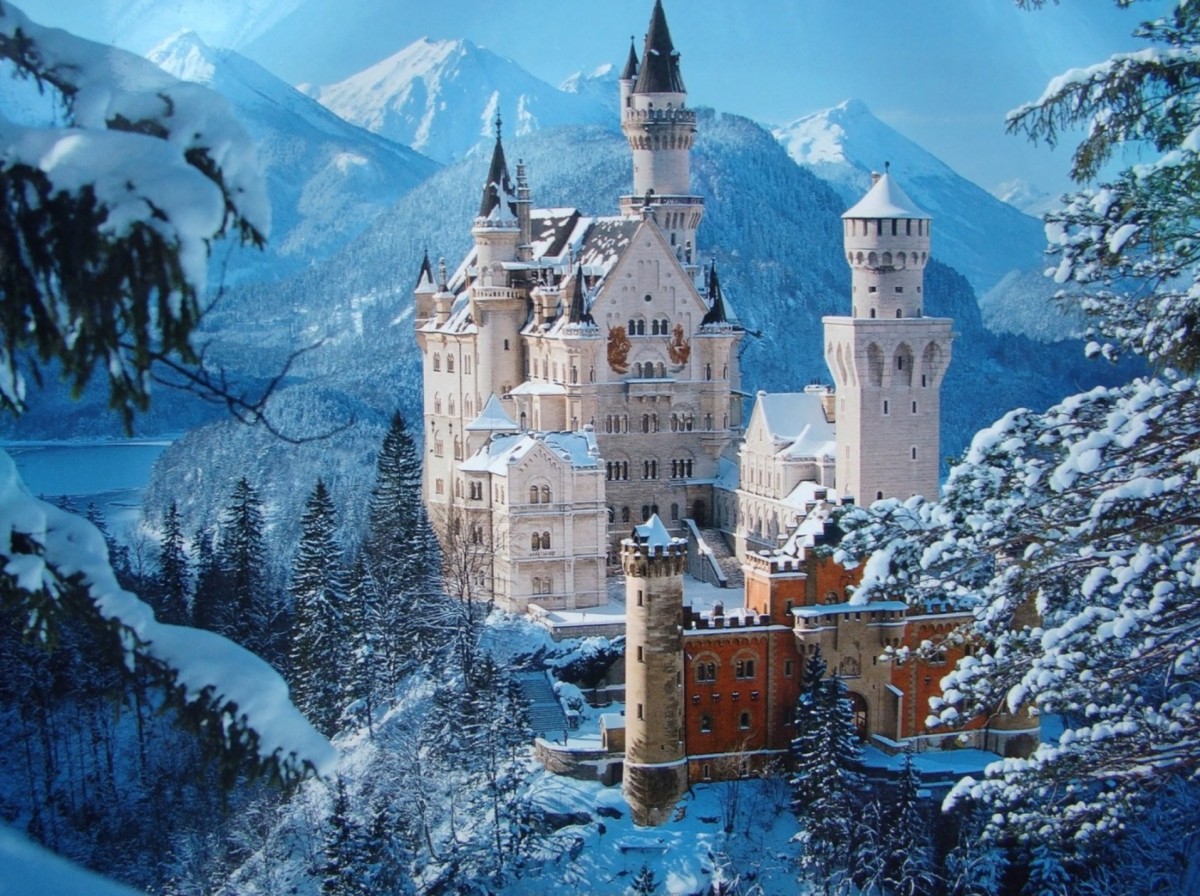

Nestled amidst the breathtaking landscapes of Bavaria, Neuschwanstein Castle stands as a mesmerizing testament to King Ludwig II's whimsical vision. Often dubbed the "Fairytale Castle," its striking silhouette against the backdrop of the Alps enchants visitors from around the globe. This romantic palace, perched above the village of Schwangau, draws approximately 1.4 million visitors each year, eager to experience the magic that inspired Disney's Sleeping Beauty Castle.
History and Origins
The story of Neuschwanstein begins with the enigmatic King Ludwig II of Bavaria, who ascended to the throne in 1864. Driven by a desire to escape the rigors of royal duty and the public eye, Ludwig envisioned a retreat that embodied his ideals of romanticism and medieval chivalry. Construction commenced in 1869, and though it was never completed during Ludwig's lifetime, the castle's design reflects his profound admiration for the operas of Richard Wagner, whom he regarded as a friend and muse.
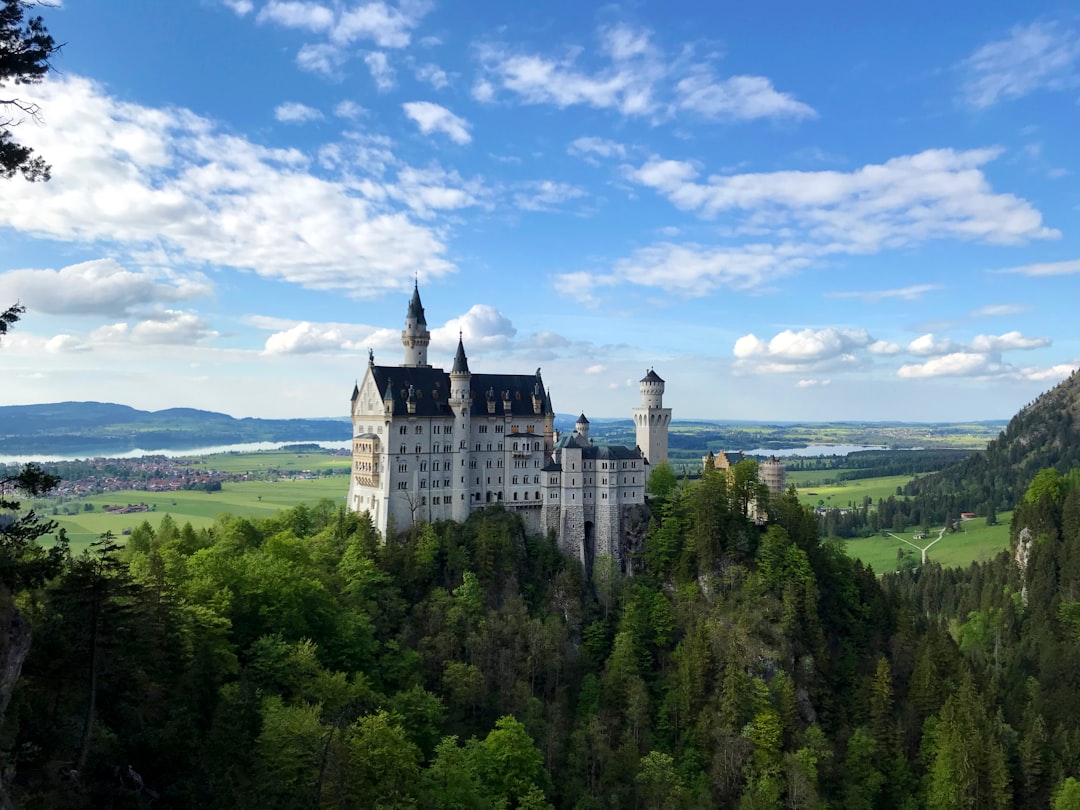
Tragically, the castle opened to the public only seven weeks after Ludwig's mysterious death on June 13, 1886, in the nearby Starnberger See. The circumstances surrounding his demise remain shrouded in mystery, fueling numerous theories and legends. Despite its origins as a personal sanctuary, Neuschwanstein quickly became a public attraction, drawing crowds eager to glimpse the retreat of the "fairytale king."
Art and Architecture
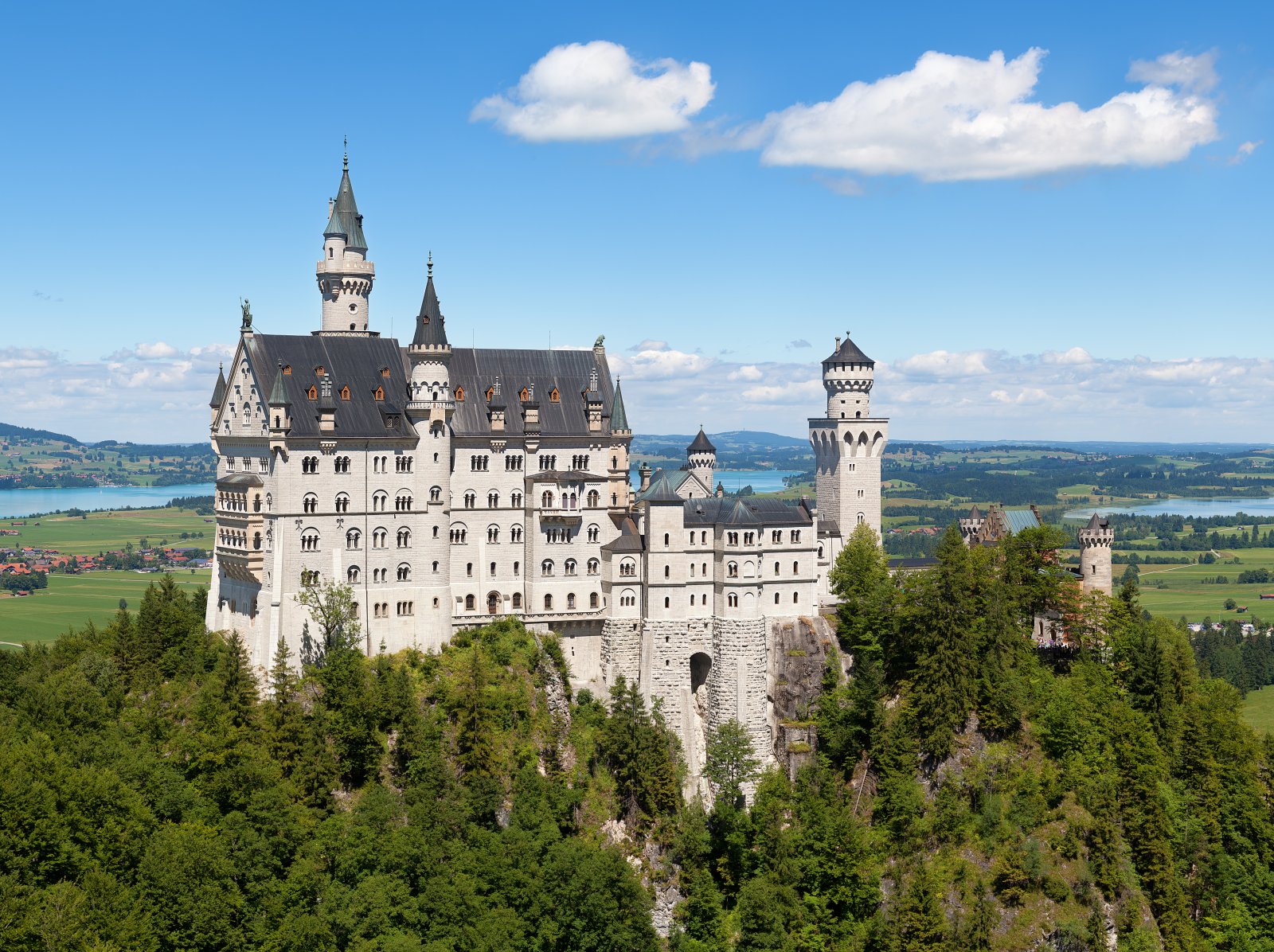
Neuschwanstein's architecture is a harmonious blend of Romanesque, Gothic, and Renaissance styles, creating a visual feast that captivates the imagination. Designed by architect Eduard Riedel, the castle features soaring towers, ornate turrets, and intricately carved wooden interiors. The stunning Great Hall, adorned with vibrant murals depicting medieval legends, is a highlight, showcasing the artistic vision of Ludwig and his team.
The castle's construction utilized local materials, with limestone sourced from the surrounding mountains. Unfortunately, the harsh Alpine climate has taken its toll on the structure, necessitating ongoing preservation efforts. Visitors each summer may witness workers carefully restoring sections of the limestone façades to maintain the castle's ethereal beauty.
Local Culture and Traditions
The area surrounding Neuschwanstein is steeped in rich Bavarian traditions. The village of Schwangau, with its quaint charm, hosts several festivals throughout the year, celebrating local heritage and craftsmanship. One notable event is the Schwangau Christmas Market, where visitors can savor traditional treats like Lebkuchen (gingerbread) while browsing handmade crafts.
Bavarian culture is also reflected in the region's culinary delights. Expect to find hearty dishes such as Schweinshaxe (crispy pork knuckle) and Käsespätzle (cheese noodles) in local eateries. Don't miss the chance to wash it down with a refreshing glass of Hefeweizen, a traditional wheat beer that complements the flavors of the region.
Gastronomy
Bavarian cuisine is a feast for the senses, and Schwangau offers a delightful array of local specialties. The region's proximity to the lush pastures and alpine farms means fresh ingredients abound. Try Allgäuer Käse, a creamy cheese that pairs wonderfully with local breads.
For a sweet treat, indulge in a slice of Bienenstich, a honey cake filled with cream and topped with caramelized almonds. Pair it with a cup of locally brewed coffee or a refreshing Radler, a blend of beer and lemonade perfect for a sunny day exploring the castle grounds.
Lesser-known Curiosities
While many visitors are familiar with the castle's picturesque views, few know that Ludwig II was a reclusive monarch who often dressed in disguise to escape the pressures of his royal duties. His passion for the arts extended beyond architecture; he funded numerous operas and compositions, leaving a legacy that shaped Bavarian culture.
Additionally, hidden within the castle is a series of secret passages and rooms that hint at Ludwig's desire for privacy. Some of these areas remain unexplored, adding an air of mystery to the already captivating narrative of Neuschwanstein.
Practical Visitor Information
The best time to visit Neuschwanstein is during the shoulder seasons of spring (April to June) and autumn (September to October). These months offer milder weather and fewer crowds, allowing for a more intimate experience.
When planning your visit, consider reserving tickets in advance, particularly during peak summer months when around 6,000 visitors may tour the castle daily. Be sure to explore not only the castle itself but also the surrounding trails that offer breathtaking panoramic views of the Bavarian landscape.
As you wander through the enchanting halls and gaze upon the stunning vistas, take a moment to appreciate the sheer artistry and history that Neuschwanstein embodies. To enhance your adventure, consider using the Secret World app, which can help you craft a personalized itinerary for your visit to Schwangau.


