
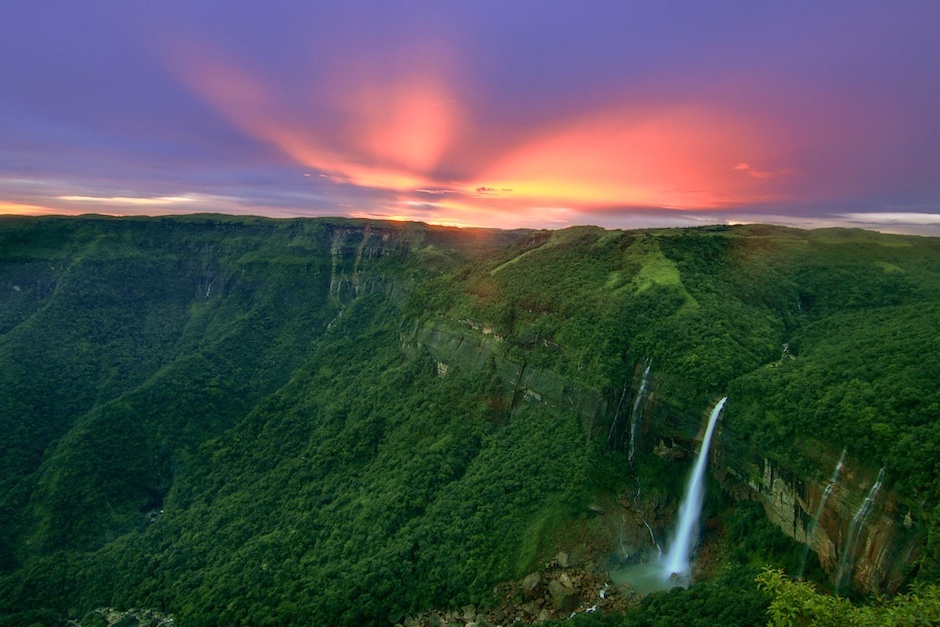

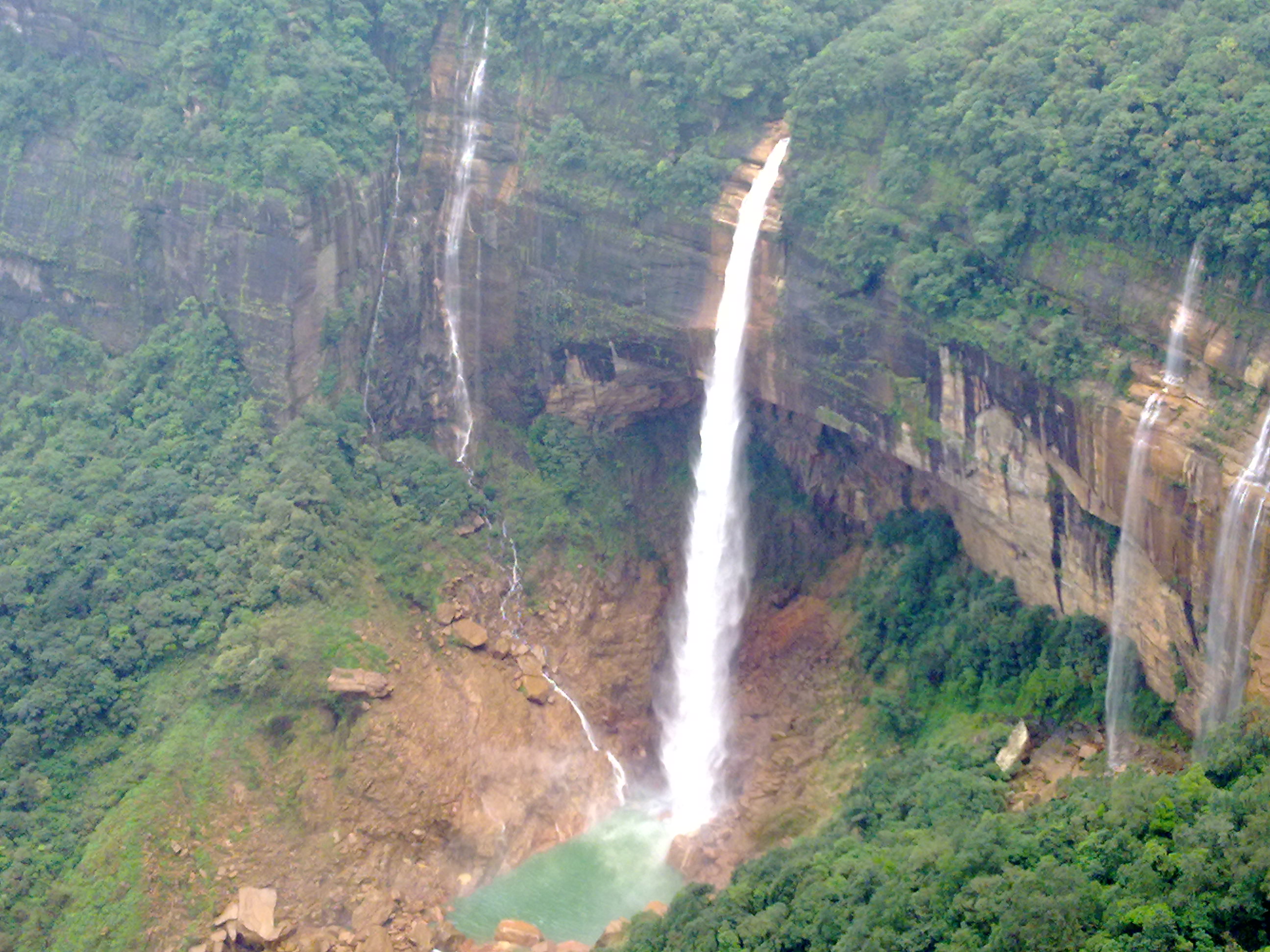
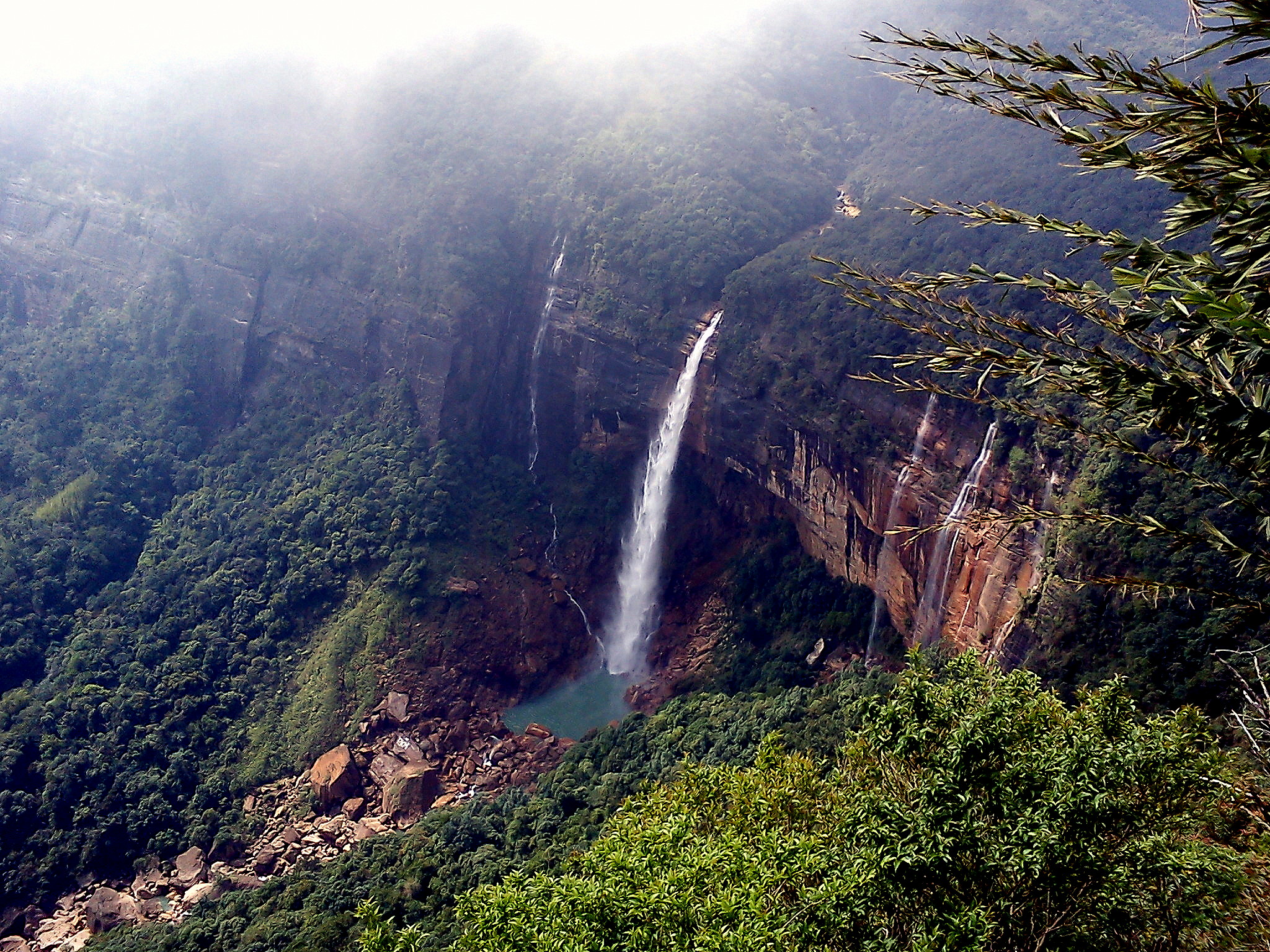
Perched on the edge of Meghalaya’s misty cliffs, Nohkalikai Falls cascades dramatically from a staggering height of 1115 feet, earning its place as India’s tallest plunge waterfall. This natural marvel is nestled near Cherrapunji, a town renowned for its extraordinary rainfall and lush landscapes. The falls are not just a testament to nature’s grandeur but also steeped in the legends and cultural fabric of the Khasi hills.
The story behind the name "Nohkalikai" is as captivating as the waterfall itself. It translates to "Jump of Ka Likai" in Khasi, a poignant reminder of a local legend. Ka Likai, a young widow, is said to have leapt off the cliff in despair after a heart-wrenching discovery about her family. This tale, though somber, is an integral part of local lore, adding a layer of human emotion to the natural beauty of the falls.
Architecturally, Nohkalikai Falls is untouched by human hands, yet its surroundings offer a unique blend of man and nature. Nearby, the Khasi villages exhibit traditional stilt houses, known as "Jadoh," built to withstand the heavy rains. These structures reflect the ingenuity of the people adapting to their environment, using locally sourced bamboo and thatch.
The cultural tapestry of the region is as vibrant as its landscapes. The Khasi people, who predominantly inhabit the area, celebrate numerous festivals that reflect their agricultural roots and reverence for nature. The Nongkrem Dance Festival, held annually, is a vivid display of the Khasi culture, where participants don traditional attire and perform ritualistic dances to thank the deities for a bountiful harvest. Visitors during this time can witness a slice of Khasi life that remains largely untouched by modernity.
Gastronomy in Cherrapunji offers a flavorful journey through Khasi cuisine. Traditional dishes like "Jadoh" (a meat and rice dish), "Tungrymbai" (fermented soybean), and "Dohneiiong" (pork with black sesame) are staples that reflect the region’s rich agricultural heritage. The food is often accompanied by "Kyat," a local rice beer that provides warmth during the chilly, rain-soaked days. These culinary delights are best enjoyed in local eateries, where recipes are passed down through generations.
Despite its fame, Nohkalikai Falls harbors secrets that escape the casual visitor. During the monsoon season, the waterfall is at its most powerful, creating a thunderous roar that echoes through the valley. However, during the drier months, the water flow diminishes, revealing rocks and boulders at the base, which are otherwise hidden. This cyclical transformation of the falls offers a unique perspective on the natural rhythms of the region.
For those planning a visit, the best time to experience Nohkalikai Falls is between October and February, when the skies are clearer, and the landscape transforms into a verdant paradise post-monsoon. The viewpoint, easily accessible from Cherrapunji, provides breathtaking vistas, especially at sunset when the fading light casts a golden hue over the falls.
While visiting, it's advisable to wear sturdy footwear due to the often slippery paths and to carry rain gear, as the weather can be unpredictable. For a more immersive experience, engaging a local guide can provide deeper insights into the folklore and ecological significance of the area.
Nohkalikai Falls is more than a visual spectacle; it’s a place where the elements of nature, culture, and history converge. Each visit is a reminder of the region’s dynamic interplay between human stories and the timeless majesty of the natural world.


