
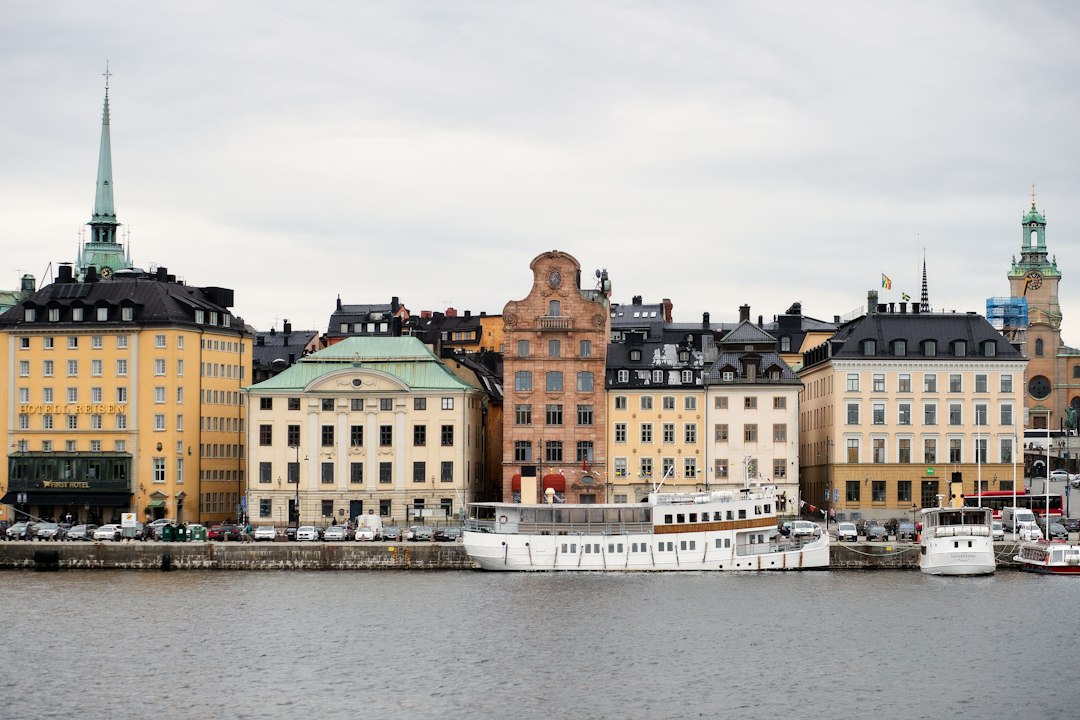

The smell of cinnamon and cardamom arrives even before seeing the stalls. In Gamla stan, the old town of Stockholm, the Christmas market in Stortorget — the main square of the neighborhood, one of the oldest in Sweden — is announced with scents that mix with the cold air of the Baltic. The facades of the buildings surrounding the square, painted in ochre, brick red, and mustard yellow, mostly date back to the 17th and 18th centuries, although the urban fabric of the neighborhood has its roots in the 13th century, when Stockholm began to take shape right on this small island called Stadsholmen.

Gamla stan is not an open-air museum in the conventional sense of the term: it is a lively neighborhood, where craft shops open every morning, antique dealers display silver and porcelain in corridors as narrow as Genoese alleyways, and tourists mingle with residents who go out to buy bread. Walking here means dealing with an urban scale that modern Europe has almost everywhere lost: streets three or four meters wide, alleys that close off into silent courtyards, stone staircases worn down by centuries of footsteps.
The Stortorget Square and the Christmas Market

Stortorget is the beating heart of Gamla stan and one of the most photographed places in all of Scandinavia. The square hosts every year, starting from the end of November and throughout December, one of the oldest Christmas markets in Sweden, active in this location for over fifty years. The wooden stalls sell julklappar — the Christmas gifts of Swedish tradition — along with blown glass ornaments, beeswax candles, wool fabrics, and hand-painted ceramics. Prices are not cheap: a small glass ornament can cost between 15 and 40 euros, but the craftsmanship quality is generally high and verifiable at the time of purchase.
Surrounding the square are some of the most significant buildings in the neighborhood. The Old Stock Exchange, built in 1778 according to the design of architect Erik Palmstedt, today houses the Swedish Academy — the same institution that awards the Nobel Prize in Literature every year. The building is recognizable by its classical facade and light yellow color that distinctly sets it apart from the surrounding medieval houses. On the ground floor is the Nobel Museum, which can be visited with an entrance ticket that costs around 130 Swedish crowns for adults.

The artisan shops and antique stores
The streets that branch off from Stortorget — particularly Västerlånggatan and Österlånggatan, the two main arteries of the district — are dotted with shops that deserve attention. Västerlånggatan, the more commercial of the two, hosts boutiques of Scandinavian design, souvenir shops, and some workshops where it is still possible to see artisans at work: luthiers, silversmiths, bookbinders. Not everything sold is authentic local craftsmanship — as in any historic European center frequented by tourists, one must know how to distinguish — but the discerning eye finds genuine pieces.

Österlånggatan is slightly quieter and hosts an interesting concentration of antique dealers. Here you can find antique prints of Nordic maps, silverware from the Gustavian period (late 18th century), pocket watches, and miniature furniture. Prices vary enormously: an original 18th-century print can cost a few hundred crowns, while signed silver pieces easily reach thousands of euros. Even just looking at the shop windows is an experience: the displayed objects tell three centuries of Swedish domestic history.
Sounds, lights, and the rhythm of the neighborhood

During the Christmas season, the neighborhood comes alive with choirs performing traditional Swedish music in the churches and squares. The Storkyrkan, the cathedral of Stockholm located just a few steps from Stortorget and dating back to its current form in the 15th century, hosts concerts of sacred music that can be attended for free or with a voluntary contribution. Inside the cathedral is the famous wooden sculpture of Saint George and the Dragon, created by the sculptor Bernt Notke in 1489: a work that alone is worth the visit to the neighborhood.
The dominant sound of Gamla stan is not that of bells, but the noise of footsteps on the gray granite cobblestones, interrupted by the jingling of bells on shop doors every time someone enters or exits. In the evening, when tourists thin out and the lights of the shop windows cast yellow and orange reflections on the wet cobblestones, the neighborhood regains a more intimate dimension.
Practical tips for visiting Gamla stan
The easiest way to reach Gamla stan is by subway: the stop Gamla stan on the red and green line leaves visitors directly at the entrance of the district. The best time to visit is early in the morning — between 9 and 11 — when the shops open but organized groups have not yet arrived. During the Christmas season, Saturday afternoon is the busiest time: it's better to avoid it if you want to walk calmly. Allowing at least two hours for a relaxed visit to the main shops is realistic; those who want to include the museums should plan for half a day. In winter, temperatures often drop below zero: waterproof shoes with non-slip soles are essential on the icy cobblestones.


