
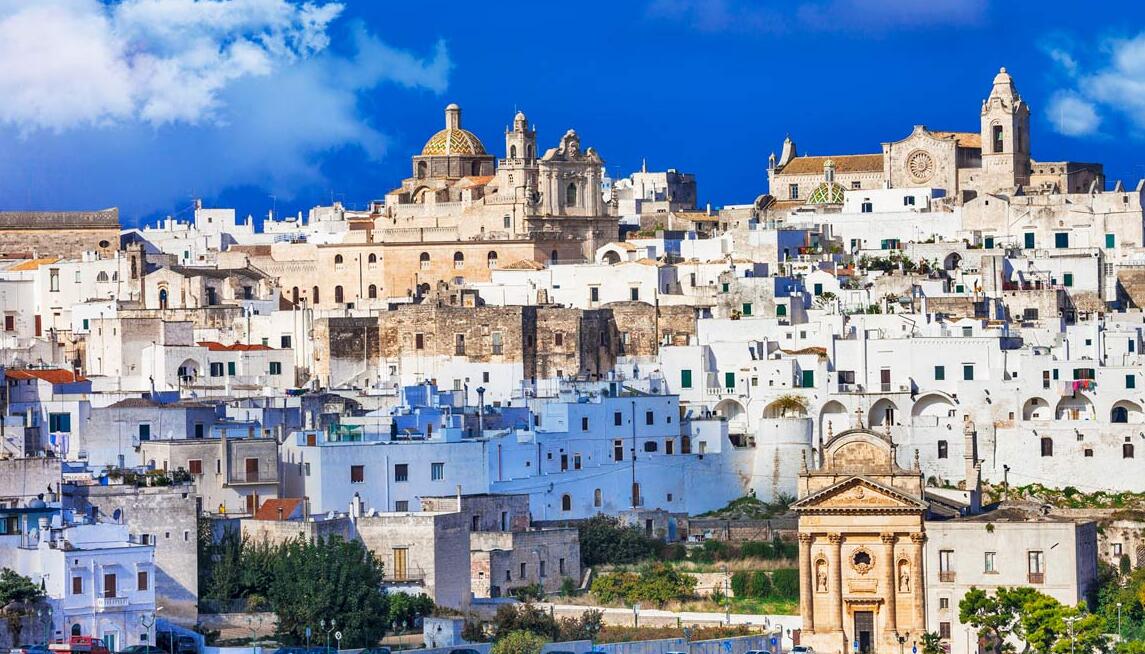

Perched atop a hill in the province of Brindisi, Ostuni, known as the White City, enchants visitors with its radiant whitewashed buildings and rich history. The city's origins trace back to the Neolithic period, with archaeological evidence suggesting that it was inhabited as early as 4000 BC. The strategic location of Ostuni made it a significant settlement throughout various historical epochs, including the Greek, Roman, and Medieval periods. Notably, it became part of the Kingdom of Naples in the 15th century, contributing to its cultural tapestry.

As you wander through the labyrinthine streets of Ostuni’s old town, you’ll be struck by the stunning Baroque architecture that defines its skyline. The Cathedral of Ostuni, built in the 15th century, features a magnificent rose window and intricate stone carvings that reflect the artistic prowess of the era. Additionally, the Church of San Francesco showcases beautiful frescoes and a serene atmosphere, inviting visitors to pause and reflect.
The local culture in Ostuni is vibrant, with traditions that celebrate both its agricultural heritage and its coastal location. The Festa dei Santi in early November is a lively event featuring parades, music, and traditional foods, drawing locals and tourists alike. The summer months also host the Ostuni Wine Festival, where visitors can sample exquisite local wines and enjoy the festive atmosphere.

Speaking of gastronomy, Ostuni is renowned for its delicious Puglian cuisine. A must-try dish is orecchiette alle cime di rapa, handmade ear-shaped pasta served with turnip tops and garlic. Don’t miss the opportunity to taste focaccia topped with local olives and herbs, or indulge in the sweet treat of pasticciotto, a pastry filled with custard. Pair your meals with Primitivo or Negroamaro, two of the region's esteemed wines that embody the flavors of Puglia.
Among the many wonders of Ostuni, a lesser-known curiosity is its ancient olive trees, some of which are over a thousand years old. The Olive Oil Museum within the city provides insight into the traditional methods of olive oil production and showcases the importance of this liquid gold to the local economy and culture. Further, hidden within the narrow streets, you'll find artistic murals and graffiti that reflect the contemporary creative spirit of the residents.
For those planning a visit, the best time to explore Ostuni is between late spring and early autumn (May to September), when the weather is warm and the landscape bursts with color. Make sure to wear comfortable shoes to navigate the steep and winding streets easily. Look for local artisan shops selling handmade ceramics, textiles, and olive oil, perfect for souvenirs that capture the essence of the region.
In conclusion, Ostuni is not just a picturesque destination; it’s a living tapestry of history, culture, and culinary delights waiting to be explored. Whether you’re meandering through its ancient streets or savoring the local flavors, the White City promises an unforgettable experience. For a personalized itinerary that perfectly suits your interests, consider using the Secret World app to uncover the hidden gems of Ostuni.


