
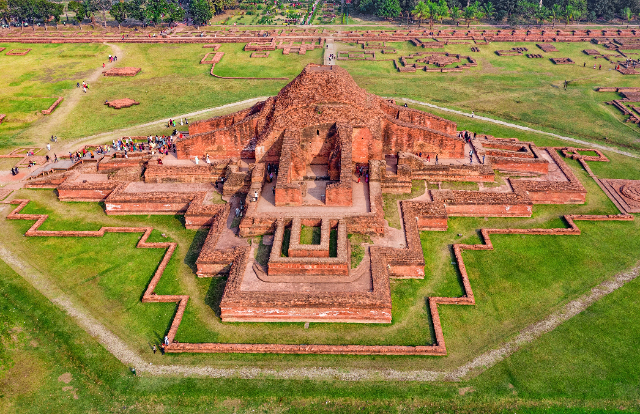

Paharpur, a quaint village located 5 km west of Jamalganj in the greater Rajshahi district of Bangladesh, is home to a remarkable historical treasure: the ruins of the largest known monastery south of the Himalayas. This significant archaeological site, dating back to the 7th century, spans an impressive area of approximately 27 acres.
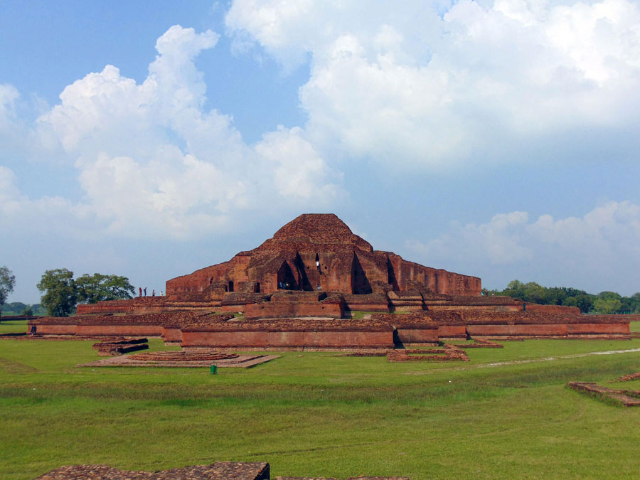
Architectural Grandeur The monastery, known as Somapura Mahavihara, is a testament to the grandeur of ancient Buddhist architecture. The entire complex is structured around a quadrangular court, with each side measuring over 900 feet externally. The high enclosure walls, about 16 feet in thickness and standing between 12 to 15 feet high, add to the monastery's imposing presence. The layout includes an intricate gateway complex on the north side, and the entire structure is arranged with a total of 177 rooms - 45 cells on the north and 44 on each of the other three sides.
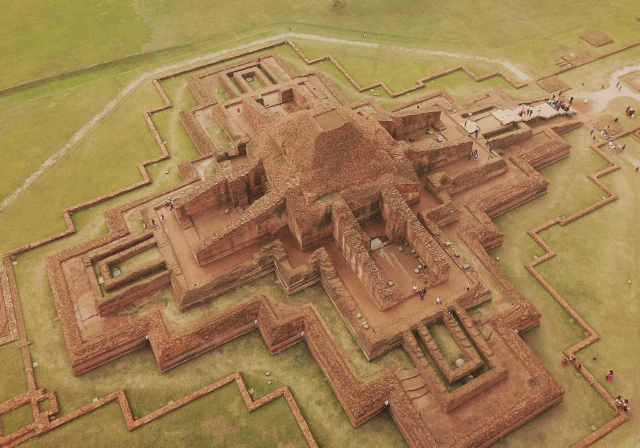
Influence of Southeast Asian Architecture One of the most striking features of Paharpur is the architecture of its central pyramidal cruciform temple. This design is profoundly influenced by the architectural styles of Southeast Asia, particularly those found in Myanmar and Java. This suggests a significant cultural and religious exchange between these regions during that era.
Preservation and Museum In an effort to preserve and showcase the rich history of Paharpur, a site-Museum was established in 1956-57. This museum houses a representative collection of objects excavated from the area. Additionally, many of the excavated findings are preserved at the Varendra Research Museum in Rajshahi. These antiquities include terracotta plaques, images of various gods and goddesses, pottery, coins, inscriptions, ornamental bricks, and other minor clay objects, providing a glimpse into the life and art of the period.
Cultural and Historical Significance Paharpur's Somapura Mahavihara is not only an architectural marvel but also a significant cultural and historical site. It is recognized as a UNESCO World Heritage Site, emphasizing its importance as a center of learning and spiritual practice in the Buddhist world. Historians and archaeologists believe that the monastery played a vital role as a seat of Buddhist education, attracting scholars and monks from far and wide.
Visiting Paharpur For history enthusiasts and tourists, a visit to Paharpur offers a unique opportunity to step back in time and experience the magnificence of ancient Buddhist architecture and culture. The site continues to be an area of active archaeological interest, promising new discoveries and insights into the rich heritage of the region.
In conclusion, Paharpur's Somapura Mahavihara stands as a significant reminder of the Buddhist heritage and the ancient educational excellence that once flourished in this part of the world, making it a must-visit site for anyone interested in the history and culture of South Asia.


