



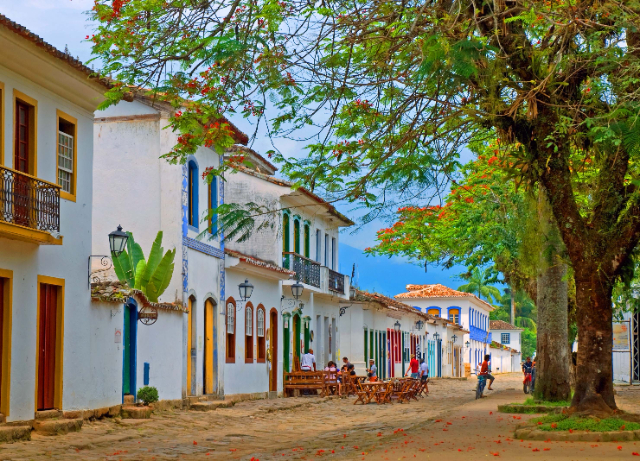
Nestled between lush tropical forests and the azure expanse of the emerald sea, Paraty stands as a jewel on Brazil's southeastern coast. This enchanting locale, set against the backdrop of the Serra da Bocaina mountain range, offers a captivating blend of natural beauty and rich cultural heritage, making it a must-visit destination for those seeking both adventure and history.
The origins of Paraty trace back to its indigenous roots, where the Guaianás people once thrived in the area. The town's official founding dates to 1667, emerging as a key port during Brazil's colonial period. Paraty became pivotal in the 18th century Gold Trail (Caminho do Ouro), serving as a vital link for transporting gold from the mines of Minas Gerais to the ports. The town's cobblestone streets, which have witnessed the comings and goings of countless traders, still echo with tales of the past, contributing to its designation as a UNESCO World Heritage Site.
Architecturally, Paraty showcases a remarkable blend of colonial Portuguese styles with a distinctive tropical flair. The town's historic center, a car-free zone, is a labyrinth of perfectly preserved whitewashed buildings adorned with colorful doors and windows. The Igreja de Santa Rita, built in 1722, is a standout example of colonial religious architecture, and serves as a testament to the town's rich spiritual history. This church, the oldest in Paraty, is now home to the Museum of Sacred Art, where visitors can admire an array of religious artifacts and artworks.
Paraty's vibrant cultural scene is kept alive through its numerous festivals. The Festa Literária Internacional de Paraty (FLIP), one of Brazil's most prestigious literary festivals, attracts writers and intellectuals from around the globe each July. Meanwhile, the Festival da Cachaça, a celebration of Brazil's traditional sugarcane spirit, highlights the town's deep-rooted connection to this national drink. Local traditions are woven into the fabric of Paraty's daily life, from the art of handcrafting boats to the rhythmic beats of maracatu and samba echoing through the streets.
Gastronomy in Paraty is a delectable journey through the flavors of the region. Seafood plays a central role, with dishes like moqueca, a slow-cooked fish stew enriched with coconut milk and dendê oil, showcasing the area's bounty. Another local favorite is the feijoada caiçara, a unique take on the classic Brazilian stew, infused with local seafood. For a sweet finish, try quindim, a luscious coconut custard. Pair these delights with a tasting of local cachaça, produced in the traditional alambics scattered throughout the countryside.
Beyond the well-trodden paths, Paraty holds secrets waiting to be discovered. Hidden among the thick forests are pristine waterfalls, like the Cachoeira do Tobogã, where the rocks themselves form a natural waterslide. The Forte Defensor Perpétuo, a historic fortress overlooking the bay, offers panoramic views and a glimpse into Brazil's colonial military history. Another hidden gem is the Quilombo do Campinho, a community founded by the descendants of escaped African slaves, where visitors can learn about Afro-Brazilian culture and history.
For those planning a visit, timing is everything. The best months to explore Paraty are from April to June and September to November, when the weather is mild, and the humidity is less intense. The town is easily accessible from Rio de Janeiro and São Paulo, both offering regular bus services to Paraty. When visiting, wear comfortable shoes for navigating the uneven cobblestone streets and prepare to embrace a slower pace, allowing the town's charm to reveal itself fully.
In Paraty, every corner tells a story, every meal is a celebration of flavors, and every festival a tribute to its rich heritage. As you wander through its streets, enveloped by the symphony of nature and culture, you'll discover that Paraty is more than a destination—it's a timeless journey.
