
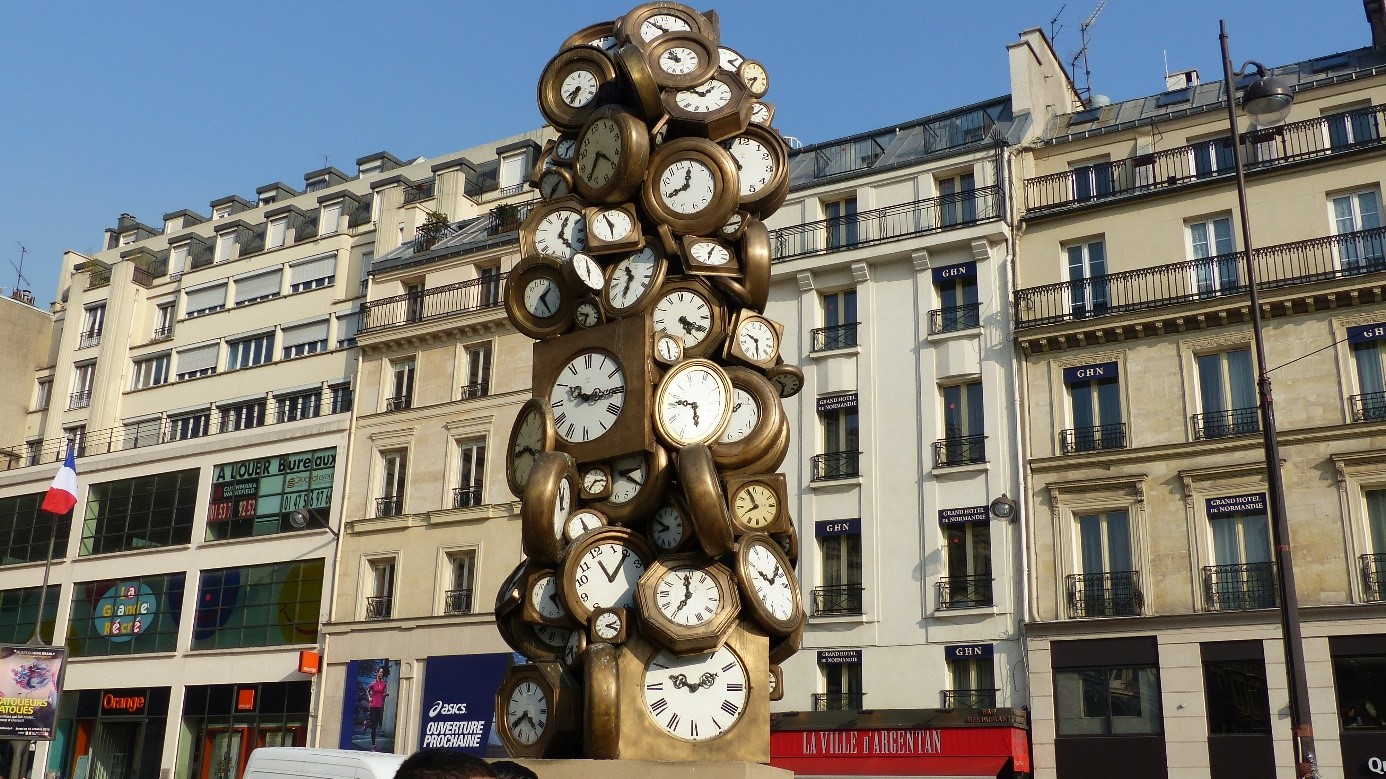

In the bustling heart of Paris, just outside the iconic Gare Saint-Lazare, stands a remarkable testament to time and art—L'Heure de Tous. This intriguing sculpture, crafted by the renowned French artist Arman Fernandez in 1985, beckons travelers and art enthusiasts alike with its unique assembly of bronze clocks, each frozen at a different hour. Yet, L'Heure de Tous is not merely a collection of timepieces; it is a poignant reflection on the fluidity and universality of time, a theme deeply embedded in the historical and cultural tapestry of Paris.
The sculpture's location is no coincidence. Gare Saint-Lazare, one of Paris's oldest railway stations, has been a vital hub since its inception in the mid-19th century. It was here, amidst the steam and steel of the industrial age, that Paris saw the dawn of a new era—a period marked by rapid urbanization and technological advancement. The station itself is a masterpiece of 19th-century architecture, characterized by its grandiose facade and intricate ironwork. As one of the six major termini of the SNCF network, Gare Saint-Lazare has been immortalized in countless works of art, most notably in the impressionist paintings of Claude Monet, who captured its bustling energy and atmospheric light.
Arman Fernandez's work is emblematic of Nouveau Réalisme, a movement that sought to redefine art by incorporating everyday objects into artistic expressions. L'Heure de Tous, with its jumble of clocks, challenges the conventional perception of time as linear and uniform. Each clock in the sculpture tells a different time, inviting viewers to ponder the subjective experience of time and its passage. This artistic endeavor is a fitting tribute to a city that has long been at the forefront of avant-garde art and innovation.
Beyond its artistic allure, L'Heure de Tous is a gateway to exploring the vibrant culture and traditions that define Paris. The area around Gare Saint-Lazare is a microcosm of the city's eclectic character. Just a stone's throw away is the Église de la Madeleine, a neoclassical church that hosts concerts throughout the year, offering visitors a taste of Paris's rich musical heritage. Meanwhile, the nearby Boulevard Haussmann is a shopper's paradise, home to the world-famous Galeries Lafayette and its stunning Art Nouveau glass dome.
Parisian gastronomy is another integral facet of the city's identity. In the vicinity of Gare Saint-Lazare, you'll find an array of bistros and cafes serving quintessential French fare. Indulge in a croque-monsieur or a tarte tatin at a cozy café, or savor the nuanced flavors of coq au vin at a traditional brasserie. The district's vibrant food scene is a testament to the city's culinary creativity and dedication to preserving age-old recipes.
For those seeking hidden gems, the area offers fascinating curiosities. Just behind the station lies the Passage du Havre, a charming shopping arcade that dates back to the late 19th century. Though modernized, it retains its historical charm, with elegant boutiques and a tranquil ambiance. Another lesser-known spot is the Musée de la Vie Romantique, tucked away in a quiet street in the 9th arrondissement. This museum, housed in a quaint villa, provides a glimpse into the romantic era of the 19th century, showcasing artworks and memorabilia of the time.
When planning a visit to L'Heure de Tous, consider the time of year. The sculpture is a delight to behold in any season, but visiting in early autumn or late spring allows you to enjoy the mild weather and vibrant city life. Early mornings or late afternoons offer the best light for photography, capturing the sculpture's intricate details against the backdrop of Parisian architecture.
In the realm of practical tips, take a moment to linger and observe the interactions of passersby with the sculpture—locals often pause, perhaps contemplating their personal connection to time amid their daily routines. Remember to explore the area on foot; the neighborhood's compact nature makes it ideal for strolling and unearthing unexpected delights.
L'Heure de Tous is more than just an artistic landmark; it is a profound reminder of the transient yet eternal nature of time, mirrored in the ever-evolving city of Paris. Whether you're an art aficionado, a history buff, or a curious traveler, this captivating sculpture offers a unique lens through which to experience the timeless allure of the French capital.


