
← Back

Parish church of San Giovanni in Vigo di Fassa

Via della Chiesa, 2, 38039 Vigo di Fassa TN, Italia ★★★★☆ 144 views
Maria Puccini
Pieve Di San Giovanni
🏆 AI Trip Planner 2026

Get the free app

Discover the best of Pieve Di San Giovanni with Secret World — the AI trip planner with 1M+ destinations. Get personalized itineraries, hidden gems and local tips. Free on iOS & Android.

🧠 AI Itineraries 🎒 Trip Toolkit 🎮 KnowWhere Game 🎧 Audio Guides 📹 Videos
Download on the App Store Get it on Google Play
Scan to download Scan to download

Religious places · Pieve Di San Giovanni

Parish church of San Giovanni in Vigo di Fassa - Pieve Di San Giovanni | Secret World Trip Planner

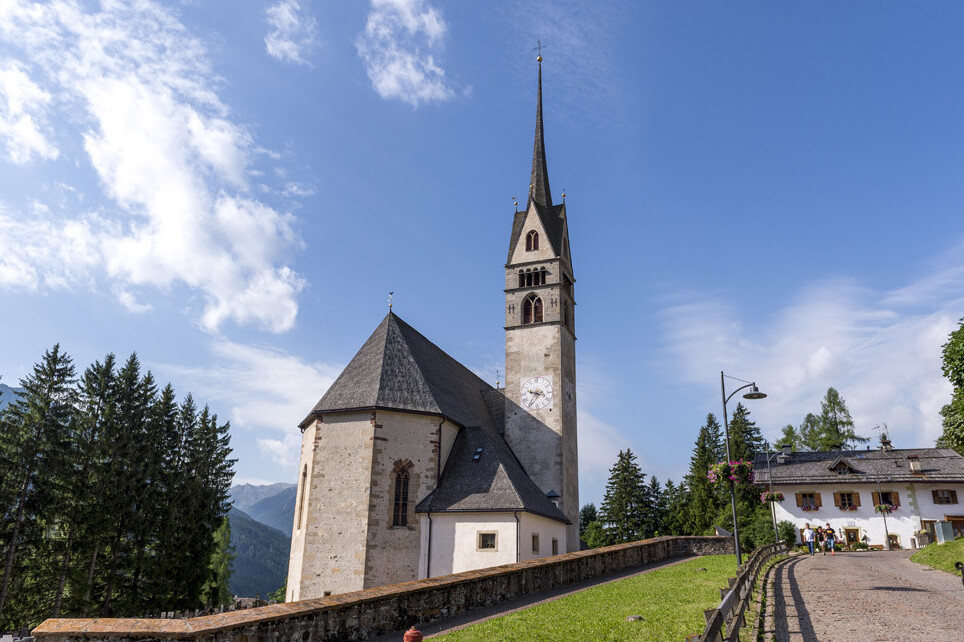
It is considered the mother church and for centuries was the fulcrum of the ecclesiastical and civil life of the valley. The Pieve di San Giovanni, with its double dedication to the Baptist and the Evangelist and the presence of a crypt dedicated to San Michele Arcangelo, recalls Longobard religious customs. The existence of the parish church is known since 1227 and of the first Romanesque building, at the level of the crypt, there are the remains of the apse with a remarkable fresco. The present Alpine Gothic style is the result of reconstruction in the second half of the 15th century. The Romanesque bell tower with three belfries and arrow-shaped spire was raised to 67 metres during the enlargement. The main portal to the west is a slightly pointed arch; at its sides are two holy water stoups supported by marble lion heads from the 13th century, surmounted by the "lamb", the coat of arms of the Prince-Bishop of Brixen. The Gothic interior has three naves supported by cylindrical syenite columns from Monzoni, without capitals, from which a geometric interweaving of thin plastered pilasters branches off, dividing the entire vault into triangular or quadrangular sails. Three of the five walls of the apse are entirely frescoed. The figures on the south side were painted by David Solbach in 1578: at the top there is a representation of the "Trinity" in the form of a "Theophany" (the Father and the Son sit side by side, between them a dove symbolizes the Holy Spirit), wrapped in light and with curious stylized angels at the base. The two large paintings below depict the biblical episodes of "Susanna at the Bath" and the healing of Tobias from blindness by his son Tobias. The paintings above the door to the sacristy, on the other hand, are the work of the South Tyrolean school of Ruprecht Potsch (1498) and depict the life of John the Baptist: the penitent saint in the desert, his preaching to the crowds, the baptism of Jesus, the beheading and the executioner handing John's head to Salome. On the adjoining wall there is another sixteenth-century scene, executed with mixed technique: the "Last Supper". The church also preserves some valuable works of art: the magnificent marble baptistery donated in 1538 by Silvestro Soldà; the precious big altar piece placed behind the high altar, painted in 1786 by a young Antonio Longo, a very famous priest painter from Val di Fiemme, depicting the baptism of Jesus. The twelve wooden Stations of the Cross, hanging along the walls of the presbytery and the side aisles, are considered the best work of Tita Pederiva of Soraga, a pioneer of the Fassa chisel (completed in 1954). From the outside, on the south side, a small portal leads to the crypt or "Rozar" (in Ladin). The interior with pointed arches, altar and statue of the Madonna are neo-Gothic. Of particular note is the fresco in the Chapel of the Dead.
Parish church of San Giovanni in Vigo di Fassa - Pieve Di San Giovanni | Secret World Trip Planner
🗺 AI Trip Planner

Plan your visit to Pieve Di San Giovanni

Suggested itinerary near Parish church of San Giovanni in Vigo di Fassa

MAJ+
500.000+ travelers worldwide
  1. 🌅
    Morning
    Parish church of San Giovanni in Vigo di Fassa
    📍 Pieve Di San Giovanni
  2. ☀️
    Afternoon
    Museum Ladin of Fassa
    📍 0.2 km · Pieve Di San Giovanni
  3. 🌆
    Evening
    Vigo di Fassa, a beautiful village in wood and stone
    📍 0.4 km · Pieve Di San Giovanni

Buy Unique Travel Experiences

Powered by Viator

See more on Viator.com

Explore nearby · Pieve Di San Giovanni

Frequently Asked Questions

The existence of the parish church is documented since 1227, making it one of the valley's oldest structures. The current Alpine Gothic style building is the result of reconstruction undertaken in the second half of the 15th century, though remnants of the original Romanesque structure, including the apse with a remarkable fresco, still exist in the crypt.
The Gothic interior features three naves supported by distinctive cylindrical syenite columns from Monzoni without capitals, from which geometric interweaving of thin plastered pilasters branch off to divide the vault into triangular and quadrangular sections. This architectural style creates a visually striking and intricate ceiling pattern that is characteristic of Alpine Gothic design.
The south side apse frescoes were painted by David Solbach in 1578 and include a representation of the Trinity as a Theophany with the Father and Son seated together and a dove symbolizing the Holy Spirit, along with biblical scenes of Susanna at the Bath and the healing of Tobias. The paintings above the sacristy door were created by South Tyrolean artist Ruprecht Potsch in 1498 and depict scenes from the life of John the Baptist.
The main west portal features a slightly pointed Gothic arch flanked by two marble holy water stoups supported by 13th-century lion heads, topped with the 'lamb' coat of arms of the Prince-Bishop of Brixen. The Romanesque bell tower stands at an impressive 67 meters tall with three belfries and an arrow-shaped spire that was raised during the church's enlargement.
The Pieve di San Giovanni has a double dedication to both the Baptist and the Evangelist, with an additional crypt dedicated to San Michele Arcangelo, which reflects Longobard religious customs and traditions. As the mother church, it served as the fulcrum of ecclesiastical and civil life in the valley for centuries, underscoring its historical and cultural importance to the Fassa Valley community.
