
← Back

Pasta Museum

Str. Giarola, 11, 43044 Collecchio PR, Italia ★★★★☆ 333 views
Giovanna Pascoli
11
🏆 AI Trip Planner 2026

Get the free app

Discover the best of 11 with Secret World — the AI trip planner with 1M+ destinations. Get personalized itineraries, hidden gems and local tips. Free on iOS & Android.

🧠 AI Itineraries 🎒 Trip Toolkit 🎮 KnowWhere Game 🎧 Audio Guides 📹 Videos
Scan to download iOS / Android
Scan for AppGallery Huawei users

About Pasta Museum

Pasta Museum - 11 | Secret World Trip Planner

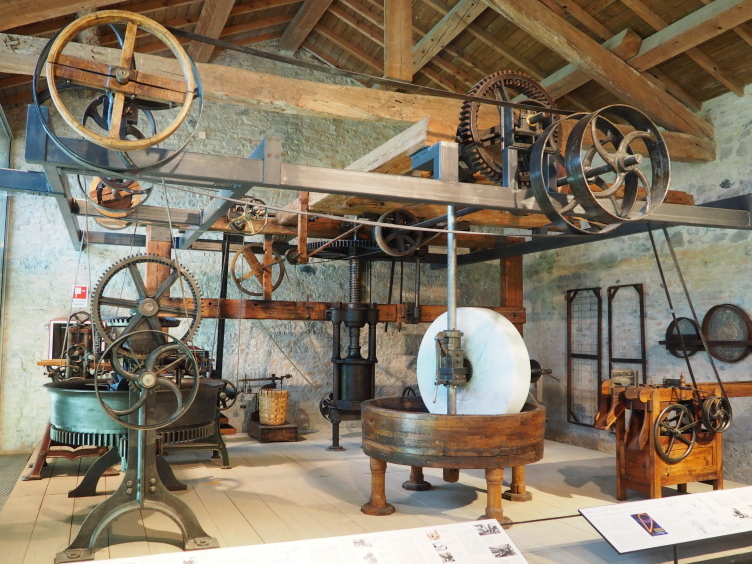
Pasta Museum The first section, dedicated to wheat, its characteristics and cultivation methods, presents models, ancient agricultural tools and documents that testify to the evolution of agricultural techniques. The second section is dedicated to milling, the various types of mill, with models and historical iconography of great interest, the reconstruction of a millstone mill and a modern cylinder mill. A synthetic section is then dedicated to bread and bakery products. The homemade preparation of fresh pasta, to which the fourth section is dedicated, is told through small domestic tools, the art of rolling pin and the extraordinary variety of the rich collection of "speronelle", or pasta wheels.

A real industrial pasta factory of the first half of the nineteenth century allows the visitor, in the fifth section, to understand the various stages of production of dried pasta, with original machinery, perfectly restored. A second nucleus of ancient machines, shows the production methods in an Emilian artisan workshop of the last century. Models and videos, then allow the visitor to know the current, very modern technologies used in industrial pasta factories to guarantee a product of constant high quality over time. A further chapter illustrates, through the "trafili", the way of forming a hundred different pasta formats, true "architectures for the mouth".

The sixth section is dedicated to the culture of pasta, with in-depth information on communication (posters, playbills, historical posters made by famous poster artists and graphic designers), gastronomy (history of pasta strainers and ideal combinations of formats and condiments from the various regions of Italy), pasta in art and culture (from paintings to stamps).

🗺 AI Trip Planner

Plan your visit to 11

Suggested itinerary near Pasta Museum

MAJ+
500.000+ travelers worldwide
  1. 🌅
    Morning
    Pasta Museum
    📍 11
  2. ☀️
    Afternoon
    Tomato Museum
    📍 0 km · 11
  3. 🌆
    Evening
    Village of Felino and the Salami Museum
    📍 7.9 km · 11

Buy Unique Travel Experiences

Powered by Viator

See more on Viator.com

Explore nearby · 11

Frequently Asked Questions

The museum features a dedicated section on homemade fresh pasta preparation showcasing small domestic tools and an extraordinary collection of 'speronelle' (pasta wheels) that demonstrate the art of rolling pin techniques. You'll also find displays of various pasta formats created through 'trafili,' explaining how different shapes are formed and referred to as 'architectures for the mouth.'
Yes, the fifth section features a real industrial pasta factory from the first half of the nineteenth century with original, perfectly restored machinery that shows the various stages of dried pasta production. Additionally, there's a separate nucleus of ancient machines from an Emilian artisan workshop of the last century, allowing visitors to understand how pasta production has evolved over time.
The first section is dedicated to wheat cultivation methods, presenting models, ancient agricultural tools, and documents showing the evolution of farming techniques. The second section covers milling with various mill types, historical iconography, and reconstructions of both a traditional millstone mill and a modern cylinder mill.
Absolutely, the sixth section is entirely dedicated to pasta culture, featuring historical posters by famous artists, the history of pasta strainers, regional Italian pasta and condiment pairings, and pasta's representation in art and culture including paintings and stamps. This section provides deep insights into how pasta has influenced Italian gastronomy and artistic expression.
The museum uses models and videos to explain the very modern technologies employed in contemporary industrial pasta factories to ensure consistent high quality. This section helps visitors understand how traditional methods have evolved into sophisticated modern production processes while maintaining the quality and integrity of the final product.
