
← Back

Patmos: The Cave of the Apocalypse

Unnamed Road, Skala 855 00, Grecia ★★★★☆ 450 views
Francesca Salerno
Skala
🏆 AI Trip Planner 2026

Get the free app

Discover the best of Skala with Secret World — the AI trip planner with 1M+ destinations. Get personalized itineraries, hidden gems and local tips. Free on iOS & Android.

🧠 AI Itineraries 🎒 Trip Toolkit 🎮 KnowWhere Game 🎧 Audio Guides 📹 Videos
Scan to download iOS / Android
Scan for AppGallery Huawei users

About Patmos: The Cave of the Apocalypse

Patmos: The Cave of the Apocalypse - Skala | Secret World Trip Planner

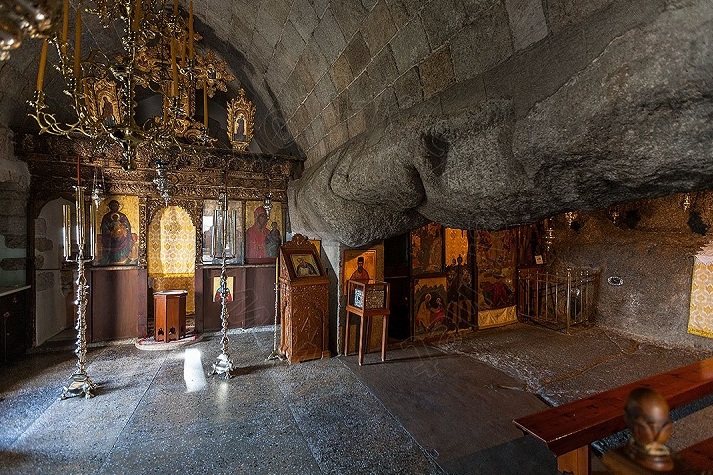
The Cave of the Apocalypse is located between the villages of Skala and Chora, in a pine forest a short distance from the port of the island of Patmos. It owes its name to the fact that it was here that the Apostle John heard the voice of God from a triple cleft in the rock, symbolizing the Holy Trinity, and had visions that led him to write the last book of the Bible, the Apocalypse. This mystical place, the centre of Christianity together with the monastery of St. John, brought to the island of Patmos the title of "Jerusalem of the Mediterranean". Thus the Apostle's simple words reveal his presence on the island, "I John, your brother and companion in affliction, in the kingdom and constancy of Christ Jesus, was on the island called Patmos, because of the Word of God and the testimony of Jesus Christ." (Revelation 1:9) The Cave was the disciple John's first shelter when in 95 A.D. the Roman Emperor Domitian exiled him to Patmos because of his Christian preaching. The Evangelist remained on the island until 97 A.D. and during his stay in the cave, three fissures formed in the rock from which the voice of God escaped. It is plausible that the fourth Gospel of John was written in this same cave. Later on St. Christodulos, abbot of Bithynia, transformed the island of Patmos into a place of worship, in fact in the eleventh century he founded, thanks to the concession of Emperor Alexis Komninos I, the great Monastery dedicated to St. John. The Greek Parliament in 1983 declared Patmos a sacred island and in 1999, UNESCO declared the Monastery, the Cave of the Apocalypse and the village of Chora a World Heritage Site. It is preceded by a small, white monastery called the Monastery of the Apocalypse, built in the 17th century. From here a staircase flanking the monks' cells leads down into the Cave, preceded by a chapel that serves as an entrance where you can smell a strong odour of incense. The interior of the cave is small, lit with simple candles and decorated with paintings and ancient icons. In the semi-darkness of this cave is undeniable the suggestion and the strong sacredness that is perceived. A place steeped in history and sacredness, which creates reverential fear in the most devout visitors. The Cave of the Apocalypse is a point of reference not only for Patmos, but for Christianity all over the world.


Patmos: The Cave of the Apocalypse - Skala | Secret World Trip Planner
🗺 AI Trip Planner

Plan your visit to Skala

Suggested itinerary near Patmos: The Cave of the Apocalypse

MAJ+
500.000+ travelers worldwide
  1. 🌅
    Morning
    Patmos: The Cave of the Apocalypse
    📍 Skala
  2. ☀️
    Afternoon
    Monastery of San Giovanni
    📍 1.8 km · Skala

Buy Unique Travel Experiences

Powered by Viator

See more on Viator.com

Explore nearby · Skala

Frequently Asked Questions

The Cave of the Apocalypse is situated between the villages of Skala and Chora in a pine forest, a short distance from Patmos's port. It's easily accessible and preceded by the small white Monastery of the Apocalypse, built in the 17th century, from which a staircase leads down into the cave.
Apostle John was exiled to Patmos in 95 A.D. by Roman Emperor Domitian because of his Christian preaching and remained on the island until 97 A.D. The cave served as his first shelter, and it was here that he heard God's voice from a triple cleft in the rock and had the visions that inspired him to write the Book of Revelation.
The three fissures in the cave rock symbolize the Holy Trinity and are where Apostle John heard the voice of God during his exile. These three clefts formed naturally during John's time on the island and represent a central spiritual element of this sacred Christian site.
The Greek Parliament declared Patmos a sacred island in 1983, recognizing its spiritual significance. In 1999, UNESCO further honored the site by declaring the Monastery of St. John, the Cave of the Apocalypse, and the village of Chora a World Heritage Site.
Visitors enter through a chapel that serves as an entrance where you'll notice a strong odor of incense, then descend a staircase flanking monks' cells to reach the small interior cave. The cave is lit by simple candles and decorated with religious iconography, creating a deeply mystical atmosphere for pilgrims and travelers.