
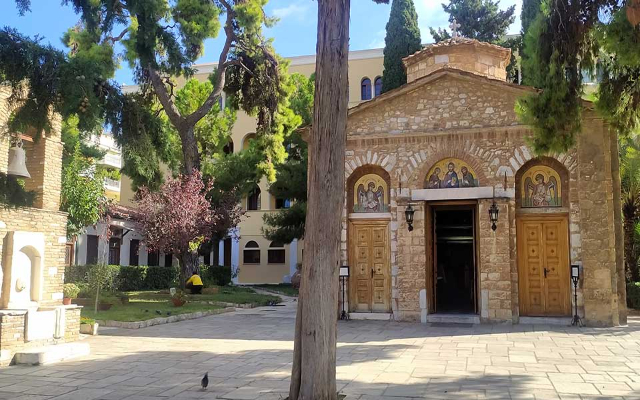

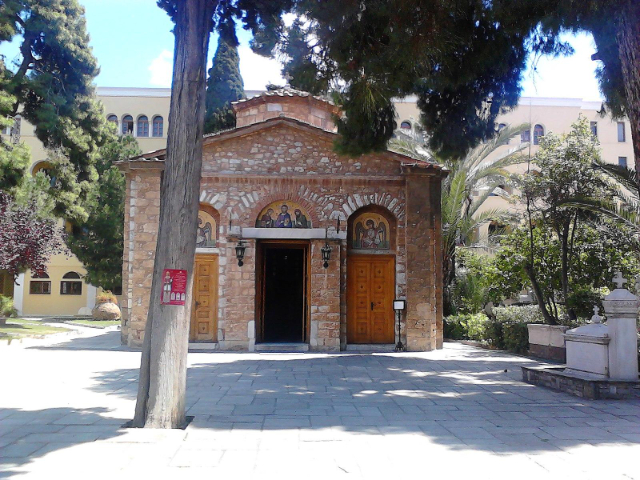
Nestled in the heart of Athens, the Petraki Monastery, also known as the Monastery of the Holy Incorporeal Taxiarches, offers a serene haven presided over by 16 devoted monks. This peaceful refuge is home to Athens' oldest standing Byzantine church, a historic gem dating back to the 10th century.
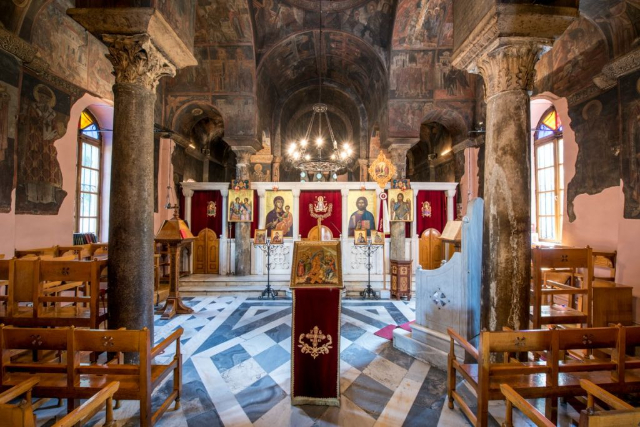
The church, predominantly constructed with rubble masonry, stands as a four-aisled, cross-in-square edifice. Its octagonal dome, a relic from the late Byzantine era, is gracefully supported by ancient columns, while the outer narthex was thoughtfully added at the outset of the 19th century.
During the era of Ottoman rule, the monastery served as a Metochion (monastic dependency) of the Karea Monastery on Mount Hymettus. It became a lifeline for the local community, offering vital medical care and sustenance to hundreds of residents and followers.
Over the centuries, the complex underwent multiple renovations, with significant modifications in the 15th and 16th centuries. In 1673, the monastery underwent an extensive overhaul, thanks to the generous financing of Parthenios Petrakis, a monk, physician, and philosopher. In appreciation of his contribution, the monastery was aptly named after him. In 1719, the church's walls were adorned with mural paintings by the renowned hagiographer Georgios Markou, and in the mid-18th century, the monastery transitioned to a patriarchal institution. From that point forward, all Abbots were designated by the Petrakis family.
The monastery precinct encompasses the Church of Saint Asomatoi Taxiarches, serving as the seat of the Holy Synod of the Church of Greece, the resting place of the esteemed cleric Constantinos Oikonomou, and a collection of artifacts, including ancient temple columns. Furthermore, the site presents captivating vistas extending towards Mount Lycabettus and the Church of St. George.
In the 19th century, the monastery's influence extended as it acquired significant nearby properties, including sites that now house the Academy of Athens, the National Technical University of Athens, the Gennadius Library, the Rizareios School, and Evangelismos, Sotira, and Syngrou Hospitals. This generous donation to the Greek government solidified the monastery's place as one of the most significant benefactors in the nation's history.
The monastery endured damage and plundering by the Ottomans during the Greek War of Independence, yet it was swiftly restored upon Greek independence. During the Balkan Wars from 1912 to 1913, the military once again made use of the monastery. In 1923, it offered refuge to numerous Greek refugees who were part of the population exchange between Greece and Turkey. During World War II, the monastery continued its humanitarian role by providing meals to local needy families every Sunday.
Visitors to the monastery grounds are welcomed, but entering the church warrants a display of respect through modest clothing and decorum. For men, it is best to avoid shorts, tank tops or sleeveless shirts, and sandals or flip-flops. Women should ensure their shoulders are covered, refraining from strapless or thinly strapped attire. Skirts and dresses should minimally extend below the knee, and some churches may require no exposed legs. Proper seating etiquette involves keeping feet on the ground, as it is considered disrespectful for them to face holy images.
The church conducts daily Divine Liturgy services from 6:00 a.m. to 8:15 a.m., which are broadcast live by the Church of Greece radio station. Additionally, the monastery annually observes the Feast of the Bodiless Powers on November 8, and on February 7 of each year, memorial services are held in honor of Abbot Petrakis.


