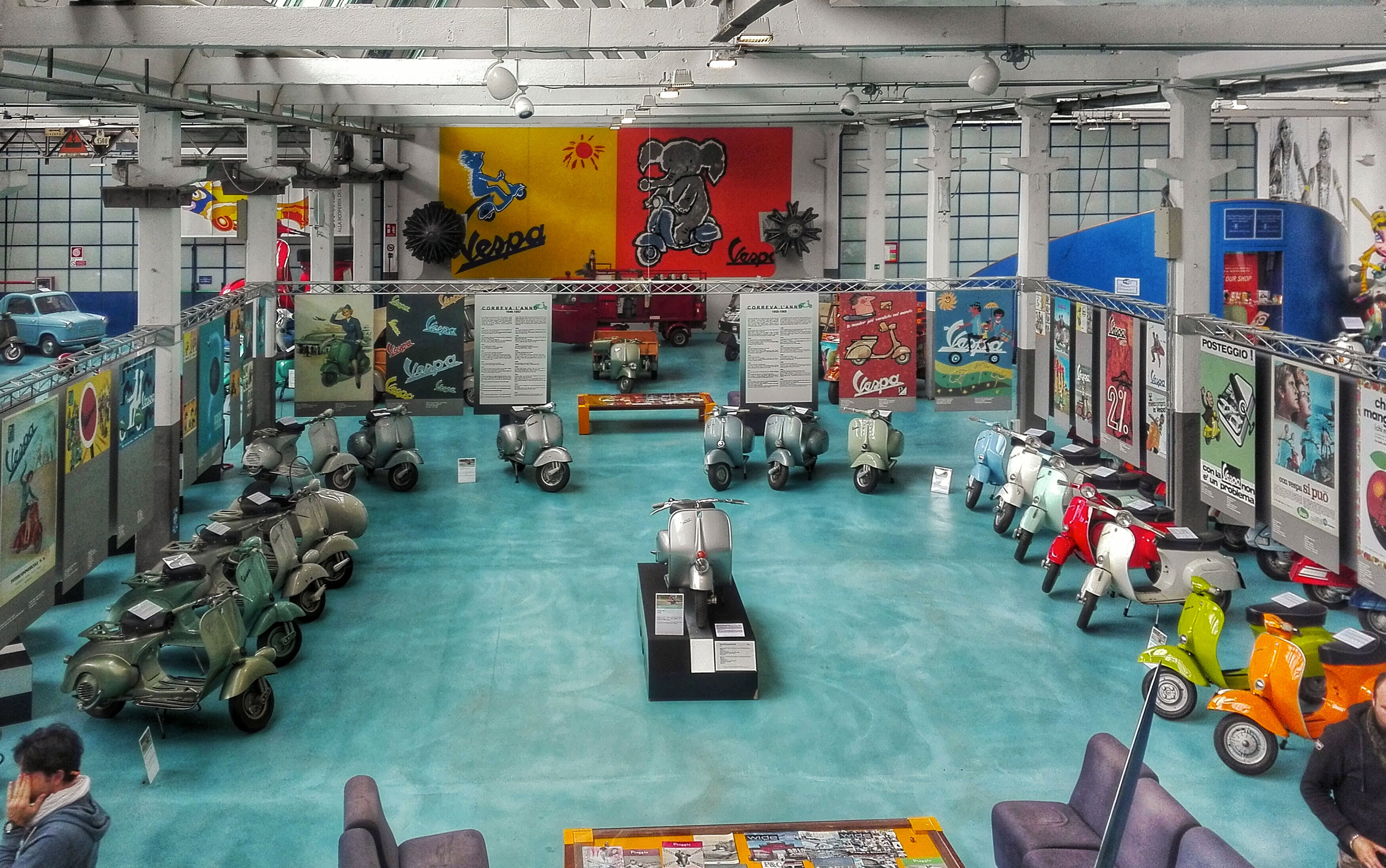


For many Italians and others, the Vespa is a travelling art form, a true icon of our contemporary culture to which it was only right to dedicate an entire museum. The Piaggio Museum in Pontedera, south of Pisa, is housed in a huge former warehouse and hosts the largest and most comprehensive exhibition of the famous two-wheelers, tracing their history and models since their creation in the 1920s, in parallel with the Italian industrial development. A visit to this place is not only for Vespa fans but also for those who want to rediscover a bit of our country's social history.
### History and Origins The roots of the Piaggio Museum trace back to the early 20th century, when Rinaldo Piaggio founded his company in 1884 initially as a manufacturer of wooden boats. By the end of World War II, the company pivoted to produce the now-iconic Vespa scooter, a project that was spearheaded by Corradino D'Ascanio in 1946. Designed as a practical yet stylish mode of transportation for the masses, the Vespa quickly became a symbol of Italian freedom and post-war recovery.
The museum not only showcases the Vespa but also highlights the evolution of the Piaggio brand through historical milestones, such as the introduction of the Vespa 98 in 1946 and the establishment of Piaggio's global presence. The museum offers a fascinating glimpse into how Italy’s economic landscape transformed alongside these engineering innovations.
### Art and Architecture The Piaggio Museum is housed in a striking building that was once a Piaggio factory warehouse. The architectural style merges industrial heritage with contemporary design, creating a unique ambiance that reflects the spirit of innovation. As visitors enter, they are greeted by a stunning array of vintage Vespas and other Piaggio vehicles displayed in a spacious, well-lit environment.
Noteworthy exhibits include rare models like the Vespa GS and the Vespa 125, with detailed descriptions of their historical significance and design evolution. The museum also showcases artistic interpretations of the Vespa through various media, celebrating its status as a cultural icon.
### Local Culture and Traditions Pontedera, while primarily known for the Piaggio Museum, is steeped in rich Tuscany traditions. The town celebrates its industrial heritage with events like the Vespa World Days, which draw enthusiasts from around the globe. Local customs include traditional festivals such as Festa della Madonna del Carmine, held in July, where locals gather for processions, food fairs, and live music.
The town also reflects the deeper cultural tapestry of Tuscany, known for its art, architecture, and community spirit, making a visit to Pontedera a gateway to experiencing authentic Italian life.
### Gastronomy No visit to Pontedera is complete without indulging in local gastronomy. The region is famous for its cucina povera, a style of cooking that emphasizes simplicity and quality ingredients. Dishes like Pici cacio e pepe—thick hand-rolled pasta with cheese and pepper—are local favorites.
Pair your meal with a glass of Chianti, a wine that embodies the essence of Tuscany. For dessert, try a slice of Torta co' bischeri, a traditional cake that combines chocolate and chard, or grab a gelato from a local shop as you stroll through the picturesque streets.
### Lesser-known Curiosities One interesting fact about the Piaggio Museum is that it houses over 250 models of Vespa and Piaggio vehicles. Many of these are one-of-a-kind, including prototypes that never reached mass production. Visitors may also be surprised to learn that the Vespa has been featured in numerous films, most famously in Roman Holiday starring Audrey Hepburn and Gregory Peck, contributing to its status as a symbol of romance and adventure.
Moreover, the museum often hosts temporary exhibitions that delve into various themes related to the Vespa, including its impact on fashion and lifestyle, providing fresh insights even for repeat visitors.
### Practical Visitor Information The Piaggio Museum is open year-round, with extended hours during the summer months. The best time to visit is during the spring or fall when the weather is mild and the crowds are thinner. Admission is usually free or at a minimal cost, and guided tours are available for those who wish to dive deeper into the exhibits.
When visiting, don't miss the chance to explore the surrounding area, including the charming streets of Pontedera, which are dotted with cafes and shops, perfect for soaking in the local atmosphere.
In conclusion, whether you’re a Vespa enthusiast or a curious traveler, the Piaggio Museum offers a rich tapestry of history, culture, and culinary delights, all set against the beautiful backdrop of Tuscany. Embrace the spirit of adventure and consider using the Secret World app to craft your personalized itinerary for exploring Pontedera.