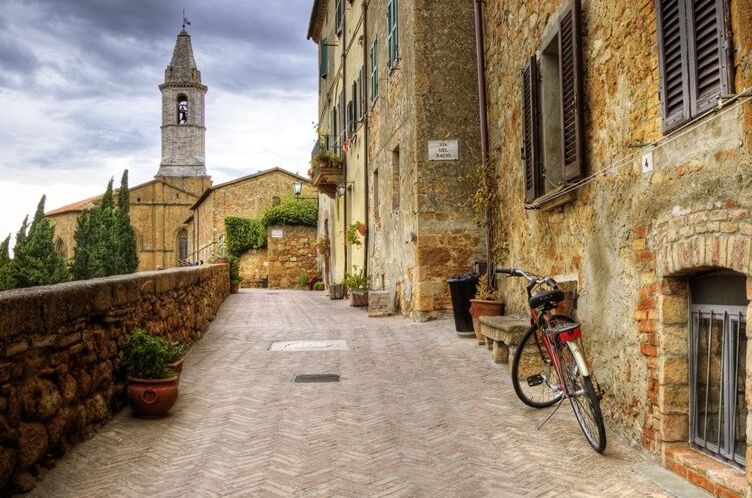

Nestled in the rolling hills of Tuscany's Val d'Orcia, the enchanting town of Pienza offers a window into the past, embodying the dreams of Renaissance humanism. This picturesque locale, designed as a utopian city by Pope Pius II, combines historical significance with breathtaking beauty, making it an unmissable stop for those exploring the cultural riches of Italy.
### History and Origins Pienza's story begins in the Middle Ages when it was known as Corsignano, a small village of little consequence. The transformation began in 1459, under the auspices of Enea Silvio Piccolomini, who later became Pope Pius II. Inspired by Renaissance ideals, he envisioned his birthplace as an ideal city—a "Città Ideale"—and enlisted the architect Bernardo Rossellino to bring this vision to life. By 1462, the transformation was largely complete, showcasing urban planning that was revolutionary for its time.
### Art and Architecture Pienza's architectural heart is the Piazza Pio II, a harmonious square that captures the essence of Renaissance style. The Cathedral of Santa Maria Assunta stands as a masterpiece of light and symmetry, its facade a testament to Rossellino's genius. Palazzo Piccolomini, the papal residence, offers insights into 15th-century nobility, complete with stunning gardens overlooking the valley. The Pieve di Corsignano, with its Romanesque architecture, predates the Renaissance overhaul, adding layers to the town's architectural narrative.
### Local Culture and Traditions The cultural life in Pienza is vibrant, deeply rooted in tradition. Each September, the town hosts the Cacio al Fuso, a festival celebrating the local pecorino cheese with a playful cheese-rolling competition. The Palio del Cacio Fuso is a nod to the community's agricultural heritage, bringing together locals and visitors in a joyous, competitive spirit. The town's dedication to preserving its customs is evident in its annual events, which blend history with festivity.
### Gastronomy Pienza is renowned for its Pecorino di Pienza, a cheese crafted from sheep's milk, celebrated for its distinct flavor and texture. Local trattorias offer dishes featuring this delicacy, from simple antipasti to rich pastas. Pairing this with a glass of Brunello di Montalcino or Vino Nobile di Montepulciano elevates any culinary experience. Osteria La Porta and Trattoria Latte di Luna are must-visit spots for authentic Tuscan fare.
### Lesser-known Curiosities Beyond its well-trodden paths, Pienza holds secrets waiting to be uncovered. Palazzo Borgia, adjacent to the cathedral, houses a museum showcasing religious artifacts and art that often go unnoticed by casual tourists. The town's streets are adorned with whimsical love-themed street names like Via dell'Amore and Via del Bacio, inviting exploration and romance. These subtle charms add layers to Pienza's allure, offering surprises at every corner.
### Practical Visitor Information The best time to visit Pienza is during the spring and autumn months when the weather is mild, and the landscape is at its most vibrant. Early mornings are ideal for exploring, as the town is quieter, allowing for intimate experiences of its architectural wonders. Wear comfortable shoes to navigate its cobblestone streets, and don't miss the panoramic views from the town walls. The Secret World app can craft a personalized itinerary, ensuring you uncover every hidden gem of Pienza.
