
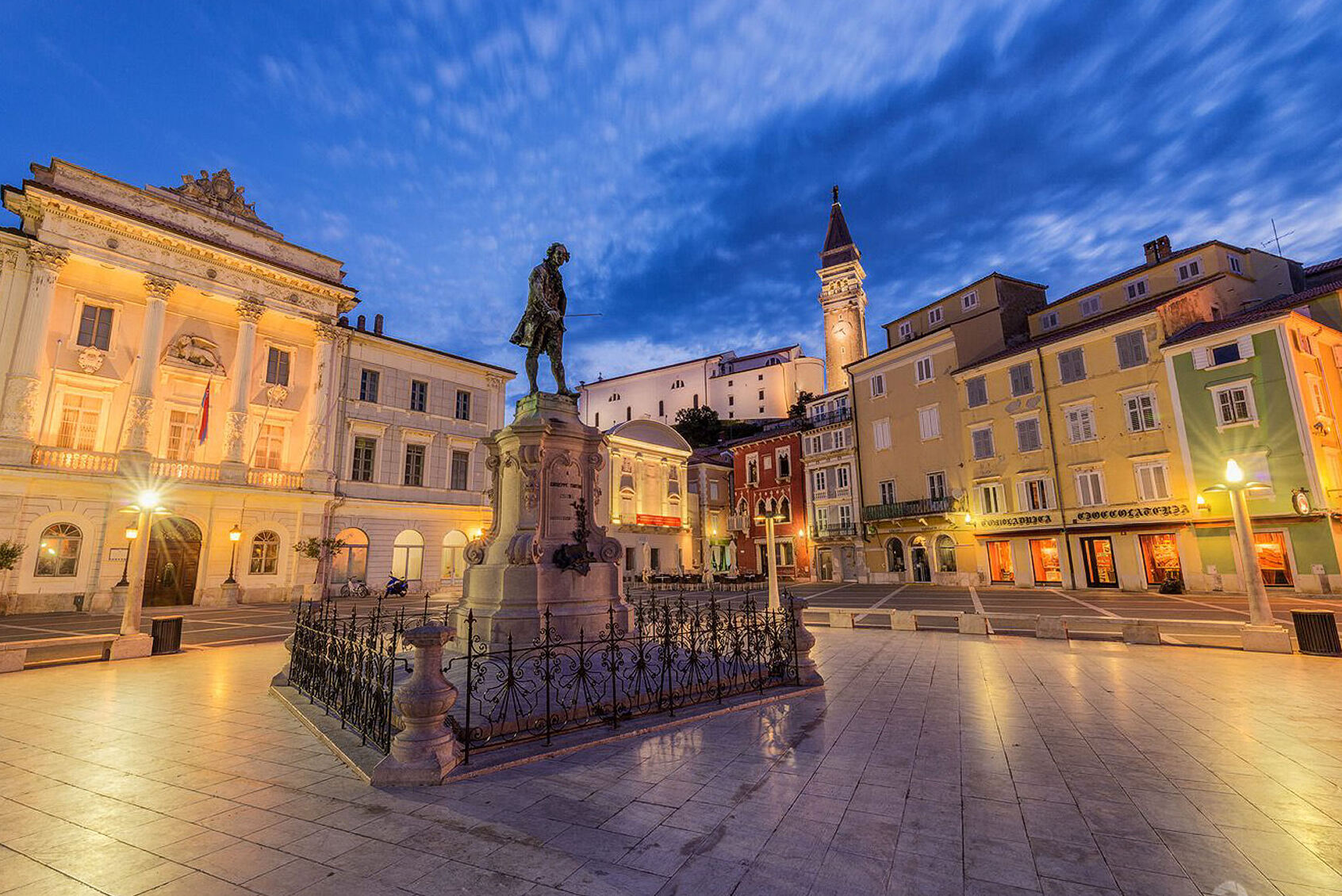

In the heart of Piran, one of Slovenia's most picturesque coastal towns, lies Tartini Square—a vibrant hub steeped in history, art, and culture. This charming oval-shaped square, adorned with a beautiful marble pavement, serves not only as the town's centerpiece but also as a gateway to exploring the rich tapestry of Piran’s heritage.
History and Origins
Originally established in 1894, Tartini Square was built on the site of the mandrač, an underground harbor used by fishermen. Its name pays homage to the legendary composer and violinist Giuseppe Tartini (1692-1770), who was born in Piran and is celebrated for his contributions to Baroque music. Tartini's most famous work, the *Devil's Trill Sonata*, continues to be a staple in violin repertoires worldwide.
Throughout the centuries, Piran has been a melting pot of cultures, influenced by Venetian, Austrian, and Italian rule. The square has witnessed significant events, from vibrant markets to political gatherings, and remains a reflection of the town's historical evolution. The surrounding buildings, including the Palace of Justice and the Church of St. Peter, tell the story of its rich past, where each stone echoes the voices of generations gone by.
Art and Architecture
The architectural style of Tartini Square is a beautiful blend of Gothic, Renaissance, and Baroque elements, characteristic of the region's Venetian influence. The Venetian House, located at the square's edge, stands out with its distinctive balcony, adding a romantic flair to the square. Its inscription, "Lassa pur dir" (Let them speak), is a testament to the enduring spirit of love and intrigue that permeates Piran’s history.
At the center of the square, a striking statue of Tartini himself captures the attention of visitors. Crafted by the sculptor Raffaele Belliazzi in 1896, this bronze monument celebrates the legacy of the composer, making it a point of interest for art enthusiasts and music lovers alike. The square's architecture is not just visually appealing but also serves as a backdrop for numerous cultural events, including concerts and performances that honor Tartini's musical heritage.
Local Culture and Traditions
Piran's culture is a vibrant tapestry woven from its historical influences. The town celebrates several festivals, with the most notable being the Tartini Festival, held annually in July. This event draws musicians from across the globe, showcasing classical music performances in honor of Piran's favorite son.
Local customs are equally fascinating, with traditions such as crafting fishing nets and preparing seafood delicacies passed down through generations. The town’s rich maritime history is reflected in its customs, where fishing remains an integral part of local life. Strolling through Tartini Square, one can often hear the sounds of traditional music wafting through the air, enveloping visitors in the town’s warm embrace.
Gastronomy
No visit to Piran is complete without indulging in the local cuisine. The flavors of the Mediterranean come alive in dishes such as pršut (cured ham), calamari, and fresh fish, which are staples in many local restaurants. A must-try is the šug (a traditional fish stew), often served with polenta, reflecting the town's deep-rooted fishing culture.
For those with a sweet tooth, Piran’s salt is a culinary highlight. The region produces high-quality sea salt, which has become a sought-after ingredient in many dishes. Pair your meal with a glass of Malvasia, a local white wine known for its fruity notes, to complete the gastronomic experience.
Lesser-Known Curiosities
While many visitors flock to the iconic sights of Tartini Square, there are hidden gems waiting to be discovered. One such curiosity is the Tartini House, located nearby, which was once the residence of the composer. The house is now a small museum, offering a glimpse into Tartini's life and works.
Another fascinating detail is the unusual acoustics of the square. Legend has it that the square was designed to amplify sounds, making it a perfect venue for musicians to showcase their talents. On quiet evenings, one can hear the faint echoes of melodies that once filled the air, a testament to Piran’s enduring musical legacy.
Practical Visitor Information
The best time to visit Tartini Square is during the warm months of late spring to early autumn when the weather is pleasant, and outdoor events abound. Early mornings or late evenings provide a magical experience, as the square glows under the soft illumination of lights, creating an intimate atmosphere perfect for soaking in the town’s charm.
When exploring, take time to sit at one of the many cafes lining the square. Savor a cup of coffee or a glass of local wine while watching the world go by. Be sure to wear comfortable shoes, as the nearby cobbled streets are best navigated on foot.
For a personalized experience in Piran that captures the essence of this enchanting town, consider using the Secret World app to plan your itinerary.


