
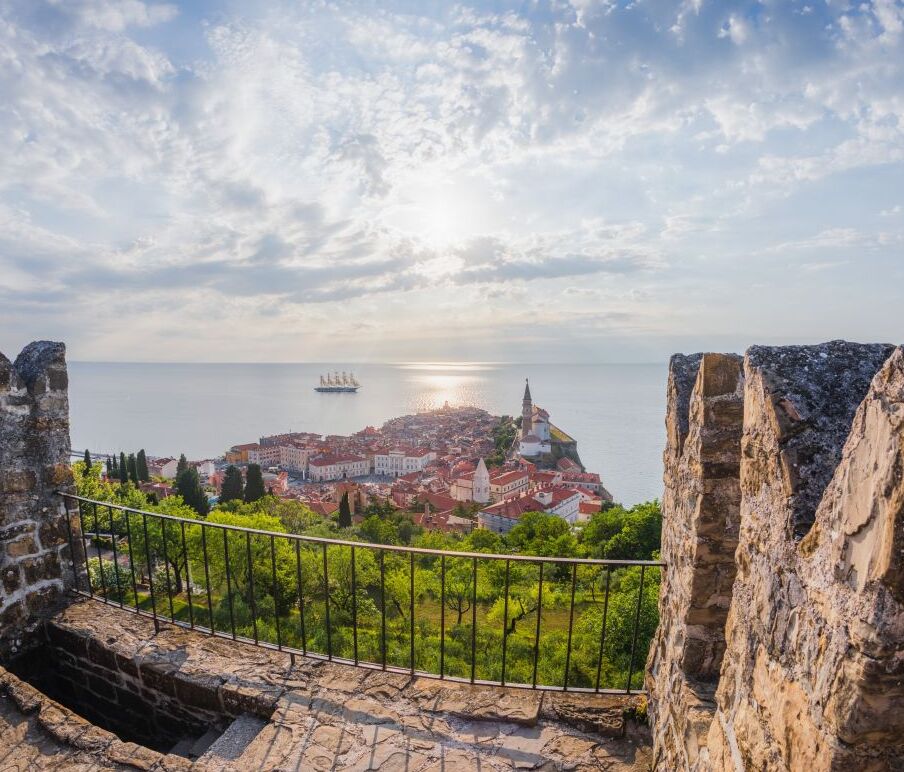

Nestled along the stunning Adriatic coast, the walls of Piran are a testament to the town's rich history and resilience. Mentioned as early as the 7th century, these formidable structures were originally erected to safeguard the core of Piran, strategically located on the Punta Peninsula. As centuries passed, the city expanded beyond its initial confines, necessitating the construction of additional defensive walls to protect against various external threats.
Piran's historical significance is underscored by its tumultuous past, having been influenced by various cultures, including the Romans, Venetians, and Austrians. The most notable expansions of the city walls occurred in the 15th and 16th centuries, during which time the defensive fortifications were enhanced with the addition of towers and bastions, creating a formidable barrier around the town. Today, visitors can explore the remnants of these walls, particularly on Mogorone Hill, which offers breathtaking panoramic views of Piran and the azure waters of the Adriatic.
Architecturally, the walls of Piran showcase a blend of Gothic and Renaissance styles, reflecting the artistic evolution of the region over the centuries. Among the seven gates that have been preserved, Porta Delfin stands out as the best-preserved Gothic entrance, adorned with a coat of arms featuring three dolphins. This gate, built in the 15th century by the mayor Delfin, epitomizes the artistic craftsmanship of the era. Each of the city’s gates, including the Baroque St. George's Gate and the Campo Gate, tells a story of Piran's development and the various epochs that have shaped its character.
Local culture thrives in Piran, where traditions are woven into the fabric of daily life. The town is known for its lively festivals, such as the Piran Regatta, which draws sailing enthusiasts from across the globe. During the Feast of St. George, celebrated on April 23, locals engage in vibrant processions and cultural events, showcasing their maritime heritage. The annual Piran Music Festival also attracts numerous artists and visitors, celebrating classical music in the stunning backdrop of the coastal town.
Piran's gastronomy is as captivating as its history. The local cuisine is a delightful blend of Mediterranean flavors, with an emphasis on fresh seafood, locally sourced ingredients, and traditional recipes. A must-try dish is calamari prepared with local olive oil, often served with a side of šugo, a rich tomato sauce. Fritto misto, a mix of fried fish and shellfish, is another popular choice, ideally paired with a glass of Malvasia wine, a crisp white wine that perfectly complements the region's seafood fare. For dessert, indulge in pistachio gelato or piran's famous pastries, which reflect the town's Italian influences.
Amidst the well-trodden paths of Piran, there are hidden gems that often elude the casual visitor. For instance, the Church of St. George boasts not only stunning architecture but also a remarkable bell tower that offers the best views of the town. Lesser-known is the Casa Veneziana, a charming Venetian-style house tucked away from the bustling streets, where you can catch a glimpse of Piran's maritime history and its connection to Venice. Additionally, the Tartini Square, named after the renowned violinist Giuseppe Tartini, is a delightful hub where you can soak in the local atmosphere and enjoy outdoor cafés.
The best time to visit Piran is during the late spring and early autumn, when the weather is pleasantly warm, and the tourist crowds are manageable. Be sure to wear comfortable shoes for exploring the cobblestone streets and to take your time wandering through the alleys, admiring the blend of architectural styles that have shaped this coastal gem. Engaging with local artisans and sampling the regional delicacies at various markets can offer a more immersive experience.
For those planning their journey to this picturesque town, consider visiting during local festivals for a truly authentic experience. Explore the Museum of Piran to deepen your understanding of the town’s maritime heritage, and don’t forget to capture the mesmerizing sunset views from the city walls, a sight that will linger in your memory long after your visit.
As you prepare for your adventure in Piran, consider using the Secret World app to craft a personalized itinerary that ensures you uncover all the treasures this beautiful town has to offer.


