



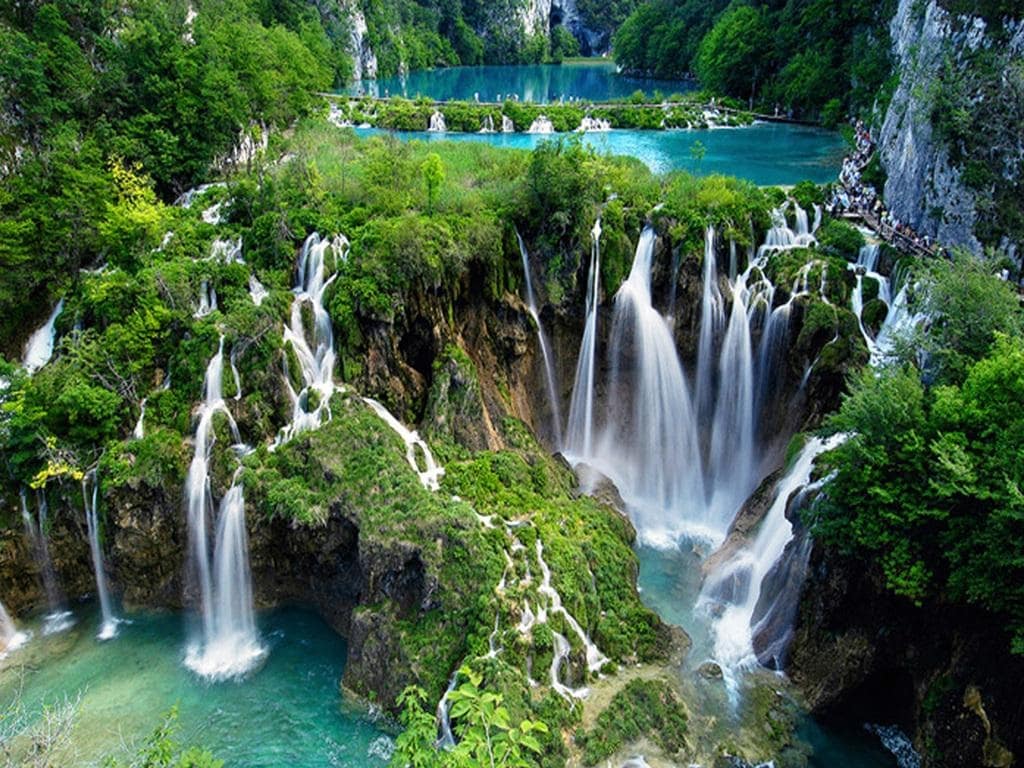
Plitvice Lakes is a mesmerizing tableau of cascading turquoise waters and lush greenery, nestled in the heart of Croatia. Recognized as one of Europe's most enchanting natural wonders, this national park is not just a feast for the eyes but a tapestry woven with rich history, captivating culture, and culinary delights.

The origins of Plitvice Lakes date back to the end of the last Ice Age, around 12,000 years ago. The formation of its unique travertine barriers, which create its cascading lakes, is a result of the interplay between water, air, and geological activity. The area was officially recognized as a national park in 1949, becoming Croatia's first national park. In 1979, it was designated a UNESCO World Heritage site, cementing its status as a global treasure. The park has also witnessed significant historical events, including the Croatian War of Independence, during which the park's hotel was the site of the Plitvice Lakes incident in 1991, marking the start of hostilities.
Walking through Plitvice Lakes, visitors are drawn not just to the stunning scenery but also to its artistic and architectural elements. Although the park itself is a masterpiece of nature, the nearby village of Rastovača and surrounding areas offer glimpses of traditional Croatian architecture. Wooden houses with steep roofs, designed to withstand heavy snowfall, are scattered throughout the region, reflecting a simpler way of life that has endured through centuries. Art lovers may appreciate the area's connection to Croatian painter Slava Raškaj, whose works captured the beauty of Plitvice in the late 19th and early 20th centuries.

The cultural fabric of Plitvice is as vibrant as its waters. Local customs and traditions remain strong, with festivals such as the annual Plitvice Marathon drawing visitors and athletes from around the world. This event, held every June, offers participants the unique experience of running through the park's breathtaking scenery. Traditional music and dance are integral to the local cultural identity, with performances often featuring the tamburica, a string instrument native to the region, echoing the rhythms of the past.
No visit to Plitvice Lakes would be complete without indulging in the local gastronomy. Croatian cuisine is a delightful fusion of Mediterranean and Central European influences. Visitors can savor hearty dishes like pašticada, a slow-cooked beef dish marinated in wine and spices, typically served with gnocchi. The region is also known for its trout, caught fresh from the park's pristine waters and often grilled to perfection. Pair these with a glass of Rakija, a potent fruit brandy, to experience the true taste of the region.
Beyond the well-trodden paths, Plitvice Lakes holds lesser-known curiosities that enrich the visitor experience. The park's intricate network of wooden walkways and bridges, which total over 18 kilometers, are marvels of engineering, designed to blend seamlessly into the natural environment. A fascinating aspect of the park is its karst topography, which features limestone caves and hidden grottoes waiting to be explored. One such hidden gem is the Šupljara Cave, a lesser-known spot that offers a glimpse into the subterranean world beneath the park.
For those planning a visit, timing is everything. The best time to visit Plitvice Lakes is during the spring or early autumn when the crowds are thinner, and the park's natural beauty is at its peak. Spring brings vibrant wildflowers and full waterfalls, while autumn paints the landscape in a stunning palette of reds and golds. Arriving early in the morning is advisable to enjoy the tranquility before the day-trippers arrive. Practical tips include wearing sturdy walking shoes, packing a raincoat, and bringing a camera to capture the park's ever-changing beauty. Keep an eye out for the park’s diverse wildlife, including the elusive brown bear and the colorful European kingfisher.
In conclusion, Plitvice Lakes is more than just a destination; it's an experience that lingers in the memory long after the journey ends. From its ancient origins and historical significance to its vibrant culture and exquisite culinary offerings, this Croatian gem beckons with an allure that is both timeless and irresistible.
