
← Back

Polignano a Mare: Abbey of San Vito Martire

Abbazia di San Vito, 70044 San Vito, Polignano a Mare BA, Italia ★★★★☆ 888 views
Simona Illy
San Vito, Polignano a Mare
🏆 AI Trip Planner 2026

Get the free app

Discover the best of San Vito, Polignano a Mare with Secret World — the AI trip planner with 1M+ destinations. Get personalized itineraries, hidden gems and local tips. Free on iOS & Android.

🧠 AI Itineraries 🎒 Trip Toolkit 🎮 KnowWhere Game 🎧 Audio Guides 📹 Videos
Download on the App Store Get it on Google Play
Scan to download Scan to download

About Polignano a Mare: Abbey of San Vito Martire

Polignano a Mare: Abbey of San Vito Martire - San Vito, Polignano a Mare | Secret World Trip Planner

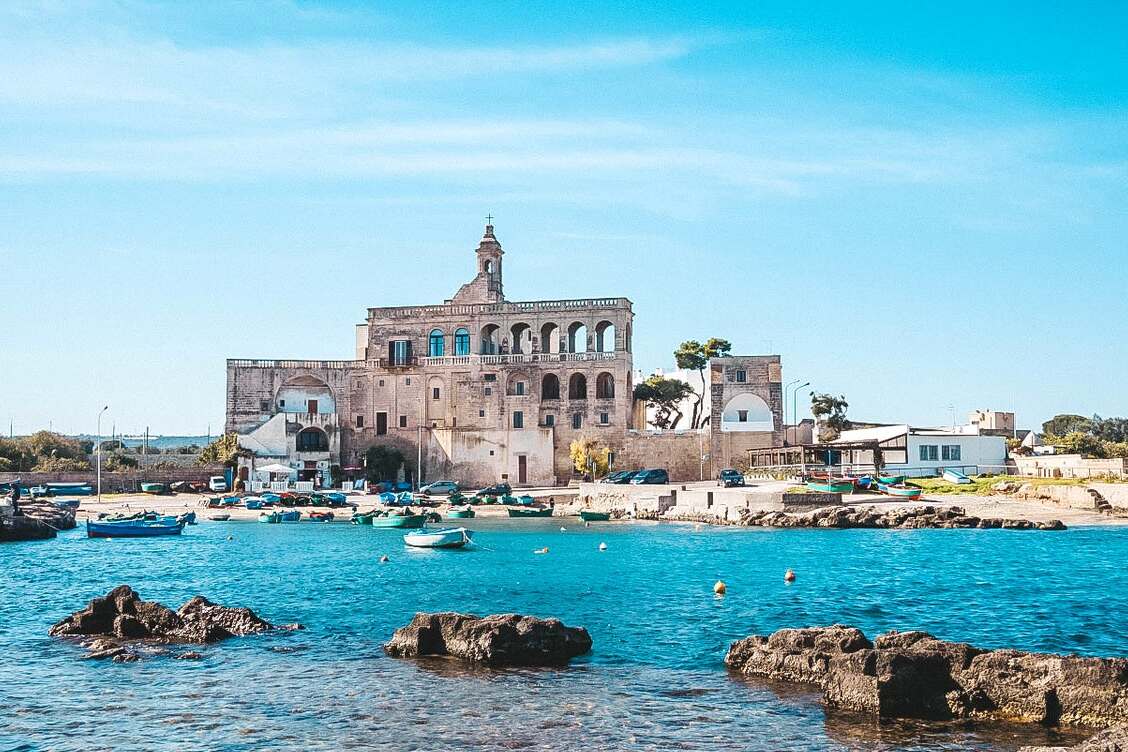
The Abbey of San Vito Martire is the main artistic attraction of the town. The church, of Benedictine foundation, was designed in the 10th century. From the 16th century the abbey was the home of the minor conventual friars of the SS. Apostles and in 1785 it became part of the Royal Property. In 1866 the State sold the abbey to the Marquises La Greca, who still own it entirely, while the church is owned by the Fondo di Edifici di Culto del Ministero degli Interni and is given in concession to the Chiesa Matrice Santa Maria Assunta where mass is held on Sundays. It has an irregular quadrangular plan, with a huge portico on the main façade, marked by loggias with round arches. The transept is surmounted by a small circular dome. The bell tower is a tower finely worked in Lecce Baroque. The portico of the facade inside overlooks a small cloister with a well. The imposing Benedictine Abbey, built right next to the small port and directly overlooking the sea. The legend tells of a noblewoman from Salerno who, while she was drowning in the river Sele, was miraculously saved by Saint Vito who asked her to have her body transferred to the castrum polymnianense in Puglia. The holy relics made the sacred place prosperous and so the abbey was founded, in all probability in the X century, by a community of Basilian monks followed by Benedictine monks in the XI century. The history of the building, however, had a troubled life, because in the following centuries there were several domains and there are also insidious Franciscan monks who made the place a place of pilgrimage. It is necessary to arrive in the XIX century to find some peace: after the suppression of the monastic orders, in fact, the monastery was incorporated in the marquis palace of Tavassi-La Greca. The complex of San Vito still represents an example of monastic architecture of relevant historical importance. The elegant abbey that can be admired today is the result of architectural additions over the centuries, but what fascinates above all are the elegant Baroque forms, such as the spectacular external staircase that leads from the courtyard to the loggia overlooking the sea. The sacred building is characterized by the Romanesque church built on the ruins of the ancient Roman tower and altered in turn by the superimposition of a building used as the seat of the convent. The relevant aspect of the church with three naves is the plant with three domes in axis and with barrel vaults in the side naves. Even today are still visible signs of a defensive system against incursions from the sea: the walls, inside the tower farm of the sixteenth century and the tower on the sea coast.


Polignano a Mare: Abbey of San Vito Martire - San Vito, Polignano a Mare | Secret World Trip Planner
🗺 AI Trip Planner

Plan your visit to San Vito, Polignano a Mare

Suggested itinerary near Polignano a Mare: Abbey of San Vito Martire

MAJ+
500.000+ travelers worldwide
  1. 🌅
    Morning
    Polignano a Mare: Abbey of San Vito Martire
    📍 San Vito, Polignano a Mare
  2. ☀️
    Afternoon
    Italy:The Cliff Restaurant (grotta Palazzese)
    📍 3.2 km · San Vito, Polignano a Mare
  3. 🌆
    Evening
    Polo Museale di Conversano
    📍 8.1 km · San Vito, Polignano a Mare

Buy Unique Travel Experiences

Powered by Viator

See more on Viator.com

Explore nearby · San Vito, Polignano a Mare

Frequently Asked Questions

The Abbey of San Vito Martire was founded in the 10th century by Basilian monks, later followed by Benedictine monks in the 11th century, according to legend built after Saint Vito miraculously saved a noblewoman from Salerno. The abbey changed hands multiple times, serving Franciscan monks and becoming a pilgrimage site before being incorporated into the Marquis La Greca palace in the 19th century, where it remains today as an important example of monastic architecture.
The abbey features an irregular quadrangular plan with a distinctive huge portico on the main façade marked by loggias with round arches, a transept topped by a small circular dome, and a beautifully crafted bell tower in Lecce Baroque style. Inside, the façade portico overlooks a small cloister with a well, showcasing architectural additions accumulated over several centuries of construction and renovation.
Yes, the church is accessible to visitors and the public can attend mass on Sundays, as it is given in concession to the Chiesa Matrice Santa Maria Assunta by the Fondo di Edifici di Culto del Ministero degli Interni. While the abbey buildings are owned by the Marquises La Greca family, the church itself remains an active place of worship open to the faithful and visitors.
The imposing Abbey of San Vito Martire is strategically built right next to the small port and directly overlooks the sea, making it one of the most picturesque religious monuments in Polignano a Mare. Its seaside location adds to its historical significance and makes it easily identifiable when exploring the town's waterfront area.
According to legend, a noblewoman from Salerno was miraculously saved from drowning in the river Sele by Saint Vito, who asked her to have her body transferred to the castrum polymnianense in Puglia. The presence of the saint's holy relics made the sacred place prosperous and inspired the foundation of the abbey, which became an important pilgrimage destination throughout the following centuries.
