
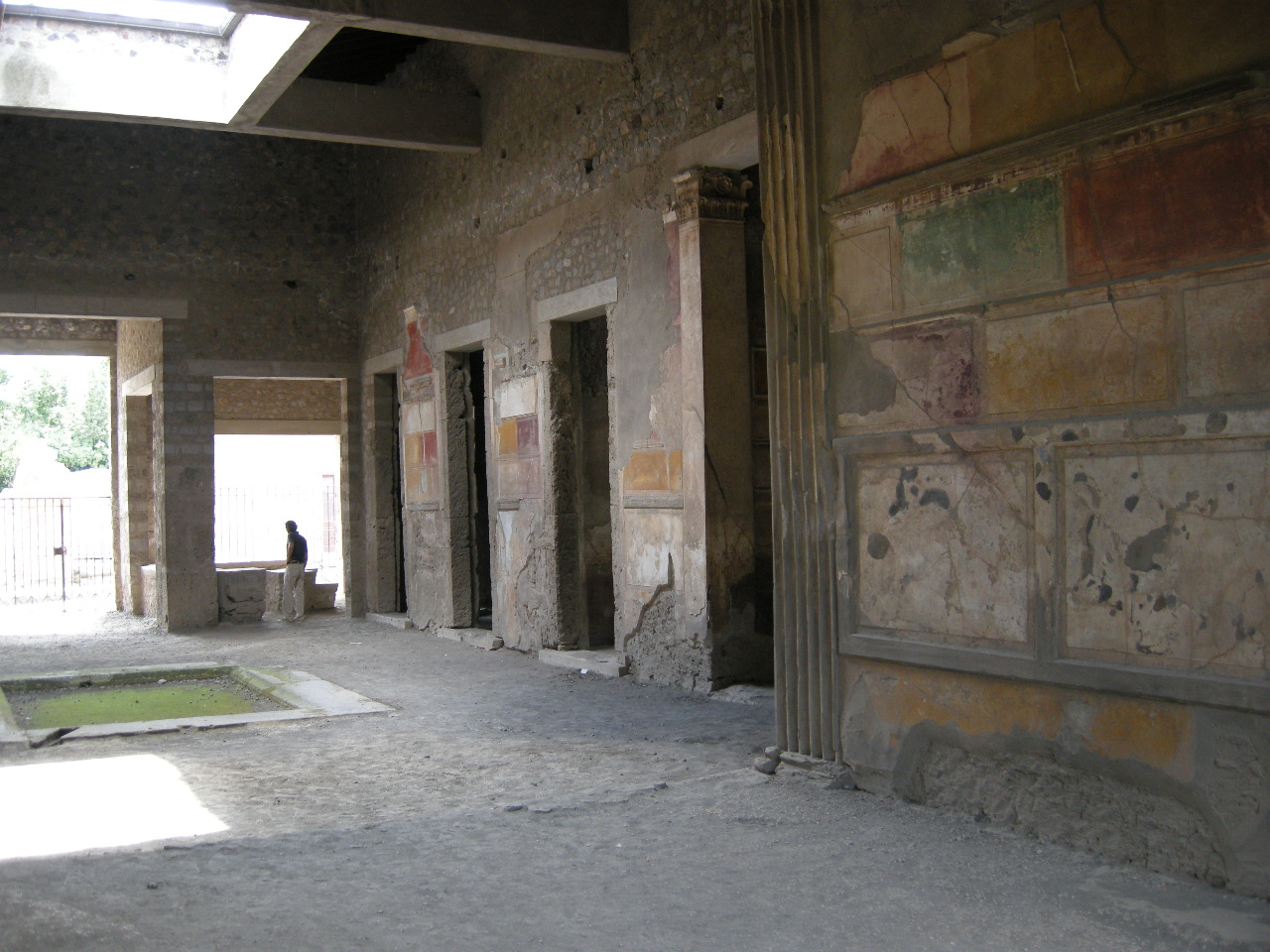

House of Sallustio in Pompeii, Italy, is a compelling testament to the ancient world, offering visitors a glimpse into the life of a wealthy Roman household. This remarkable structure, dating back to the 3rd century BC, is steeped in history and has seen its fortunes rise and fall through the ages.

The origins of the House of Sallustio can be traced back to the Samnite era, predating the Roman conquest. It is attributed to A. Cossius Libanus, a prominent figure of the time, as indicated by a signet ring discovered during excavations in 1806. Despite the façade mentioning C. Sallustio, the historical context suggests that the house was not directly connected to him. The house’s storied past took a tragic turn during World War II when it was damaged by bombing in 1943, adding a layer of modern history to its ancient narrative.
Architecturally, the House of Sallustio exemplifies the first style of Roman decorative art, characterized by its intricate frescoes and luxurious interiors. The layout features a grand atrium with an impluvium (a basin for collecting rainwater) at its center, surrounded by rooms that highlight the affluence of its former inhabitants. Visitors can still admire the remnants of the house’s opulent decoration, including limestone columns that once graced the two porticos of the garden. A striking bronze fawn, which added to the splendor of the atrium, serves as a reminder of the artistry that once filled these walls.

Delving deeper into the house, a corridor leads to later additions, likely constructed in the 1st century BC. These rooms may have been used by an innkeeper, hinting at the house’s transformation over time. On the back wall of a small garden area, a vivid depiction of Actaeon, the hunter who was transformed into a stag by the goddess Diana, provides a fascinating insight into mythological themes prevalent in Roman art. This fresco not only showcases the skill of ancient artists but also serves as a window into the cultural beliefs that permeated daily life.
The local culture surrounding Pompeii is rich and vibrant, influenced by a blend of Roman and indigenous traditions. Festivals dedicated to ancient deities were once commonplace, celebrating agricultural cycles and the changing seasons. Even today, the echoes of these festivities can be felt in the region, particularly during the annual Pompeii Festival, which features music, dance, and reenactments that transport visitors back to the days of the Roman Empire.
Gastronomy in Pompeii draws from the agricultural bounty of the region, with local markets bustling with fresh produce, olive oil, and wines. Traditional dishes often feature garum, a fermented fish sauce that was a staple in Roman cuisine, and cereals that were common in ancient meals. Visitors can indulge in local delicacies such as pizza, which has its roots in ancient flatbreads, and sfogliatella, a pastry filled with ricotta, reflecting the region's culinary evolution.
Among the lesser-known curiosities of the House of Sallustio is the intriguing use of space within the home. While many visitors focus on the grand atrium and frescoes, few realize that the layout hints at a shift in social structure. The presence of an inn possibly indicates a transition from a purely residential space to one that catered to travelers, showcasing the adaptability of ancient Romans. Additionally, the house’s proximity to the Forum suggests it was strategically located, contributing to its potential use as a commercial establishment.
For those planning a visit, the best time to explore Pompeii and the House of Sallustio is during the spring or fall when the weather is mild, and the crowds are thinner. Early morning visits can provide a more intimate experience with the ruins, allowing for contemplation in the quiet of the ancient streets. Be sure to take a moment to appreciate the intricate details of the frescoes and the architectural features that tell the story of a once-thriving household, now immortalized in time.
To fully immerse yourself in this historical journey, consider using the Secret World app to craft a personalized AI itinerary, ensuring you don’t miss any hidden gems during your visit.


