
← Back

Ponchielli Theater

Corso Vittorio Emanuele II, 52, 26100 Cremona CR, Italia ★★★★☆ 298 views
Emily Bush
Cremona
🏆 AI Trip Planner 2026

Get the free app

Discover the best of Cremona with Secret World — the AI trip planner with 1M+ destinations. Get personalized itineraries, hidden gems and local tips. Free on iOS & Android.

🧠 AI Itineraries 🎒 Trip Toolkit 🎮 KnowWhere Game 🎧 Audio Guides 📹 Videos
Scan to download iOS / Android
Scan for AppGallery Huawei users

About Ponchielli Theater

Ponchielli Theater - Cremona | Secret World Trip Planner

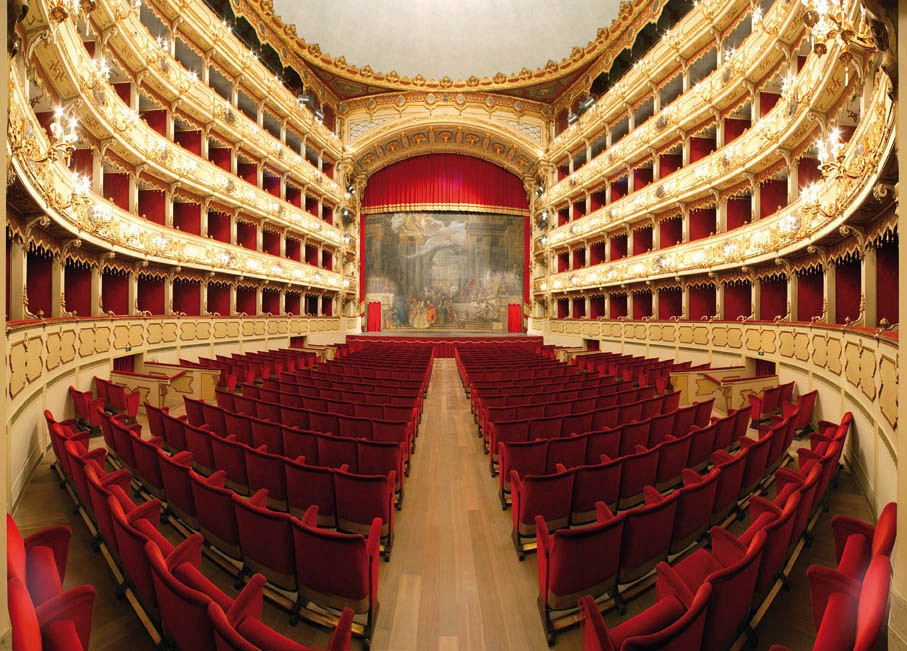
The present building of the Amilcare Ponchielli Theater is the result of a series of construction, reconstruction, alterations, maintenance and restoration that has lasted two hundred and fifty years. There are, however, basically two forms that the Cremonese theater has taken in its long history, the first dating back to the 1700s and the current one, which dates from 1808.

The story begins in 1747, when a group of nobles decided to endow the city with a proper theater, replacing the various, somewhat temporary, and in any case vanished, halls that had preceded it. The design commission was given to Giovanni Battista Zaist, a Cremonese architect who was part of the circle of the famous Bibiena. Teatro Nazari, named after the owner, changed its name in 1785, when it was purchased by the stagehands as the "Teatro della Società" or "Noble Association" theater.

That first construction was destroyed in 1806 by fire, as often happened to wooden theaters of the 1700s; however, the condominiums decided on its immediate reconstruction, entrusting the project to the best-known theater architect of the time, Luigi Canonica, who was inspired by his master, Piermarini, but with several original contributions.

Thus was built one of the best theaters of the time, with a horseshoe-shaped hall, four tiers of boxes and a gallery, which took the name Teatro della Concordia, to which was added, at the beginning of our century, that of Cremona's greatest opera composer, Amilcare Ponchielli. Improvements were also immediately made, including the lengthening of the stage, making it one of the largest in Italy. In 1824 a new fire partially destroyed the structure, which was immediately restored by Faustino Rodi and Luigi Voghera. Acquired to municipal ownership in 1986, since 1989 the Ponchielli has undergone radical restoration, rehabilitation and technological upgrading.

🗺 AI Trip Planner 2026

Plan your visit to Cremona

Suggested itinerary near Ponchielli Theater

MAJ+
500.000+ travelers worldwide
  1. 🌅
    Morning
    Ponchielli Theater
    📍 Cremona
  2. ☀️
    Afternoon
    I marubini : la pasta delle feste
    📍 0.3 km · Cremona
  3. 🌆
    Evening
    Stradivarius and the Violin Museum
    📍 0.3 km · Cremona

Buy Unique Travel Experiences

Powered by Viator

See more on Viator.com

Explore nearby · Cremona

Frequently Asked Questions

The original theater, called Teatro Nazari, was built in 1747 by Cremonese architect Giovanni Battista Zaist as a proper theater to replace temporary halls. It was later renamed Teatro della Società in 1785 when purchased by stagehands, but was destroyed by fire in 1806.
The present building dates from 1808 and was designed by Luigi Canonica, the most renowned theater architect of the time, following the destruction of the original theater by fire. It features a distinctive horseshoe-shaped hall with four tiers of boxes and a gallery, making it one of the best theaters of its era.
The theater was renamed Teatro della Concordia, with 'Amilcare Ponchielli' added in honor of Cremona's greatest opera composer. The theater is notable for having one of the largest stages in Italy, which was lengthened early in the 20th century to enhance its capabilities.
The theater was acquired by municipal ownership in 1986 and underwent radical restoration, rehabilitation, and technological upgrading starting in 1989. These improvements ensured the preservation of this important cultural landmark for future generations.
The theater experienced two major fires during its long history: the first destroyed the original Teatro Nazari in 1806, and a second fire in 1824 partially destroyed the current structure, which was then restored by Faustino Rodi and Luigi Voghera. Wooden theaters were particularly vulnerable to fire during the 1700s and early 1800s.
