



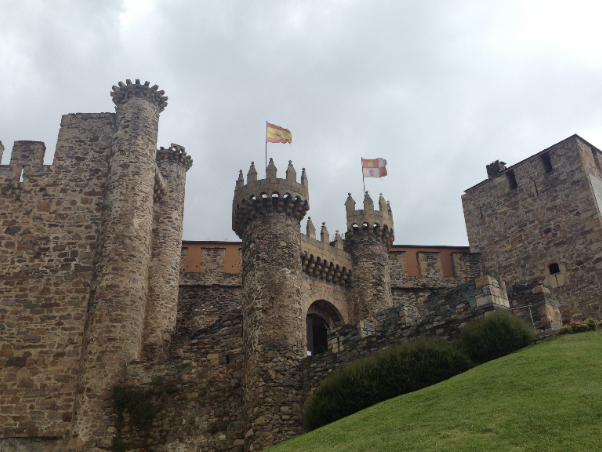
Perched majestically on a hill overlooking the town of Ponferrada, the Ponferrada Castle is a treasure trove of history and architecture on the famed Camino de Santiago. This medieval fortress, with its massive walls and storied past, invites travelers and history enthusiasts to step back in time and explore the legacy of the Knights Templar.
The origins of Ponferrada Castle date back to the 12th century, when it was constructed to protect pilgrims journeying on the Camino de Santiago. In 1178, King Ferdinand II of León handed it over to the Knights Templar, a powerful military order tasked with safeguarding the route. The Templars, known for their distinctive white mantles emblazoned with a red cross, were charged not only with the defense of this strategic location but also with the protection of the pilgrims traveling to the sacred city of Santiago de Compostela. The castle remained under the Templars’ guardianship until their dissolution in the early 14th century, after which it passed through various hands, including the crown and the noble House of Osorio.
Architecturally, Ponferrada Castle is a fascinating blend of Romanesque, Gothic, and Renaissance styles. Its robust battlements and imposing towers evoke the military prowess of its former Templar occupants. One of the most striking features is the Torre del Homenaje, or Keep, which offers panoramic views of the Bierzo Valley. Within its walls, visitors can find remnants of the medieval era, including ancient armories and chapels. The castle's interior is a labyrinth of halls and courtyards, each with its own story etched into the stone. Artifacts and exhibits within the castle provide insight into the lives of those who once roamed its corridors.
The cultural landscape of Ponferrada is deeply intertwined with its historical past. The town comes alive during the Fiestas de la Encina in early September, a celebration dating back to the medieval period. This festival, dedicated to the patron saint of the region, features processions, traditional music, and local dance, offering a vibrant glimpse into the community's enduring traditions. Additionally, the castle itself often hosts medieval fairs and reenactments, allowing visitors to experience the ambience of bygone eras.
No visit to Ponferrada would be complete without indulging in the local gastronomy. The region of Bierzo is renowned for its rich culinary heritage, with dishes that reflect its fertile lands and agricultural abundance. Botillo del Bierzo, a hearty dish made of pork, is a local specialty that dates back centuries. Pair this with a glass of Mencía, a robust red wine native to the Bierzo vineyards, and you have a meal that embodies the spirit of the region. For those with a sweet tooth, the Tarta de Santiago, a traditional almond cake, is a nod to the Camino itself.
Beyond its historical and cultural significance, Ponferrada Castle harbors a few lesser-known curiosities. Legend has it that a secret tunnel once connected the castle to the nearby Basilica de la Encina, offering an escape route in times of siege. Another intriguing aspect is the castle's alleged connection to the mystical Holy Grail. Though unfounded, stories persist of the Templars’ guardianship of sacred relics, adding an air of mystery to the fortress.
For travelers planning a visit, the best time to explore Ponferrada Castle is during the spring or early autumn. These seasons offer mild weather, perfect for wandering the castle grounds and the surrounding town. It's advisable to allocate a few hours to fully appreciate the site. A guided tour is highly recommended, as it enriches the experience with detailed historical context and stories that might otherwise be missed. Pay particular attention to the castle's comprehensive museum, which houses artifacts from the Templar period and provides deeper insights into their enigmatic history.
In essence, Ponferrada Castle is more than just a historical monument; it's a living testament to the medieval spirit, a place where the echoes of the past resonate with the footsteps of modern pilgrims. Its blend of history, culture, and gastronomy makes it an essential stop on any journey along the Camino de Santiago.
