
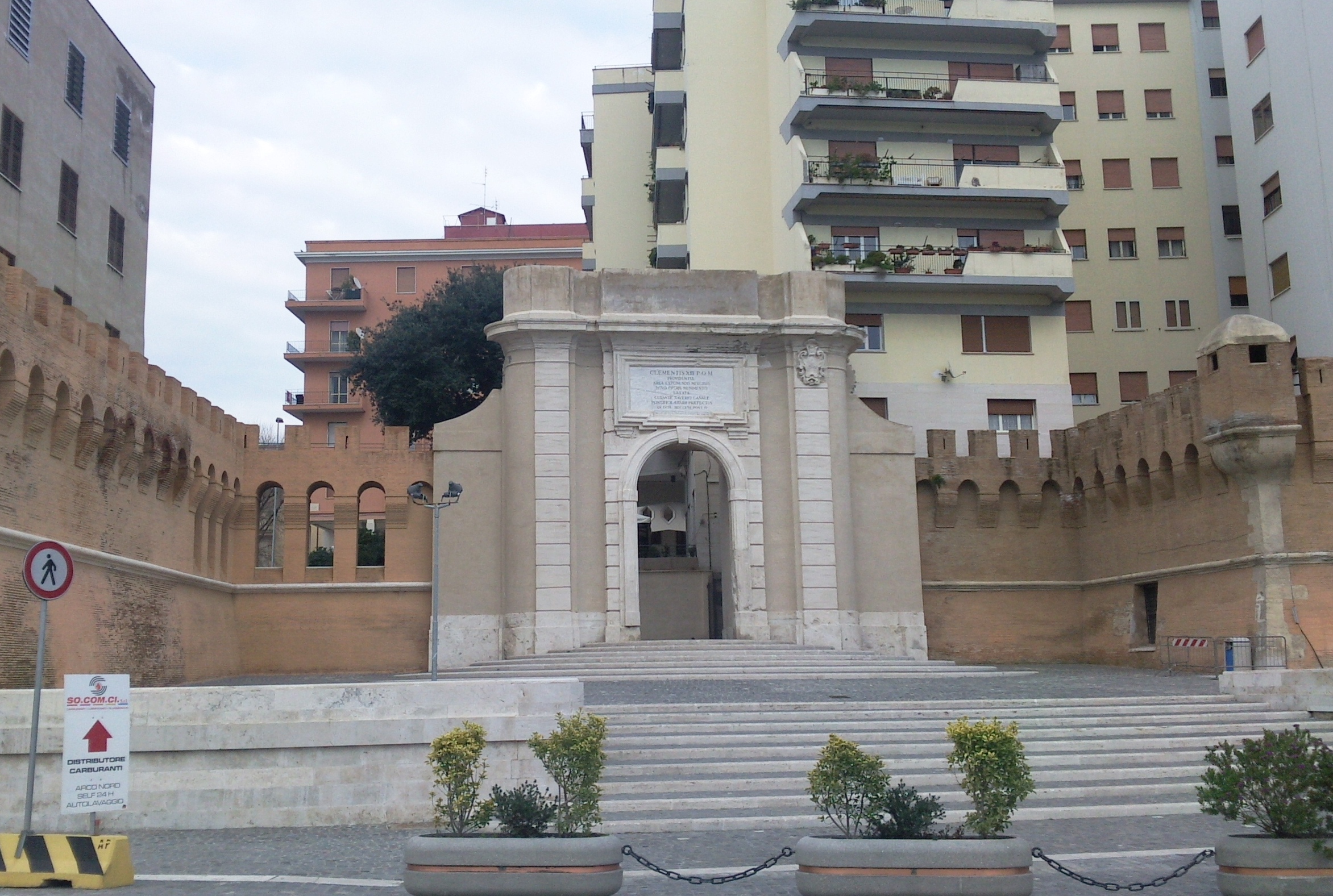

Nestled in the vibrant port city of Civitavecchia, the imposing Porta Livorno stands as a testament to Italy’s rich historical narrative. This monumental passage, completed in 1761 under the direction of Pope Clement XIII, serves as a striking gateway that connects the bustling port with the northern sections of the city. A glance at the memorial stone gracing the top of the gate reveals not only its purpose but also the ambition of the papacy to enhance both the security and the commercial vitality of the region.
The history of Civitavecchia itself traces back to ancient times, where it was known as Centumcellae, a name derived from the Roman Emperor Trajan's construction of a series of warehouses—centum cellae—to facilitate trade. With its strategic location along the Tyrrhenian Sea, the port quickly became a vital maritime hub. The city’s evolution continued through the Middle Ages, marked by the construction of fortifications and the establishment of significant maritime commerce. The papacy recognized this potential early on, and Porta Livorno was one of many architectural endeavors aimed at fortifying the city.
Architecturally, Porta Livorno is a splendid example of Neoclassical design. Its grand façade is characterized by a monumental arch, flanked by massive stone walls that reflect the strength and resolve of the papal authority during the 18th century. The gate is adorned with intricate carvings, including the Papal Coat of Arms, which further emphasizes the gate's significance as a symbol of papal power and influence. Visitors can admire not only the architectural prowess but also the artistry involved in its construction, which remains a proud marker of Civitavecchia's identity.
Civitavecchia's local culture is steeped in traditions that reflect its maritime heritage. The city celebrates various festivals throughout the year, including the Festa di Santa Fermina in May, which honors the patron saint of Civitavecchia with a colorful procession and local feasts. The festival showcases a blend of religious fervor and community spirit, characterized by music, dance, and traditional foods that draw locals and tourists alike.
Speaking of cuisine, Civitavecchia boasts a rich gastronomic landscape influenced by both its coastal location and historical roots. Seafood reigns supreme here, with dishes like spaghetti alle vongole (spaghetti with clams) and frittura di pesce (fried fish) being local favorites. The nearby Tuscan countryside also contributes to the culinary scene, with hearty dishes such as pici cacio e pepe (thick spaghetti with cheese and pepper) and renowned Tuscan wines. For those seeking a sweet treat, the maritozzo—a sweet bun filled with whipped cream—is a must-try.
Beyond its historical significance and culinary delights, Porta Livorno is enveloped in lesser-known curiosities that add to its charm. One unique aspect is the legend of the “Porta della Fortuna”, or the Gate of Fortune: it is said that passing through the gate while making a wish will bring good luck. Additionally, many locals believe that the gate serves as a protective charm for sailors embarking on their journeys. Such stories imbue the structure with a sense of mystique that is often overlooked by visitors.
For those planning a visit to Civitavecchia, the best time to explore is during the spring (April to June) and early autumn (September to October) when the weather is mild, and tourist crowds are manageable. While Porta Livorno is a highlight, don’t miss the chance to stroll along the picturesque waterfront or visit the nearby Forte Michelangelo, a 16th-century fortress that further showcases the city’s military heritage.
As you walk through the gate, take a moment to absorb the atmosphere—a blend of historical grandeur and everyday life. Keep an eye out for local artisans and bustling markets that add vibrancy to the port area, ensuring every visit is a unique experience.
In the heart of Civitavecchia, Porta Livorno stands not just as a gateway but as a symbol of the city’s enduring spirit, inviting travelers to explore its storied past and thriving culture. For a personalized exploration of this vibrant city, consider using the Secret World app to craft your own itinerary.


